 Search


FAQs
What makes a coin valuable?


I have coins to sell, what’s the next step?
How will my purchases be shipped?
What happens if I’m not entirely happy with my purchase?
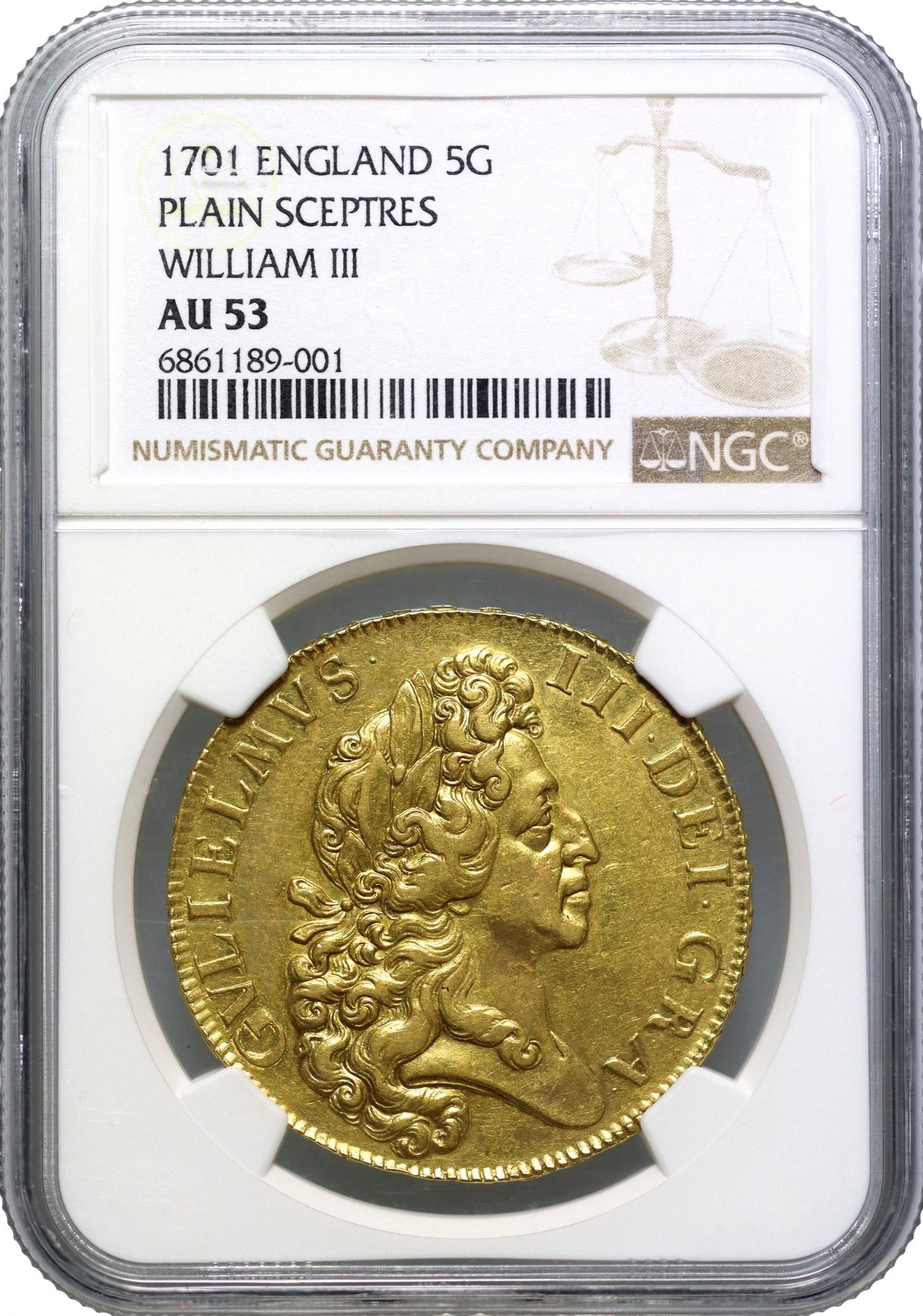
William III 1701 Five-Guineas, 'Fine work', plain sceptres, NGC AU53
William III (1694-1702), gold Five Guineas, 1701, fine work style with plain sceptres on reverse, laureate head right, abbreviated Latin legend and toothed border surrounding, GVLIELMVS. III. DEI. GRA. rev. crowned cruciform shields, eight strings to harp, plain emblematic sceptres in angles, Lion of Nassau at centre, date either side of top crown, abbreviated Latin legend and toothed border surrounding, .MAG BR.FRA ET.HIB REX, edge inscribed in raised letters, inverted orientation to obverse, +DECVS. ET. TVTAMEN. ANNO. REGNI. DECIMO. TERTIO+ (Bull EGC 397; Holloway 61; MCE 172; S.3456). Lightly toned with wear to high points both sides, surface marks and hairlines, has been slabbed and graded by NGC as AU53.
NGC Certification 6861189-001.
The Samuel King Survey co-written by this cataloguer and published in May 2005 recorded the 1701 fine work Five Guineas as one of the most prolific with 256 examples traded over a 45 year period, whilst being highly desirable for the detailed design, with a wholesome rendition of William of Orange. This is probably why many survive to the present day as the design was highly coveted and produced at the end of this reign with the plain sceptre variation being more often seen than the ornamental. The total output for gold for calendar year 1701 was a massive £1,190,019 worth which was the first time in British history that gold output had run to over seven figures. This was principally because during this year all the old foreign overseas gold coin was deemed no longer legal tender and was called into the Mint for making into new coins. The total output is an indication of how much foreign gold was circulating in the UK and being imported by merchants and the fastest way to mint such a burden of money was to produce the largest denomination as based on survival rates the gold Five Guineas is by far the most common 1701 dated coin. A major achievement for the Master of the Mint who has only been in the job for a couple of years, a certain Mr Isaac Newton (yet to be knighted).
The abbreviated Latin legends translate as "William the third by the grace of God" on the obverse, and "King of Great Britain, France and Ireland" on the reverse; with the Latin on the edge meaning "an ornament and a safeguard in the thirteenth year of the reign."
The old claim to the French Kingdom dating back to the time of the Wars of the Roses, when King Henry VI had regnal jurisdiction over a portion of France, and a number of Mints including Paris. Subsequently the last French possession of Calais had been physically lost in the time of Mary Tudor on January 7th 1557/8.
FAQs
What makes a coin valuable?
I have coins to sell, what’s the next step?
How will my purchases be shipped?
What happens if I’m not entirely happy with my purchase?

Popular Coins
View all-
Elizabeth II 2022 silver proof 2oz City Views London
Regular price £220Regular priceUnit price per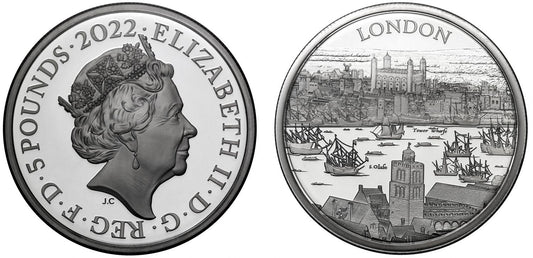
-
Charles III 2024 gold PF70 UC 1/4oz Britannia
Regular price £1,040Regular priceUnit price per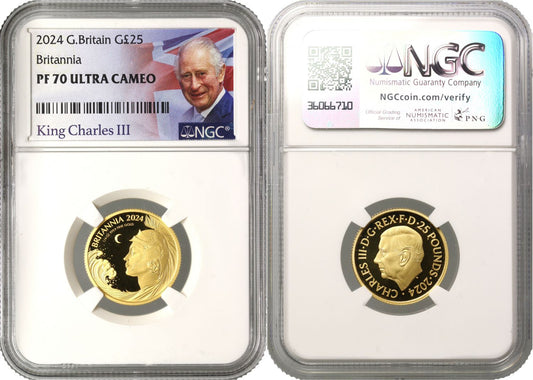
-
Charles III 2024 gold proof 1/4oz Britannia
Regular price £990Regular priceUnit price per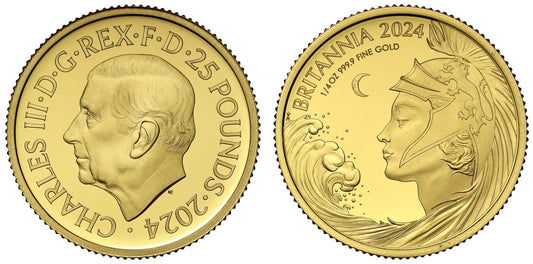
-
Charles III 2025 silver proof 2oz Waterloo Victory
Regular price £255Regular priceUnit price per