 Search


FAQs
What makes a coin valuable?


I have coins to sell, what’s the next step?
How will my purchases be shipped?
What happens if I’m not entirely happy with my purchase?
William III 1699 Five-Guineas, Elephant & Castle, AU53, ex Traveller collection
William III (1694-1702), gold Five Guineas, 1699, elephant and castle below first laureate head right, legend and toothed border surrounding, GVLIELMVS. III. DEI. GRA., rev. crowned cruciform shields, sceptres in angles, Lion of Nassau at centre, date either side of top crown, legend and toothed border surrounding, .MAG BR.FRA ET.HIB. REX., edge inscribed in raised letters, upright orientation to obverse, +DECVS. ET. TVTAMEN. ANNO. REGNI. UNDECIMO. (Schneider 479; MCE 170; EGC 395 R2; S.3455). Toned, with a little wear at centre on obverse, hairlines, has been slabbed and graded by PCGS as AU53 and very rare.
PCGS Certification 379868.53/54276587.
The Latin legends translate as on the obverse "William the Third by the Grace of God," and abbreviated on the reverse as "King of Great Britain, France and Ireland."
There are only three years that are possible to collect for the Five Guineas of William III and four varieties in total, 1699 is the earliest with two varieties, either with or without the elephant and castle below. This is the provenance mark of the Royal African Company of England as it had been named since refinancing in 1672, and the issue of the largest denomination of the Five Guinea was a rare occurrence by this time there not being any since the reign of William and Mary. This is in fact the final Five Guineas to have ever been minted with this provenance mark and sporadic issues afterward are of the Guinea or smaller. "The Rarity of Five Guinea Pieces - An Analysis" appeared in the preface of the Samuel King Collection of Highly Important English Gold Coins sold at Spink on 5th May 2005 co-written by the present cataloguer. The analysis showed that over a 45-year period preceding 2005, since 1960 that only 29 examples of the Five Guineas dated 1699 with elephant and castle below bust had been bought or sold in numismatic commerce, making it the rarest and most seldom seen of the four varieties of these large coins. £141,377 worth of gold for calendar year 1699 which is the third lowest for gold production in the seven years of dates in this reign, though of course we do not know how the output would be broken down between the gold denominations nor how long a date on a coin die would have lasted into a following calendar year.
This coin has a most intriguing provenance being hidden away in a European family collection since before World War II. The "Traveller" was a wealthy gentleman who having inherited a portion of a successful family company, made a fortune by promptly selling it and then travelled the world on what was in part an extended honeymoon for the decade between the Wall Street Crash of 1929 and the outbreak of World War II. With the financial instability of the great depression and after dabbling at first with gold bullion, he decided to form an enormous collection of world gold coins from ancient to modern whilst travelling the world to see the relevant dealers in their geographical locations to find the most appropriate coins. The result was a collection of some 15,000 coins, 1,700 of which we are told are British, with all going into secure hiding as of 1940 when the nazi regime encroached on where our traveller was located. Sadly, the collector died of a stroke with the stress of the world situation at this time and the collection remained hidden away for decades, stored carefully in individual envelopes in cigar boxes within locked aluminium strongboxes, that were buried in the ground in a field at the collector's property. His wife carried the secret of the burial location for the decades following and reaching the end of her life some 50 years later divulged the secret to her only daughter, whereupon in the 1990s the family retrieved all the coins intact and secured them safely in a bank vault until it was time to sell by auction in 2025. Though we often hear of buried treasure or hoards of coins from antiquity in the ground, it is not often we hear of a sophisticated coin collection actually being buried for decades, an intriguing story to permanently associate with coins of the Traveller provenance which has been written about in newspapers and online worldwide. We are lucky enough to have secured a small number of rare British coins from this esteemed collection.
Provenance:
Ex A. H. Baldwin, purchased 29th June 1931.
Ex The Traveller Collection, English part one, Numismatica Ars Classica, 20th May 2025, lot 2040 when housed in a NGC AU53 holder, now rehoused in PCGS.
FAQs
What makes a coin valuable?
I have coins to sell, what’s the next step?
How will my purchases be shipped?
What happens if I’m not entirely happy with my purchase?


Popular Coins
View all-
* Elizabeth II 2022 silver proof 2oz City Views London
Regular price £220Regular priceUnit price per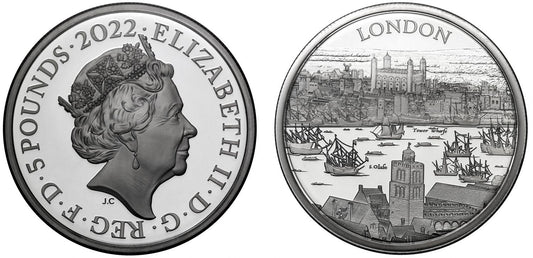
-
* Charles III 2024 gold PF70 UC 1/4oz Britannia
Regular price £1,090Regular priceUnit price per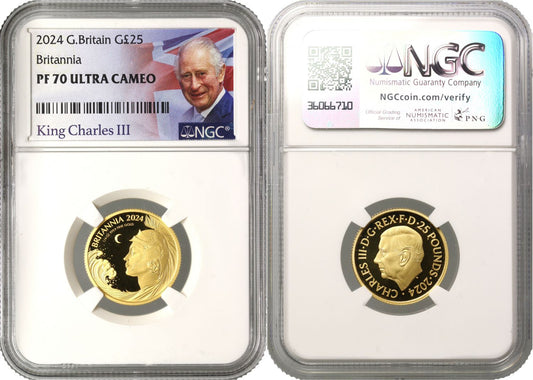
-
* Charles III 2024 gold proof 1/4oz Britannia
Regular price £1,040Regular priceUnit price per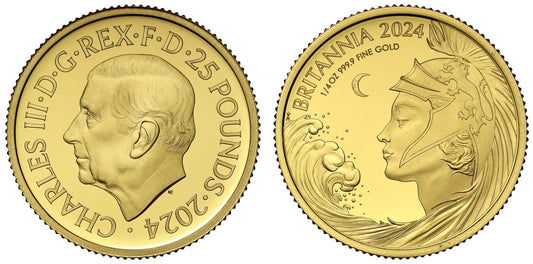
-
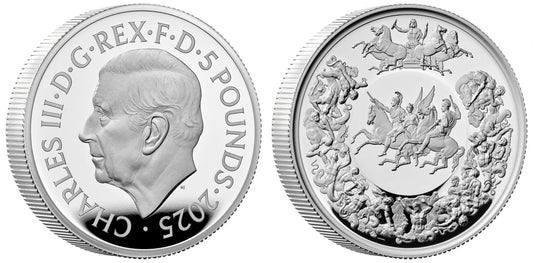
* Charles III 2025 silver proof 2oz Waterloo Victory
Regular price £255Regular priceUnit price per