 Search


FAQs
What makes a coin valuable?


I have coins to sell, what’s the next step?
How will my purchases be shipped?
What happens if I’m not entirely happy with my purchase?
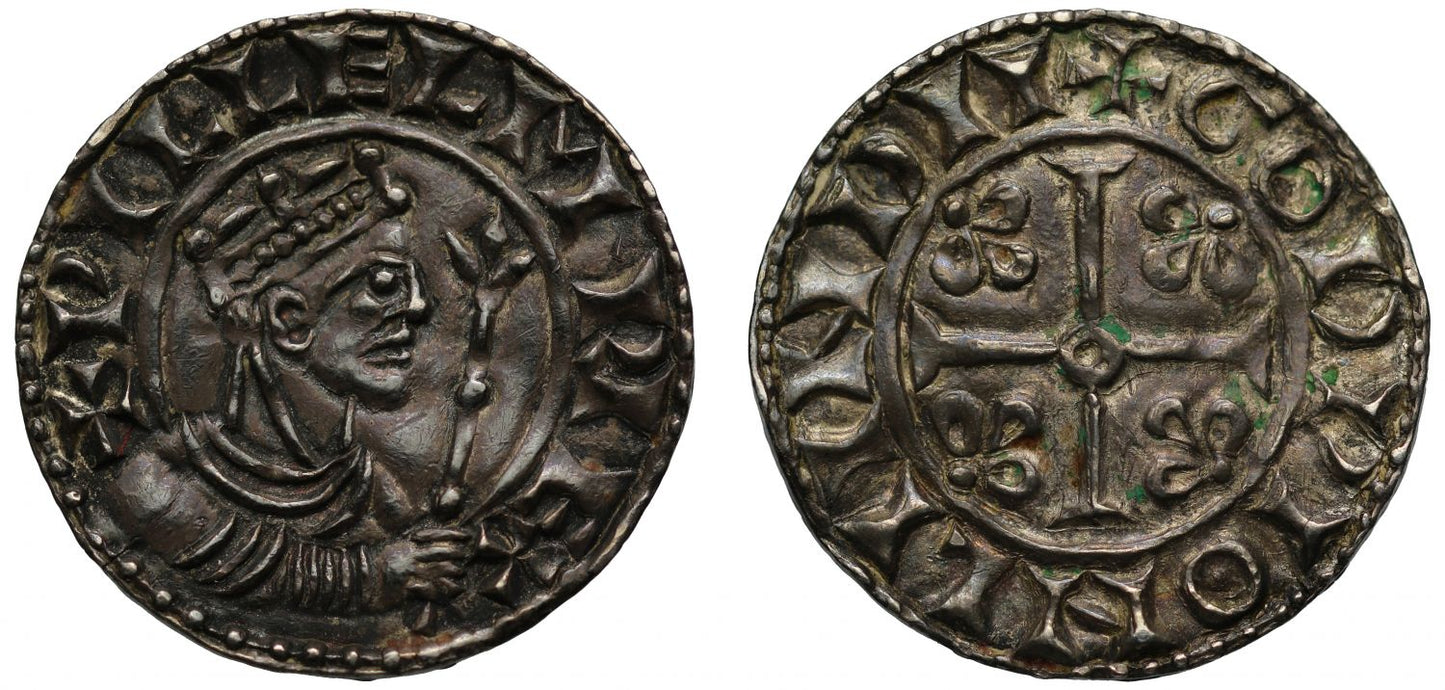
William I Penny, Profile right type, London, Godwi, ex Rashleigh, Watters, Drabble, Snellenberg and Lessen
William I (1066-87), silver Penny, profile right type (c.1080-83), London Mint, Moneyer Godwi, crowned bust to edge of coin in profile right holding fleured sceptre, legend commencing lower left with inner linear and outer beaded circles surrounding both sides, +PILLELM RIEX, rev. annulet at centre of cross pattée, pellet stalked trefoils in each angle from linear rim surrounding, outer legend and beaded border surrounding, +GODPI ON LIINDII, 1.38g (BMC type VII; N.847; S.1256). Toned, well struck and centred, an excellent portrait, almost extremely fine.
The legends translate as "William, King " and on the reverse "Godwi of London."
North records up to 38 moneyers working at London in this reign in all types.
The first Norman King of England, William the Conqueror born around 1028 was the son of Robert I of Normandy and Herleya. A descendant of Rollo, William became Duke of Normandy in 1035, he subsequently married Matilda of Flanders in the 1050s ensuring a powerful ally in that neighbouring region. After a protracted struggle and quashing rebellions, his hold over Normandy was eventually secure by 1060 and with appointment of supporting abbots and bishops in the Norman church, and he subsequently secured the region of Maine in 1062. William's first cousin once removed was the childless Edward the Confessor of England and from this family connection and that Edward had previously told him he would succeed, he assumed a claim to the throne of England over Harold Godwinson, who Edward had named as his successor on his deathbed in January 1066. William also claimed that Harold previously had promised the throne to him in the event of succession, Harold having sworn over holy relics in William's presence as depicted in the Bayeux tapestry. William therefore built up a powerful invasion force to cross the channel and fight for the right to rule England as of September 1066. He landed at Pevensey Bay and after setting up camp with a basic fort at Hastings he marched north to meet Harold at Senlac Hill at Battle, East Sussex on the 14th October. A battle raged for most of the day, with at one point a rumour spread that William was slain resulting in him having to remove his helmet and reveal he was alive and fighting, boosting the morale of the Normans for the final onslaught in which Harold perished, either from an arrow in the eye or cut down by a horseman. William then went on a military tour to put down local uprisings leading to his crowning in Westminster Abbey on Christmas Day. He made arrangements in London for governance for whenever he would be in Normandy, and by 1075 his hold on England was almost complete with many forts and castles constructed. His later years involved quelling other uprisings in Europe and difficulty with his eldest son Robert Curthose, but his most famous achievement in England was the preparation of the Domesday Book in 1086; a survey of the land and the land-owners and nobles within it, listing pre-conquest and current holders at that time. William died in September 1087 leading a campaign in northern France and was buried at Caen. Normandy was given to eldest son Robert, with England given to his next surviving son William Rufus.
Capital City London upon the River Thames following Roman occupation, minted some of the earliest Saxon coins with gold Thrymsas and silver denarii with a "Londuniu" signature. Mercian Kings beginning with Offa minted coins there, but the first coin to actually say City of London upon it is the unique Ludica portrait Penny that was found in 2016, followed by subsequent coins of Ecgberht. In 871 the Danes wintered in London for the first time but was King Alfred of Wessex who settled and fortified the capital circa 880 to resist further invasions. Edward the Elder incorporated the City in Wessex in 911 and it resisted a major attack in the reign of Aethelred II in 1009. However, London submitted to the Danish Swein in 1013, but three years later the citizens accepted Eadmund Ironside as King and resisted a siege by Canute.
Later unsettled times occurred in the anarchy period of the reign of King Stephen, remaining loyal to the King except for a few months in 1141 when Empress Matilda was admitted but within a short time expelled. Coinage activity here has been mostly constant throughout history from the Romans until the reign of our current Queen and only moving out to Wales from 1969.
Provenance:
Ex E. W. Rashleigh, Sotheby, 21st June 1909, lot 365, illustrated plate VII.
Ex C. A. Watters, Sotheby, 21st May 1917, lot 155.
Ex Gilbert C. Drabble, part I, Glendining 4th July 1939, lot 594, sold for £5/12/6d illustrated plate XVII.
Ex H. H. Snellenberg Collection, Spink Numismatic Circular, October 1966 item 5512.
Ex Marvin Lessen, North York Moors Collection, part 2, 3rd July 2019, lot 375.
Ex Collection of an English Doctor part II, Sovereign Rarities fixed price list online May 2022.
FAQs
What makes a coin valuable?
I have coins to sell, what’s the next step?
How will my purchases be shipped?
What happens if I’m not entirely happy with my purchase?
Popular Coins
View all-
Elizabeth II 2022 silver proof 2oz City Views London
Regular price £220Regular priceUnit price per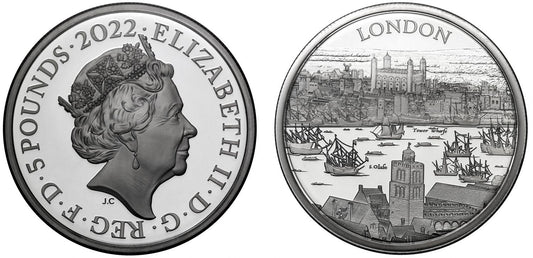
-
Charles III 2024 gold PF70 UC 1/4oz Britannia
Regular price £1,020Regular priceUnit price per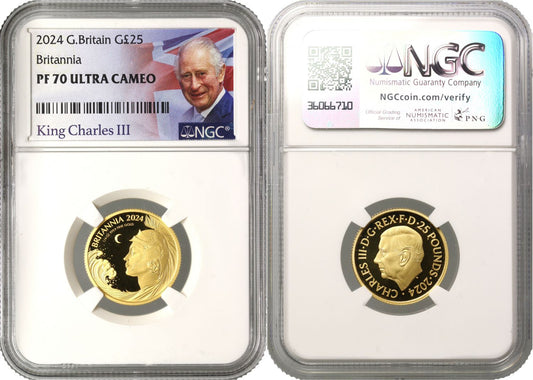
-
Charles III 2024 gold proof 1/4oz Britannia
Regular price £950Regular priceUnit price per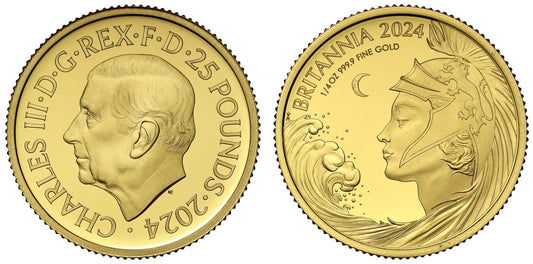
-
Charles III 2025 silver proof 2oz Waterloo Victory
Regular price £260Regular priceUnit price per