 Search


FAQs
What makes a coin valuable?


I have coins to sell, what’s the next step?
How will my purchases be shipped?
What happens if I’m not entirely happy with my purchase?
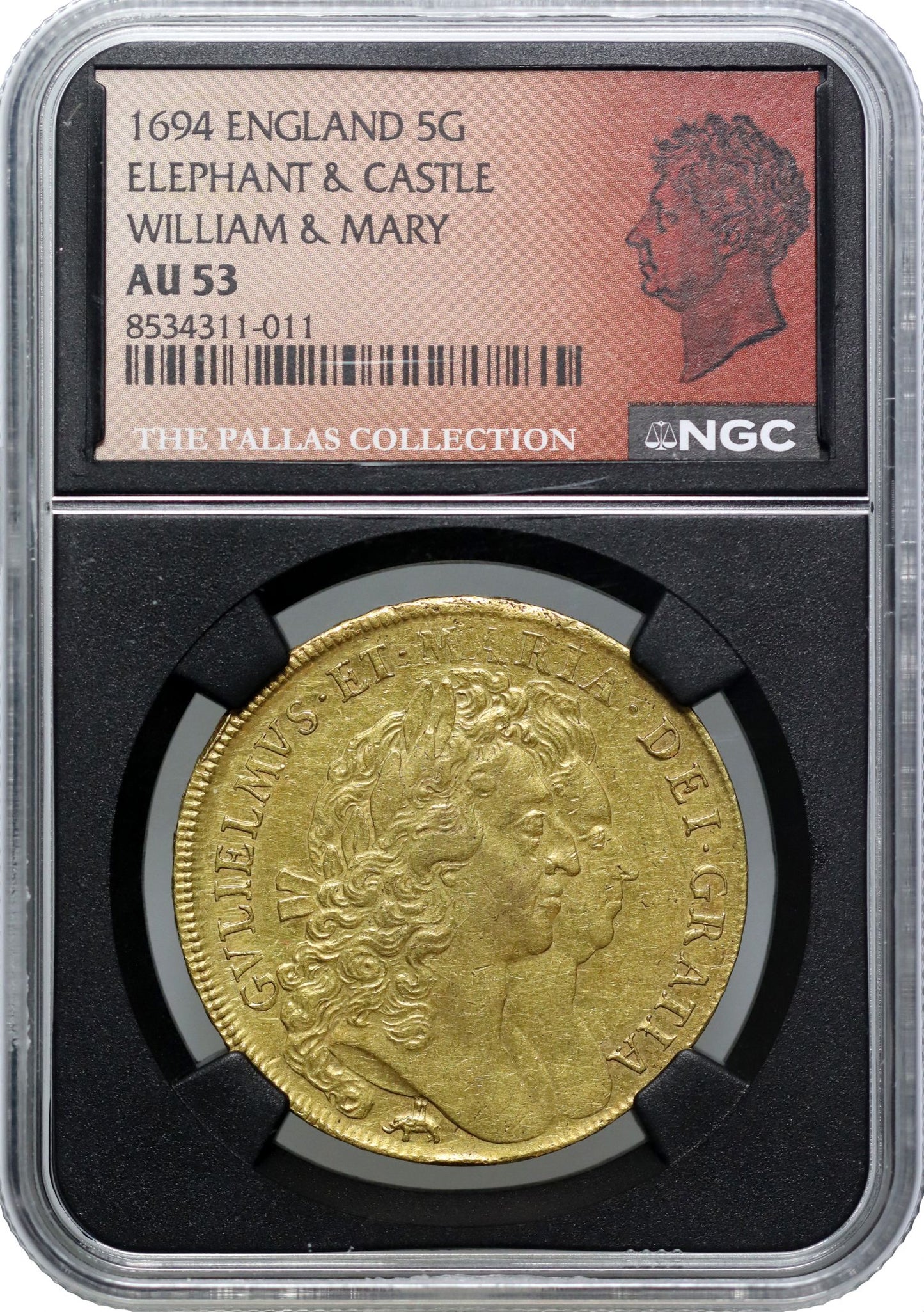
William and Mary 1694 Five-Guineas, elephant & castle, AU53, rarest of reign, ex Pallas
William and Mary (1688-94), gold Five Guineas, 1694, elephant and castle below conjoined busts right, legend surrounding, GVLIELMVS. ET. MARIA. DEI. GRATIA, toothed border around rim both sides, rev. crowned quartered shield of arms with scalloped frame, Lion of Nassau as an escutcheon at centre, date either side of crown, MAG. BR. FR. ET. HIB . REX. ET. REGINA., edge inscribed in raised letters, inverted orientation to obverse, +DECVS. ET. TVTAMEN. ANNO. REGNI. SEXTO. +. (Schneider -; Bull EGC 352 R4; MCE 143; GH 57; S.3423). Toned with some wear to highest points of design both sides, has been slabbed and graded by NGC as AU53, the rarest Five Guinea of this reign.
NGC certification 8534311-011 with Pallas Collection label on black core.
The Latin legends translate to on obverse "William and Mary by the Grace of God" continuing on the reverse as "King and Queen of Great Britain, France and Ireland."
"The Rarity of Five Guinea Pieces - An Analysis" appeared in the preface of the Samuel King Collection of Highly Important English Gold Coins sold at Spink on 5th May 2005 co-written by the present cataloguer. The analysis showed that over a 45-year period preceding 2005, since 1960 that only 13 examples of the Five Guineas dated 1694 with elephant and castle below bust, had been bought or sold in numismatic commerce, which make this the rarest five guinea piece of this joint reign. £57,246 worth of gold for calendar year 1693 which is the fourth lowest for gold production in the six years of dates in this reign, though of course we do not know how the output would be broken down between the gold denominations or how exactly how much was received to be minted from the Royal African Company of England. At this time the company had just surpassed its peak levels of output of coins which were for 1691 and 1692, when gold was released from reserves to be minted and stock bonuses paid out. For further reading on this subject see recent publication "The Metal in Britain's Coins" by Graham Birch, chapter 3.
Provenance:
Ex Glendining, 17-18th May 1967, lot 582 sold for £180.
Ex Seaby Coin and Medal Bulletin, September 1967, item G1359 for £285.
Ex The Pallas Collection 450.
FAQs
What makes a coin valuable?
I have coins to sell, what’s the next step?
How will my purchases be shipped?
What happens if I’m not entirely happy with my purchase?

Popular Coins
View all-
Elizabeth II 2022 silver proof 2oz City Views London
Regular price £220Regular priceUnit price per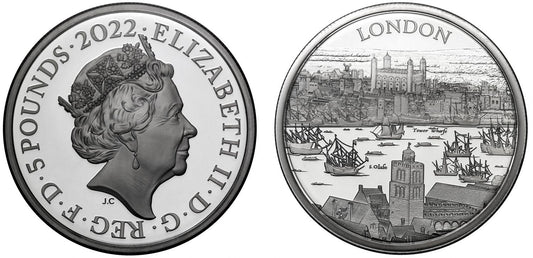
-
Charles III 2024 gold PF70 UC 1/4oz Britannia
Regular price £1,020Regular priceUnit price per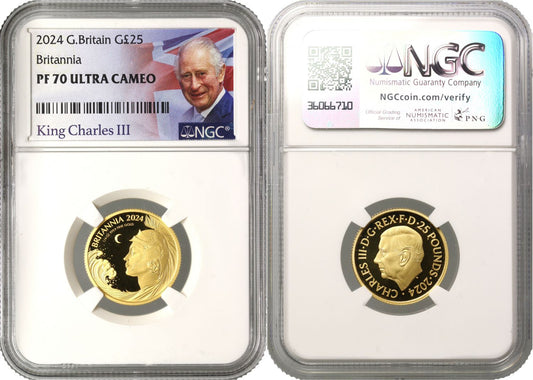
-
Charles III 2024 gold proof 1/4oz Britannia
Regular price £950Regular priceUnit price per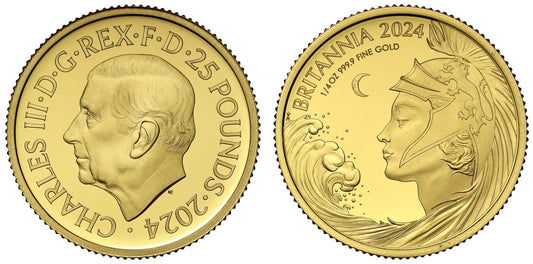
-
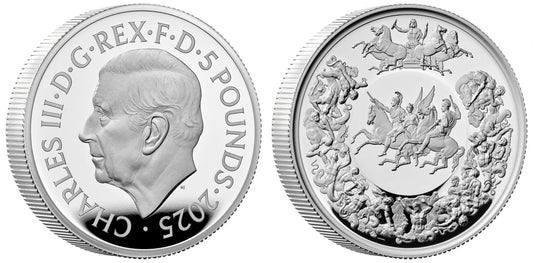
Charles III 2025 silver proof 2oz Waterloo Victory
Regular price £260Regular priceUnit price per