 Search


FAQs
What makes a coin valuable?


I have coins to sell, what’s the next step?
How will my purchases be shipped?
What happens if I’m not entirely happy with my purchase?
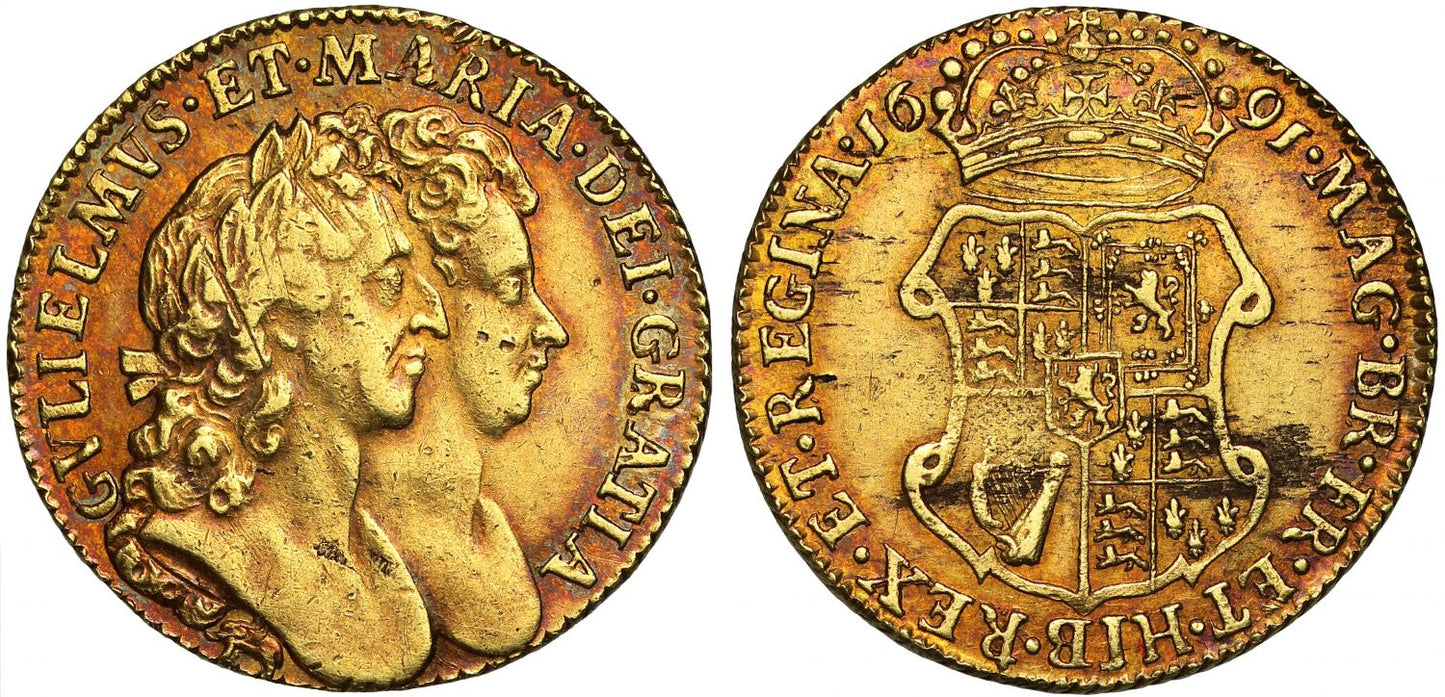
William and Mary 1691 Guinea Elephant & Castle
William and Mary (1688-94), gold Guinea, 1691, elephant and castle below conjoined busts right, legend surrounding, GVLIELMVS. ET. MARIA. DEI. GRATIA., toothed border around rim both sides, rev. crowned quartered shield of arms, date either side of crown, MAG. BR. FR. ET. HIB . REX. ET. REGINA., weight 8.44g (Schneider 470; Bull EGC 368; Farey 335; MCE 153; S.3427). Attractively toned with nice red colour, flan adjustment marks in hair of King, two digs on cheek of Queen, other light surface marks and hairlines, some black flecking and haymarks on reverse, otherwise very fine and rare.
The Latin legends translate to on obverse "William and Mary by the Grace of God" continuing on the reverse as "King and Queen of Great Britain, France and Ireland."
James and Norbert Roettier, the sons of John who was about to retire to Brussels, were the engravers of the coinage and expected to take over his position as Chief(s), however perhaps because they were Roman Catholic, the position of Chief went to George Bowers at Michaelmas 1689, but he later died on 1st March 1690. As the Chief position then went to the Engraver of Seals, Henry Harris, and as he did not have coin die work experience he arranged for the Roettier brothers to work on the coin dies right through till 1697 whereupon a similar arrangement was taken up with John Croker.
For 1691 gold output was the second lowest of this joint reign at £54,497 for the calendar year across all the denominations, the highest output being in 1689 at £128,442 worth and the lowest in 1690 at £48,772. This coin is struck from gold supplied by the Royal African Company of England which is defined by the elephant and castle provenance mark below the bust. The company had been so reconstructed by the Duke of York from 1672. The "R.A.C." was quite a success trading with Africa and the New World through the 1670s and 1680s, and 1691 was the last good year before troubles started again from 1692, what with the nine years war with France and competition to their African monopoly. For further reading see "The Metal in Britain's Coins" by Graham Birch. We also note an account of the number of guineas coined out of the Royal African Company gold appeared in the Gazetteer and London Daily Advertiser of the 23rd January 1755 which was reproduced in Thomas Snellings publication of 1763. This account tells us that 26,700 Guineas (£29,296worth) were struck presumably out of the £54,497 worth of goldwhich leaves £25,201 to have been struck into all the other denominations of gold. For 1691 there were all four denominations issued for the Royal African Company as well as Five Guineas, Guineas and Half-Guineas from other sources of gold. Therefore it would seem the lion's share of gold this calendar year came originally from Africa.
FAQs
What makes a coin valuable?
I have coins to sell, what’s the next step?
How will my purchases be shipped?
What happens if I’m not entirely happy with my purchase?
Popular Coins
View all-
Elizabeth II 2022 silver proof 2oz City Views London
Regular price £220Regular priceUnit price per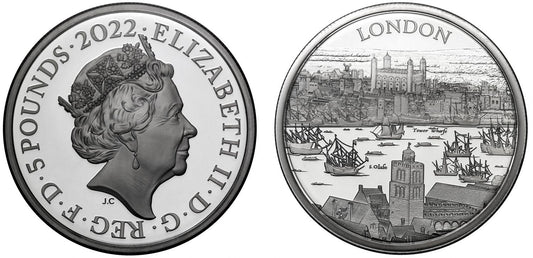
-
Charles III 2024 gold PF70 UC 1/4oz Britannia
Regular price £1,020Regular priceUnit price per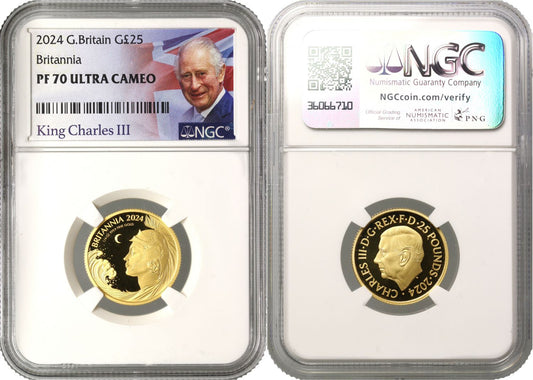
-
Charles III 2024 gold proof 1/4oz Britannia
Regular price £950Regular priceUnit price per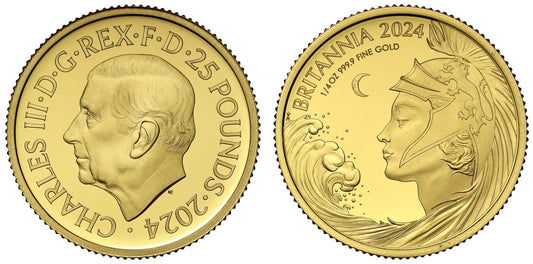
-
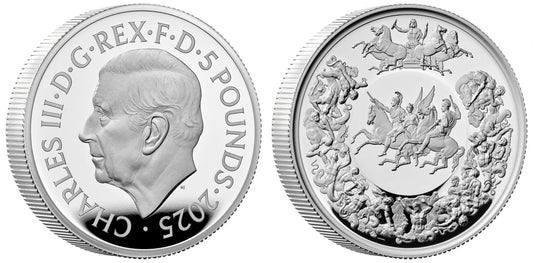
Charles III 2025 silver proof 2oz Waterloo Victory
Regular price £260Regular priceUnit price per