 Search


FAQs
What makes a coin valuable?


I have coins to sell, what’s the next step?
How will my purchases be shipped?
What happens if I’m not entirely happy with my purchase?
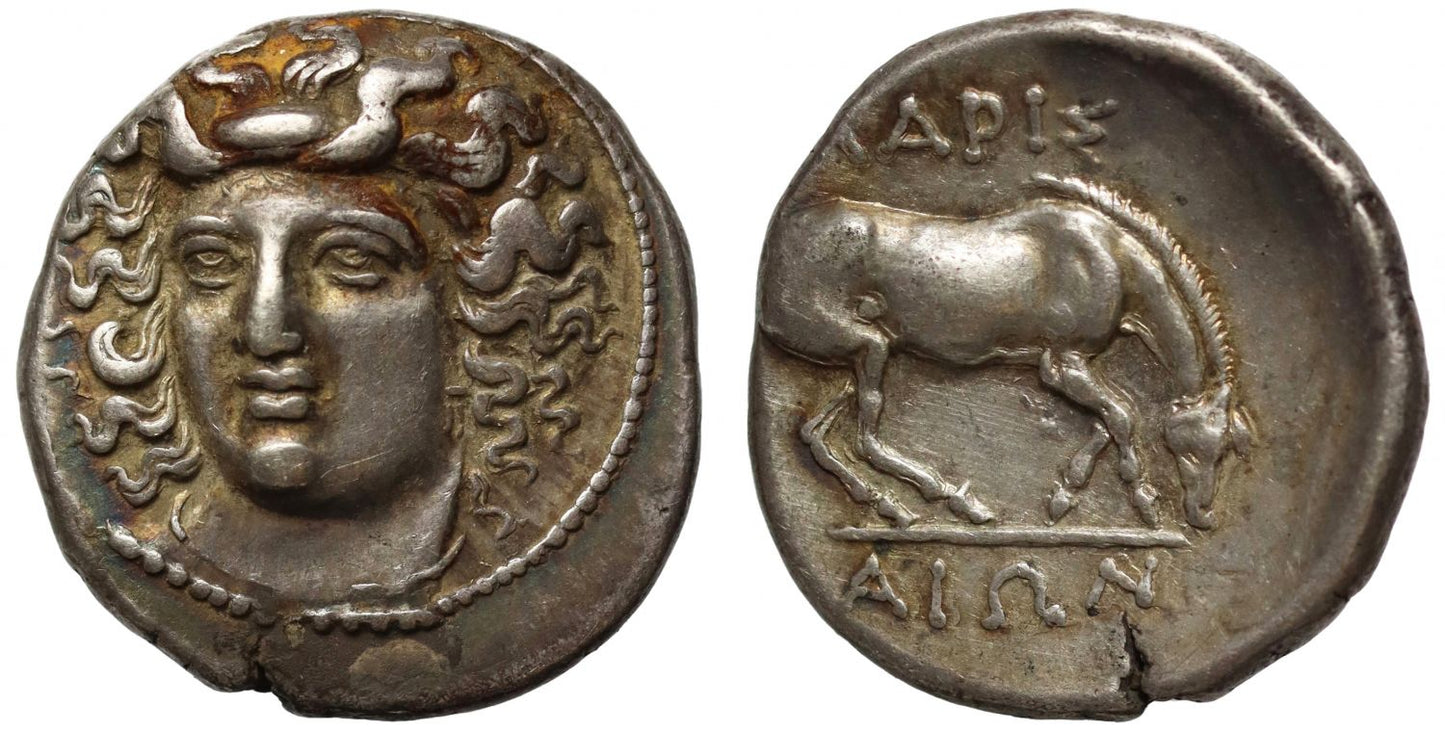
Thessaly, Larissa, Silver Drachm.
Thessaly, Larissa, silver Drachm, c. 356-342 BC, head of the nymph Larissa wearing ampyx, pendant earring and necklace, rev. ΛΑΡΙΣ-ΑΙΩΝ Horse standing right, preparing to roll, 6.10g, 12h (BCD Thessaly I 1155; BCD Thessaly II 316-9; HGC 4, 454). Fine style and attractively tone, good very fine.
This silver drachm was struck at Larissa, one of the most important cities of ancient Thessaly, around 356342 BC. The city was situated in the fertile plains of Thessaly, a region renowned throughout the ancient Greek world for its horses and equestrian culture. The imagery chosen for Larissa's coinage reflects this strong connection between the city, its local mythology and the importance of horses to Thessalian society.
The obverse depicts the head of the nymph Larissa facing slightly to the right. She wears an ampyx, a decorative headband or forehead ornament, together with a pendant earring and necklace. Larissa was a local water nymph and the mythical namesake of the city. Her elegant portrait is one of the most recognisable designs of Thessalian coinage and is notable for its graceful, idealised treatment.
On the reverse is a horse standing to the right and preparing to roll or lie down. The Greek inscription ΛΑΡΙΣ-ΑΙΩΝ identifies the people of Larissa. The horse is particularly appropriate for a coin from Thessaly, which was famous in antiquity for its exceptional horses and skilled cavalry. Thessalian horses were highly valued throughout the Greek world, and horsemanship was closely associated with the region's aristocratic culture.
The unusual depiction of the horse preparing to roll gives the reverse a sense of movement and everyday behaviour rather than presenting the animal simply as a static symbol. This naturalistic approach is characteristic of some of the finest Greek coinage of the Classical period, when engravers increasingly sought to portray animals and human figures with greater observation and vitality.
The period in which this drachm was produced was one of considerable political activity in central Greece. Thessaly was divided between competing political interests, while the growing power of Philip II of Macedon was beginning to influence the affairs of the Greek mainland. Larissa remained an important regional centre and continued to produce distinctive coinage.
This drachm therefore combines mythology, regional identity and artistic achievement. The refined portrait of the nymph Larissa on the obverse and the celebrated Thessalian horse on the reverse make it a particularly expressive example of Classical Greek coinage, capturing the close relationship between the city of Larissa, its landscape, mythology and renowned equestrian tradition.
FAQs
What makes a coin valuable?
I have coins to sell, what’s the next step?
How will my purchases be shipped?
What happens if I’m not entirely happy with my purchase?
Popular Coins
View all-
Elizabeth II 2022 silver proof 2oz City Views London
Regular price £220Regular priceUnit price per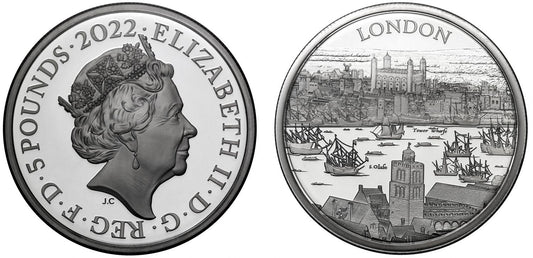
-
Charles III 2024 gold PF70 UC 1/4oz Britannia
Regular price £1,020Regular priceUnit price per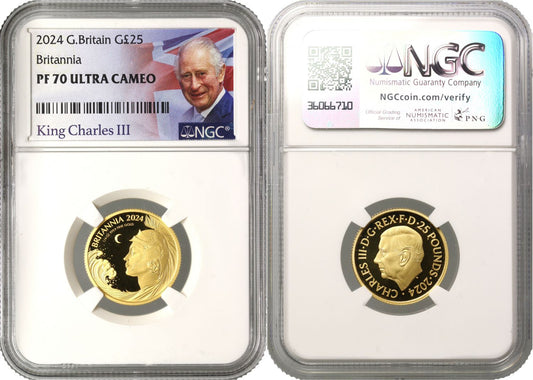
-
Charles III 2024 gold proof 1/4oz Britannia
Regular price £950Regular priceUnit price per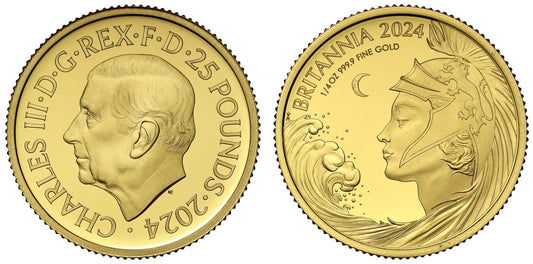
-
Charles III 2025 silver proof 2oz Waterloo Victory
Regular price £260Regular priceUnit price per