 Search


FAQs
What makes a coin valuable?


I have coins to sell, what’s the next step?
How will my purchases be shipped?
What happens if I’m not entirely happy with my purchase?
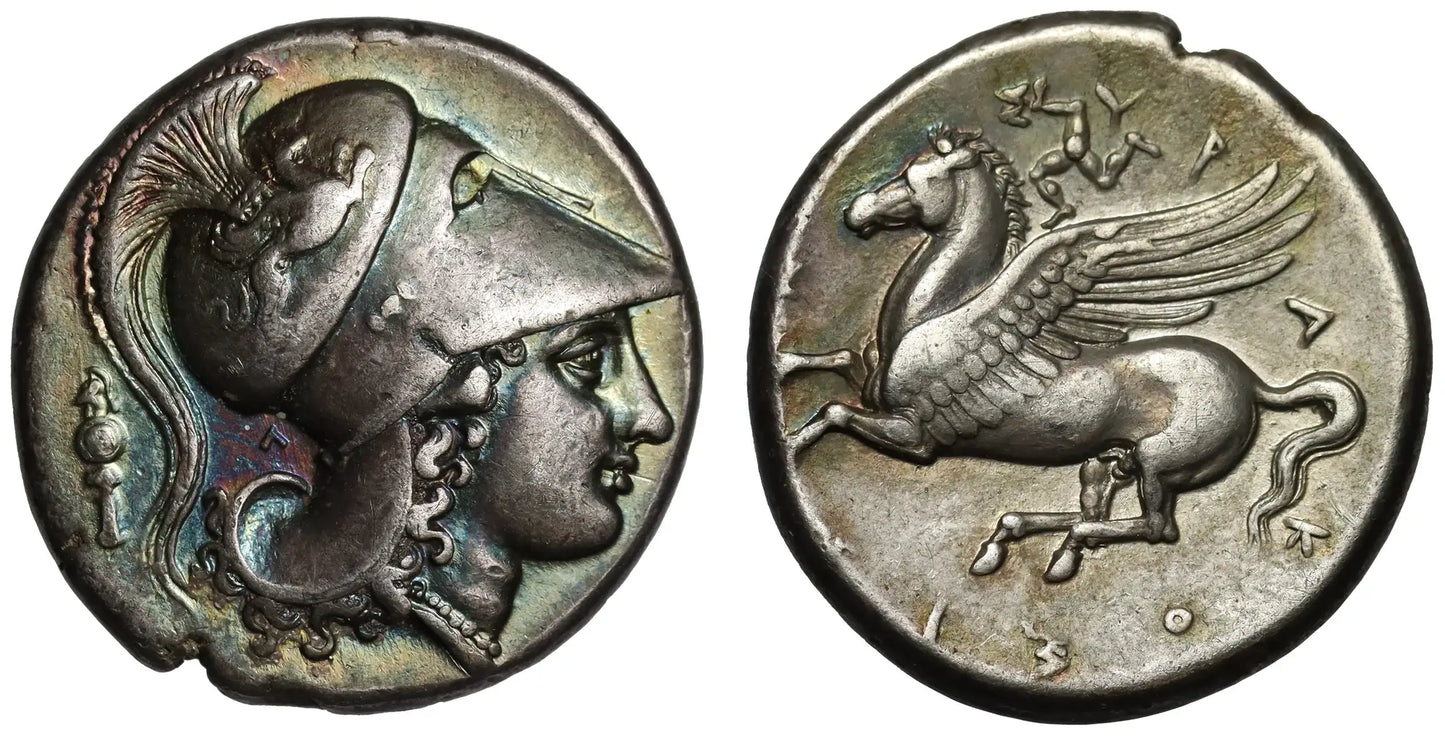
Syracuse, Agathokles, Silver Stater, Provenance to 1990
Sicily, Syracuse, Agathokles, 317-289 BC, silver Stater, struck circa 317-306/5 BC, head of Athena right, wearing crested Corinthian helmet decorated with griffin on the bowl, trophy to left, rev. Pegasus flying left, triskeles above, 8.52g, 6h, (Calciati II, 13 or 16; HGC 4, 1402; SNG ANS - (cf. 559-560); SNG Ashmolean 2073 (die identical); SNG Munich 1195 (die identical). magnificent iridescent toning, good very fine.
Provenance:
Ex Giessener Münzhandlung, Auction 50, 1990, Lot 171
This attractive silver stater was struck at Syracuse during the early rule of Agathokles, one of the most ambitious and formidable rulers of ancient Sicily. The obverse depicts Athena wearing a crested Corinthian helmet decorated with a griffin, accompanied by a trophy symbol. The reverse features Pegasus in flight, with the distinctive Sicilian triskeles above. These designs reflect the established artistic traditions of Syracuse while also belonging to a period of considerable political and military transformation.
Agathokles rose from relatively humble origins, the son of a potter, to become a powerful military commander and eventually tyrant of Syracuse in 317 BC. Determined to establish Syracusan dominance over Sicily, he embarked on an ambitious campaign against Carthage, whose influence extended across the western part of the island. In 310 BC, following a Carthaginian invasion of Sicily, Agathokles launched a remarkable counter-offensive by taking his army across the Mediterranean to North Africa and attacking Carthaginian territory directly. Although ultimately unsuccessful in defeating Carthage, he secured a peace settlement in 306 BC. In the same period, he adopted the title of king, reflecting his growing power and ambitions. He continued to rule until his death in 289 BC, leaving a significant mark on the political and numismatic history of Sicily.
FAQs
What makes a coin valuable?
I have coins to sell, what’s the next step?
How will my purchases be shipped?
What happens if I’m not entirely happy with my purchase?
Popular Coins
View all-
Elizabeth II 2022 silver proof 2oz City Views London
Regular price £220Regular priceUnit price per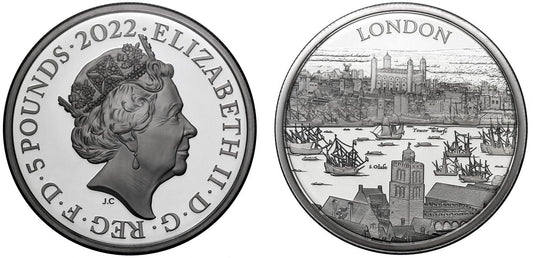
-
Charles III 2024 gold proof 1/4oz Britannia
Regular price £950Regular priceUnit price per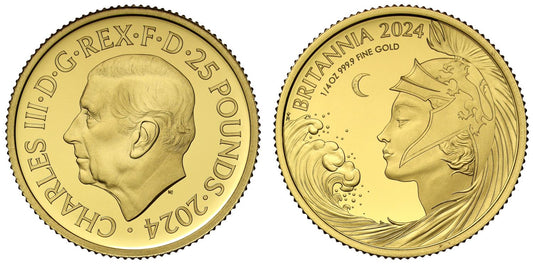
-
Charles III 2025 silver proof 2oz Waterloo Victory
Regular price £260Regular priceUnit price per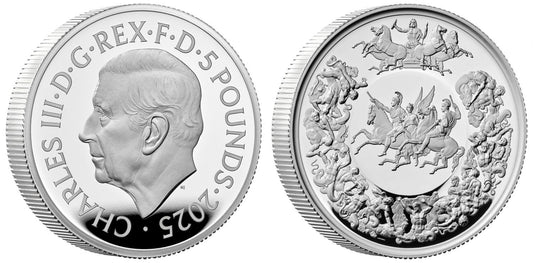
-
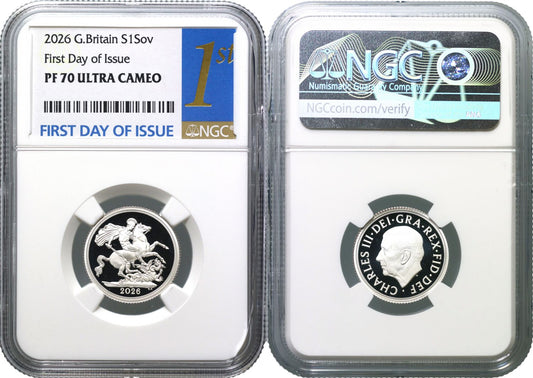
Charles III 2026 silver PF70 UCAM FDI Sovereign
Regular price £125Regular priceUnit price per