 Search


FAQs
What makes a coin valuable?


I have coins to sell, what’s the next step?
How will my purchases be shipped?
What happens if I’m not entirely happy with my purchase?
Siculo-Punic, 350-300 BC, Silver Tetradrachm
Sicily, Siculo-Punic 350-300 BC, silver Tetradrachm. 'People of the Camp' mint (Entella?), Wreathed head of Tanit-Persephone to left, wearing triple-pendant earring and necklace; pellet before, four dolphins swimming around, rev. head of horse to left; date palm behind, Punic 'M' below. 17.09g, 6h (Jenkins, Punic 230 (O72/R197); de Luynes 1466; SNG Lockett 1054; HGC 2, 289). Good extremely fine, struck in high relief with nice lustre.
This impressive silver tetradrachm belongs to the Siculo-Punic coinage produced under Carthaginian influence in western Sicily during the fourth century BC. Carthage, the powerful Phoenician city-state of North Africa, had long competed with the Greek cities of Sicily for control of the island's wealth, fertile agricultural land and strategic Mediterranean trading routes. Following earlier conflicts, Carthaginian intervention intensified in 410 BC, with successive campaigns bringing substantial parts of western Sicily under Punic control.
Unlike the Greeks, Carthaginians had initially made little use of coined money in their homeland. Their military campaigns in Sicily, however, created an immediate need to pay mercenary soldiers, many of whom were accustomed to receiving Greek style silver coinage. Consequently, Carthaginian authorities began striking substantial quantities of silver tetradrachms, adopting the familiar Greek weight standard and artistic conventions. These issues became known as Siculo-Punic coinage.
The obverse depicts Tanit-Persephone, a goddess combining Phoenician and Greek religious traditions, wearing a wreath and elaborate jewellery, surrounded by four dolphins. The reverse features a horse's head facing left, with a date palm behind. The horse and palm were important symbols of Carthaginian identity, while the Greek-inspired portrait demonstrates the cultural blending characteristic of Punic Sicily.
The attribution to the enigmatic 'People of the Camp' mint, possibly Entella in western Sicily, is particularly interesting. These issues are associated with Carthaginian military activity and are believed to have played an important role in paying mercenary forces.
FAQs
What makes a coin valuable?
I have coins to sell, what’s the next step?
How will my purchases be shipped?
What happens if I’m not entirely happy with my purchase?

Popular Coins
View all-
Elizabeth II 2022 silver proof 2oz City Views London
Regular price £220Regular priceUnit price per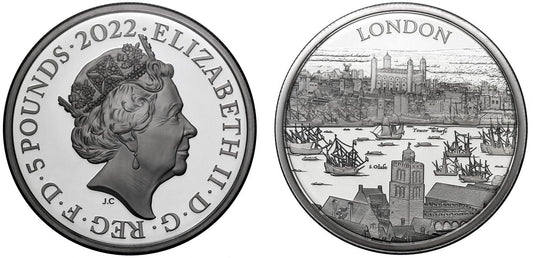
-
Charles III 2024 gold proof 1/4oz Britannia
Regular price £950Regular priceUnit price per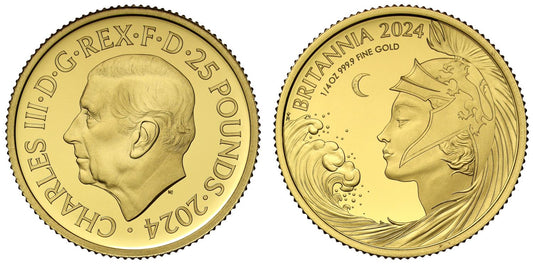
-
Charles III 2026 silver PF70 UCAM FDI Sovereign
Regular price £125Regular priceUnit price per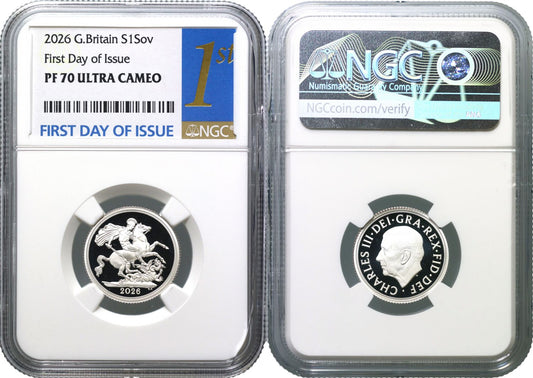
-
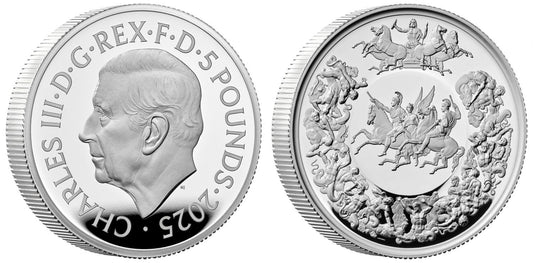
Charles III 2025 silver proof 2oz Waterloo Victory
Regular price £260Regular priceUnit price per