 Search


FAQs
What makes a coin valuable?


I have coins to sell, what’s the next step?
How will my purchases be shipped?
What happens if I’m not entirely happy with my purchase?
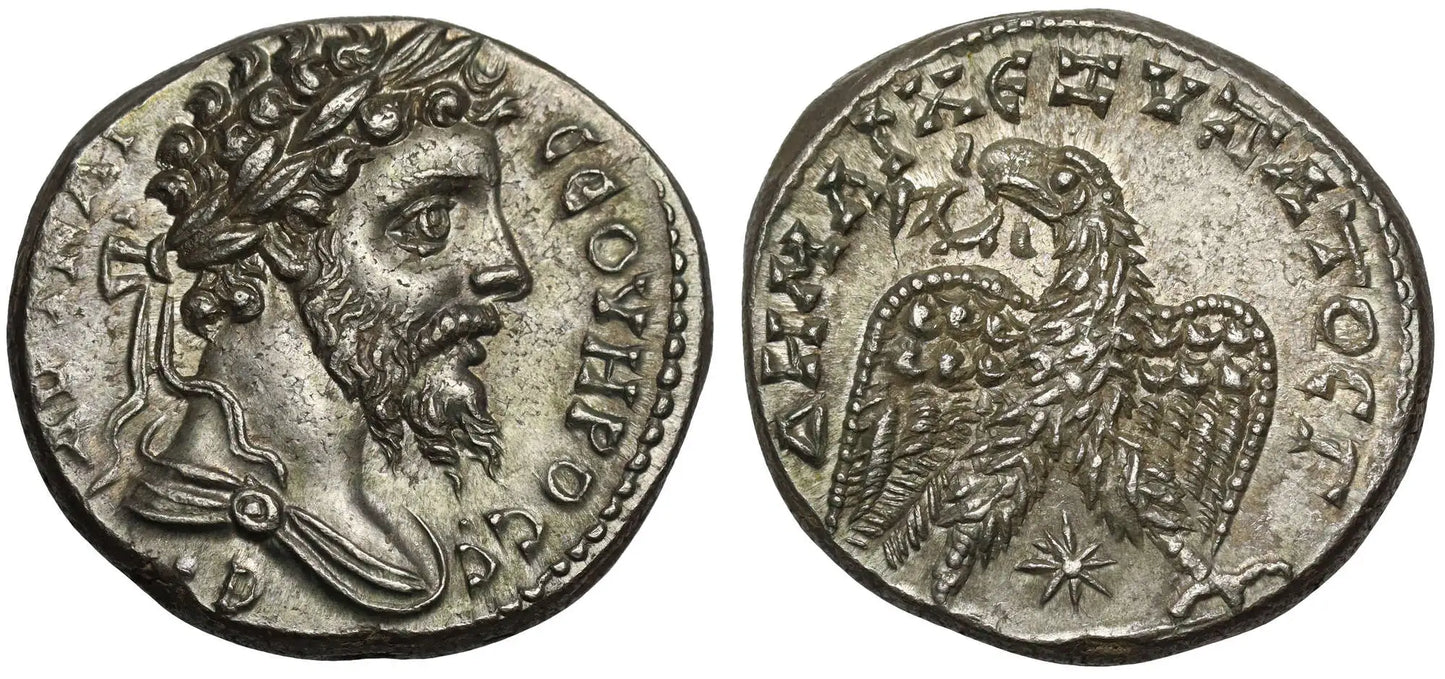
Seleucis and Pieria, Septimius Severus, silver Tetradrachm
Septimius Severus (193-211 AD),Seleucis and Pieria, Laodicea ad Mare, Tetradrachm, 205-207 AD, αυτ και ϲεουηροϲ ϲε,laureate and draped bust right, rev. δημαρχ εξ υπατοϲ γeagle standing facing, wings spread, head left, wreath in beak, star between legs,around, 13.44g, 11h, (RPC Online 87280var.[eagle]; Prieur 1117var.).About extremely fine, lightly toned over residual lustre, superb portrait struck in high relief.
This Tetradrachm of Septimius Severus was struck at Laodicea ad Mare, in the region of Seleucis and Pieria, around 205 - 207 AD. Laodicea was an important coastal city in Roman Syria, located near modern day Latakia. The coin bears a portrait of Septimius Severus on the obverse, accompanied by a Greek inscription giving his imperial titles. On the reverse, a large eagle stands with its wings spread, with a star between its legs. The eagle was a powerful symbol associated with Roman authority and the military. Although Septimius Severus was born in Leptis Magna in North Africa, Syria became extremely important during his reign. In 193 AD, he became emperor after a period of civil war known as the Year of the Five Emperors. His main rival in the East was Pescennius Niger, who controlled Syria and had strong support in the region. Severus therefore travelled east and defeated Niger in 194 AD. After securing Syria, Severus continued to have strong connections with the region. Laodicea benefited greatly under his rule, the city was elevated to the status of a metropolis in 194 AD and later became a Roman colony with ius Italicum around 197- 198 AD. By the time this coin was struck, Severus was no longer campaigning in Syria, but his political influence remained strong. The tetradrachm demonstrates how Roman emperors used local Greek coinage to project their authority throughout the eastern provinces.
The obverse legend αυτ και ϲεουηροϲ ϲε translates to "Emperor Caesar Severus Augustus."
The reverse legend δημαρχ εξ υπατοϲ γtranslates to "Tribunician Power, Consul for the third time."
FAQs
What makes a coin valuable?
I have coins to sell, what’s the next step?
How will my purchases be shipped?
What happens if I’m not entirely happy with my purchase?
Popular Coins
View all-
Elizabeth II 2022 silver proof 2oz City Views London
Regular price £220Regular priceUnit price per
-
Charles III 2024 gold PF70 UC 1/4oz Britannia
Regular price £1,020Regular priceUnit price per
-
Charles III 2024 gold proof 1/4oz Britannia
Regular price £950Regular priceUnit price per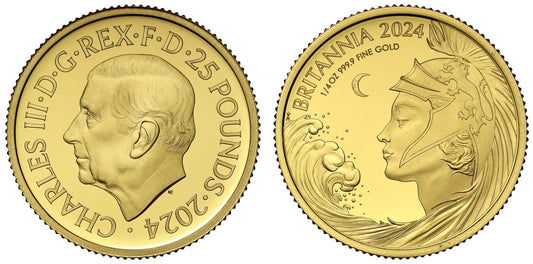
-
Charles III 2025 silver proof 2oz Waterloo Victory
Regular price £260Regular priceUnit price per