 Search


FAQs
What makes a coin valuable?


I have coins to sell, what’s the next step?
How will my purchases be shipped?
What happens if I’m not entirely happy with my purchase?
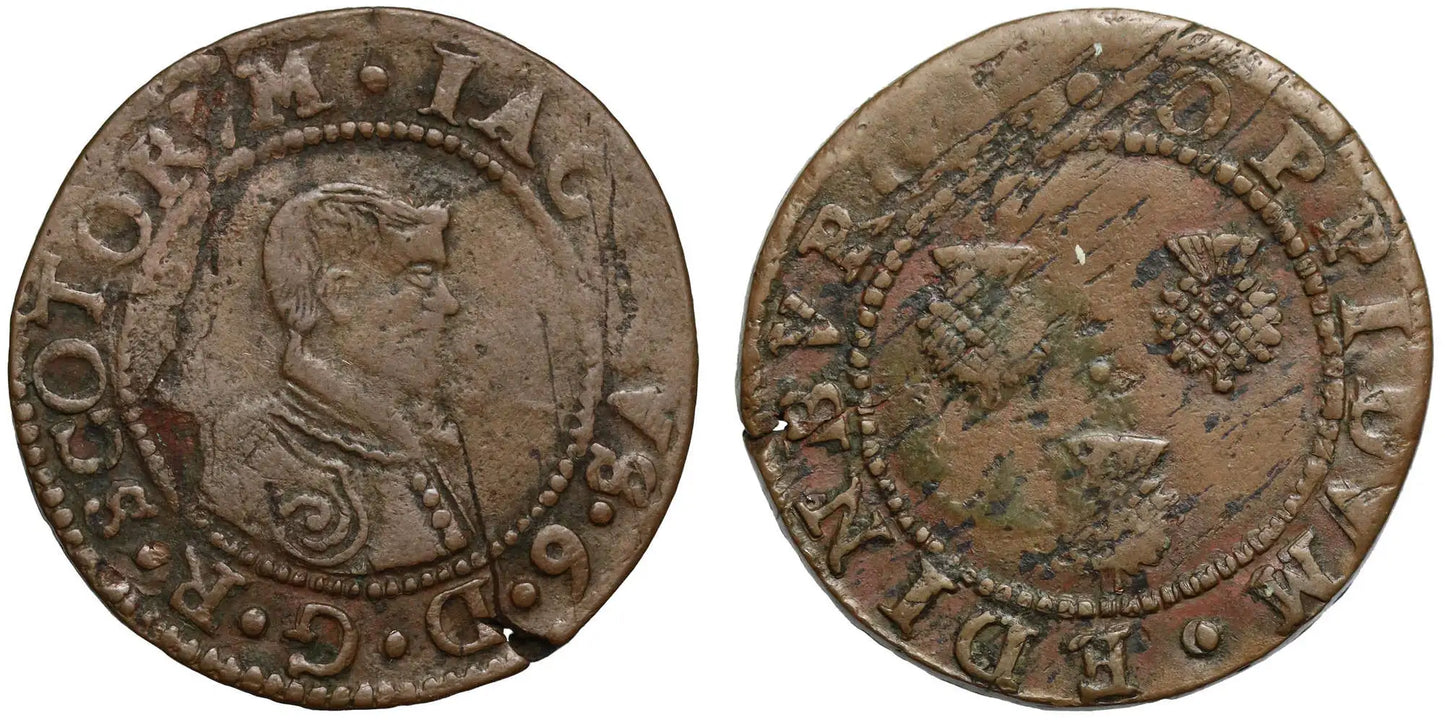
Scotland, James VI copper Turner of Twopence, undated issue of 1597
James VI of Scotland (1567-1625), copper Twopence or Turner, undated, issued 1597, bare head armoured bust of King right, beaded circles and legend surrounding, .IACOBVS. 6. D. G. R. SCOTORVM, rev. pellet at centre of three thistle heads, beaded circles and legend surrounding, .OPPIDVM . EDINBVRGI, weight 3.76g (S.C.B.I. 35:1340 Ashmoleon, 1341, 1342 Hunterian; S.C.B.I. 58:1754 - 1762 Edinburgh; S.C.B.I. 71:1358, 1359 Stewartby; Burns 1, fig.970 variety; S.5521). Small flan chip and hairline crack, streaky tone, a bold fine.
The abbreviated Latin legends translate as on the obverse "James the Sixth, by the Grace of God, King of Scotland" and on the reverse "Town of Edinburgh".
In April 1597 James Achesoun the Master wrote an "overture" recommending a purely copper coinage be struck to do away with the process of alloying any silver in small proportions and for the workers to use the time that was saved to more finely execute and engrave the coinages of silver and gold. As a result, on the 13th May 1597 the King's Majesty, with advice of council, called for a Scottish weight of 100 stone of copper to be made into Twopence and Penny coins.
To help regulate the weights better and process, Achesoun introduced a new invention of a coin flatting machine to roll out the metal used for coinage to any desired thickness and have the flans produced by means of a cutter which would result in much more uniform modules to then strike the coin designs upon. This order dictated Twopences to be produced at 58.89 grains and the Penny at 29.44 grains weight. Pennies were to have a single raised dot places behind the portrait on the coinage to denote their value. This was a significant order as it represents the first time a machine is to be used in the method of preparing the Scottish coinage.
Provenance:
Ex Mark Rasmussen Numismatist, Spring 2016, List 28, item 676.
FAQs
What makes a coin valuable?
I have coins to sell, what’s the next step?
How will my purchases be shipped?
What happens if I’m not entirely happy with my purchase?
Popular Coins
View all-
Elizabeth II 2022 silver proof 2oz City Views London
Regular price £220Regular priceUnit price per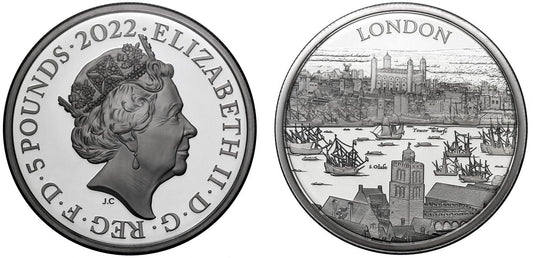
-
Charles III 2024 gold proof 1/4oz Britannia
Regular price £950Regular priceUnit price per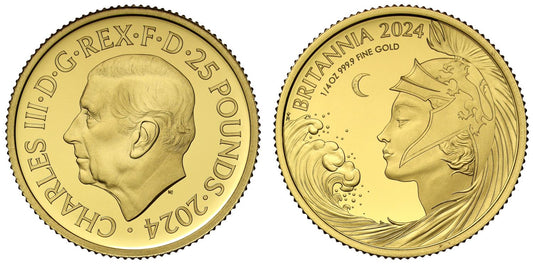
-
Charles III 2025 silver proof 2oz Waterloo Victory
Regular price £260Regular priceUnit price per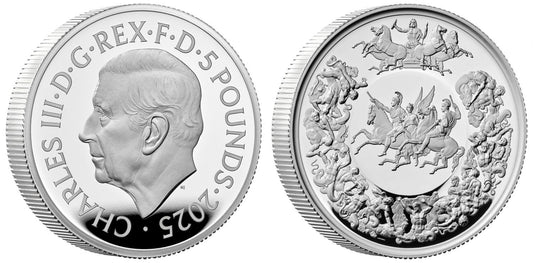
-
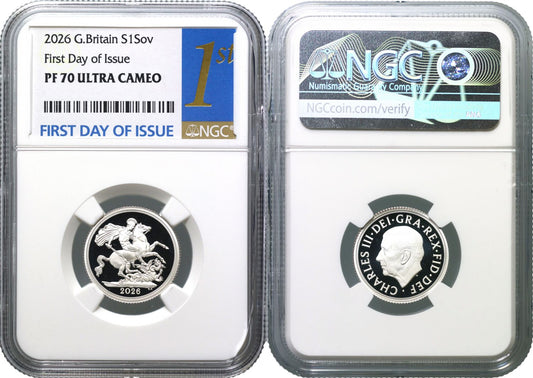
Charles III 2026 silver PF70 UCAM FDI Sovereign
Regular price £125Regular priceUnit price per