 Search


FAQs
What makes a coin valuable?


I have coins to sell, what’s the next step?
How will my purchases be shipped?
What happens if I’m not entirely happy with my purchase?
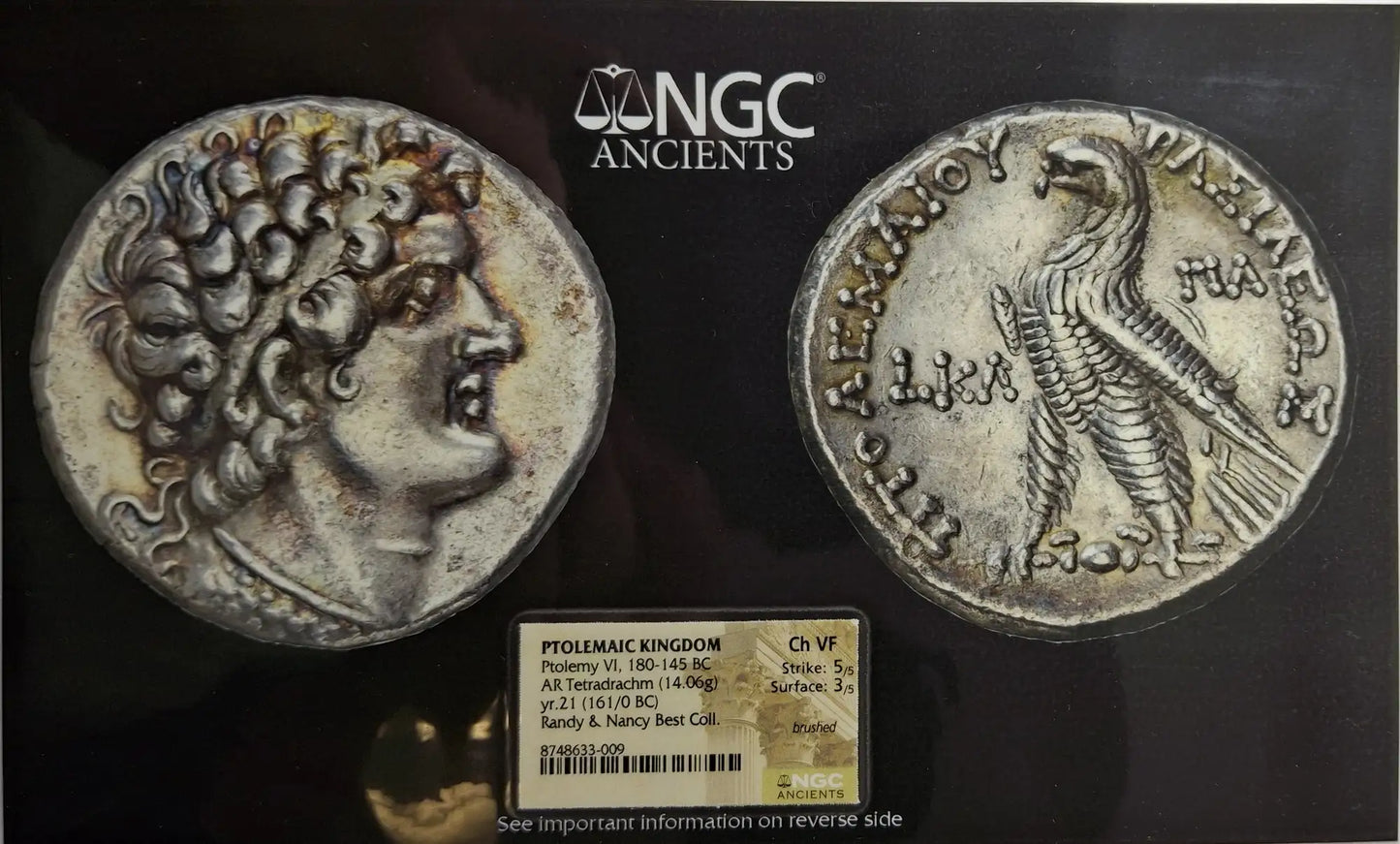
Ptolemy VI Philometer, Silver Tetradrachm Yr.21, Ch VF 5/5 3/5
Ptolemy VI Philometer (180-145 BC) silver tetradrachm, Paphos, Dated Regnal Year 21 (161/160 BC), diademed head of Ptolemy I right, aegis tied around neck, rev. ΠTOΛEMAIOY-BAΣIΛEΩΣ, eagle standing left on thunderbolt, with closed wings; L KΛ (date) in left field, ΠA in right field, 14.06g, 12h (CPE II 1269. Svoronos 1433). Comes with NGC (photo-certificate) Ch VF 5/5 - 3/5, brushed.
From the Randy & Nancy Best Collection.
NGC Certification 8748633-009
This silver tetradrachm was struck at Paphos on Cyprus during the reign of Ptolemy VI Philometor, in his 21st regnal year, 161/160 BC. It belongs to the long tradition of Ptolemaic coinage that combined Greek artistic conventions with imagery designed to proclaim the authority and legitimacy of the Egyptian royal dynasty. The British Museum Records Ptolemaic issues of Ptolemy VI from both Egypt and Cyprus, illustrating the wide monetary reach of his kingdom.
The obverse depicts the diademed head of Ptolemy I Soter, the founder of the Ptolemaic dynasty, facing right and wearing an aegis around his neck. Rather than showing the reigning Ptolemy VI himself, the coin deliberately invokes his famous ancestor. Ptolemy I had been one of the generals of Alexander the Great and established himself as ruler of Egypt after Alexander's death. His successors continued to use his portrait on their coinage, reinforcing dynastic continuity and the legitimacy of Ptolemaic rule. British Museum
The reverse carries the royal inscription ΠΤΟΛΕΜΑΙΟΥ ΒΑΣΙΛΕΩΣ, meaning "of King Ptolemy," surrounding an eagle standing left upon a thunderbolt with closed wings. The eagle and thunderbolt were among the most characteristic symbols of Ptolemaic royal coinage. The date L KΛ identifies the issue as regnal year 21, while ΠA identifies the mint of Paphos. The use of a precise regnal date makes the coin particularly valuable for understanding the chronology of Ptolemaic monetary production.
Ptolemy VI inherited the Egyptian throne as a child in 180 BC, with his mother Cleopatra I initially acting as regent. His reign was marked by political struggles within the royal family and repeated conflict with the Seleucid kingdom. He was also closely associated with his sister and wife, Cleopatra II, and later became involved in a prolonged power struggle with his younger brother, the future Ptolemy VIII.
FAQs
What makes a coin valuable?
I have coins to sell, what’s the next step?
How will my purchases be shipped?
What happens if I’m not entirely happy with my purchase?

Popular Coins
View all-
Elizabeth II 2022 silver proof 2oz City Views London
Regular price £220Regular priceUnit price per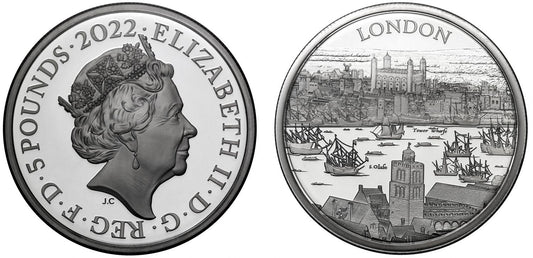
-
Charles III 2024 gold PF70 UC 1/4oz Britannia
Regular price £1,020Regular priceUnit price per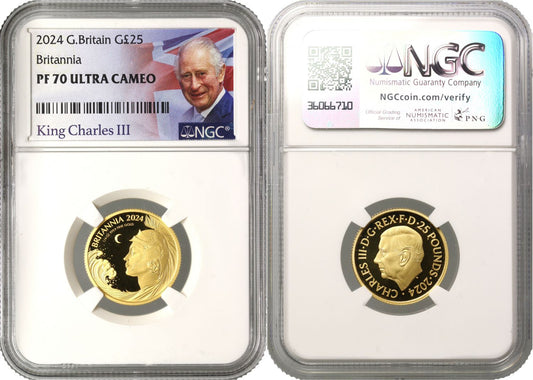
-
Charles III 2024 gold proof 1/4oz Britannia
Regular price £950Regular priceUnit price per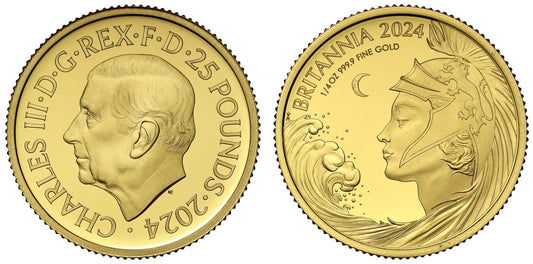
-
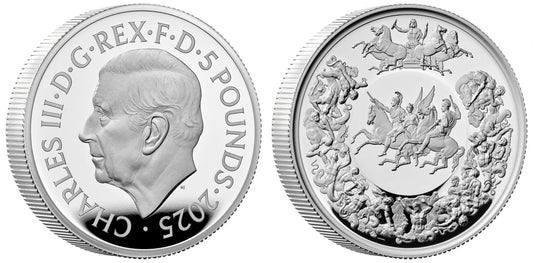
Charles III 2025 silver proof 2oz Waterloo Victory
Regular price £260Regular priceUnit price per