 Search


FAQs
What makes a coin valuable?


I have coins to sell, what’s the next step?
How will my purchases be shipped?
What happens if I’m not entirely happy with my purchase?
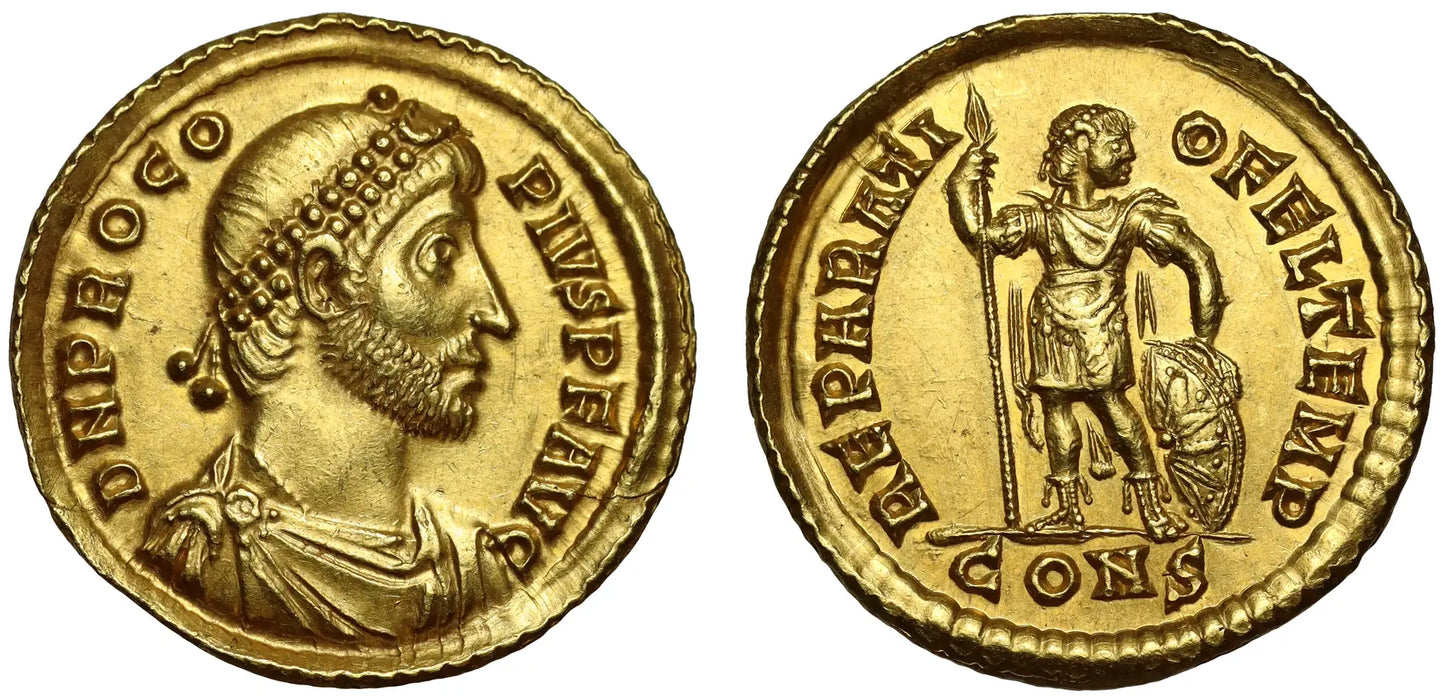
Procopius Usurper, Gold Solidus, Extremely Rare
Procopius Usurper (365-366 AD), gold solidus, Constantinople, late 365 AD, D N PROCO-PIVS P F AVG, pearl-diademed, draped and cuirassed bust right, rev. REPARATI-O FEL TEMP, Procopius standing facing, head to right, holding spear and shield; in exergue, CONS, 4.51g, 11h (RIC IX 2a; Depeyrot 14/4). Slight flan lamination at 4 o'clock on obverse, full flan and more, has beautiful lustre, slight wear on the highpoints thus almost extremely fine and extremely rare.
Provenance:
CNG Triton XXV (2022), 1016; Roma XVIII (2019), 1249.
Procopius was the last member of the house of Constantine to don the diadem. A maternal cousin of Julian II, Procopius had a successful career as a civil servant and was made a comes, or count, after Julian won the throne in 361 AD. When Julian prepared his invasion of Persia a year later, he placed Procopius in command of a 30,000-man force intended to hook up with the allied Armenian army and join Julian's legions in Mesopotamia. Procopius later claimed that his cousin also gave him a purple cloak, along with instructions to take over as emperor should Julian be killed in battle. At any event, Procopius failed miserably in his role, contributing to the defeat of Julian's main force and his death in battle on June 27, 363 AD. When the army chose Jovian as emperor, Procopius made no protest and took Julian's body back to Tarsus for burial. But when Jovian abruptly died a few months later and the brothers Valentinian I and Valens took over, Procopius decided to make a try for the throne. While Valens was away from the capital, Procopius re-emerged at Constantinople on September 28, 365 AD, wrapped in Julian's purple cloak. The garrison proclaimed him emperor, and Procopius quickly established control of western Asia Minor. But he showed little strategic sense and soon some of his best officers and soldiers began defecting back to Valens. Meanwhile, Valens built his own forces and maneuvered Procopius into a decisive battle at Nicolea, Phrygia in May of 366 AD. Procopius suffered a crushing defeat and was summarily executed in the aftermath, ending his eight-month usurpation. The gold coinage of Procopius carries on the Constantinian tradition of fine portraiture and crisp execution. The exceptional portrait on this issue shows him wearing a close beard, probably a symbol of sympathy and mourning for his kinsman Julian II. His beard and the lack of any Christian symbolism on the reverse also hint at possible Pagan sympathies. The solidi of Procopius are particularly rare, with only 14 examples sold at auction since 1996. This is undoubtably one of the rarest Solidi from the ancient world!
The obverse inscription D N PROCO-PIVS P F AVG translates to "Our Lord Procopius, Pious and Blessed Emperor."
The reverse inscription translates to "REPARATI-O FEL TEMP/ CONS translates to "The restoration of happy times / Constantinople."
FAQs
What makes a coin valuable?
I have coins to sell, what’s the next step?
How will my purchases be shipped?
What happens if I’m not entirely happy with my purchase?
Popular Coins
View all-
Elizabeth II 2022 silver proof 2oz City Views London
Regular price £220Regular priceUnit price per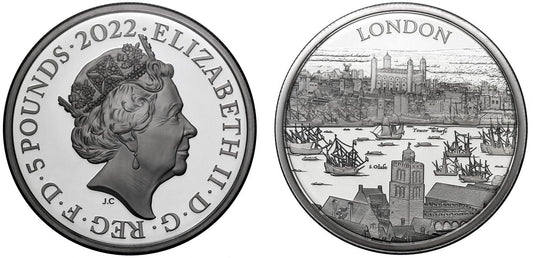
-
Charles III 2024 gold proof 1/4oz Britannia
Regular price £950Regular priceUnit price per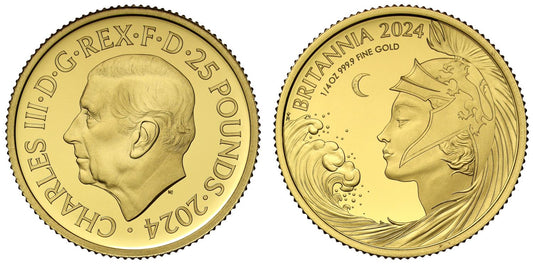
-
Charles III 2025 silver proof 2oz Waterloo Victory
Regular price £260Regular priceUnit price per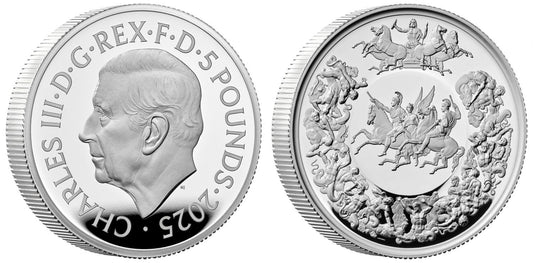
-
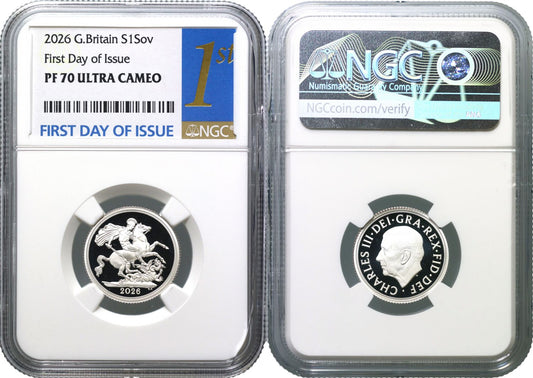
Charles III 2026 silver PF70 UCAM FDI Sovereign
Regular price £125Regular priceUnit price per