 Search


FAQs
What makes a coin valuable?


I have coins to sell, what’s the next step?
How will my purchases be shipped?
What happens if I’m not entirely happy with my purchase?
Nerva, Silver Denarius
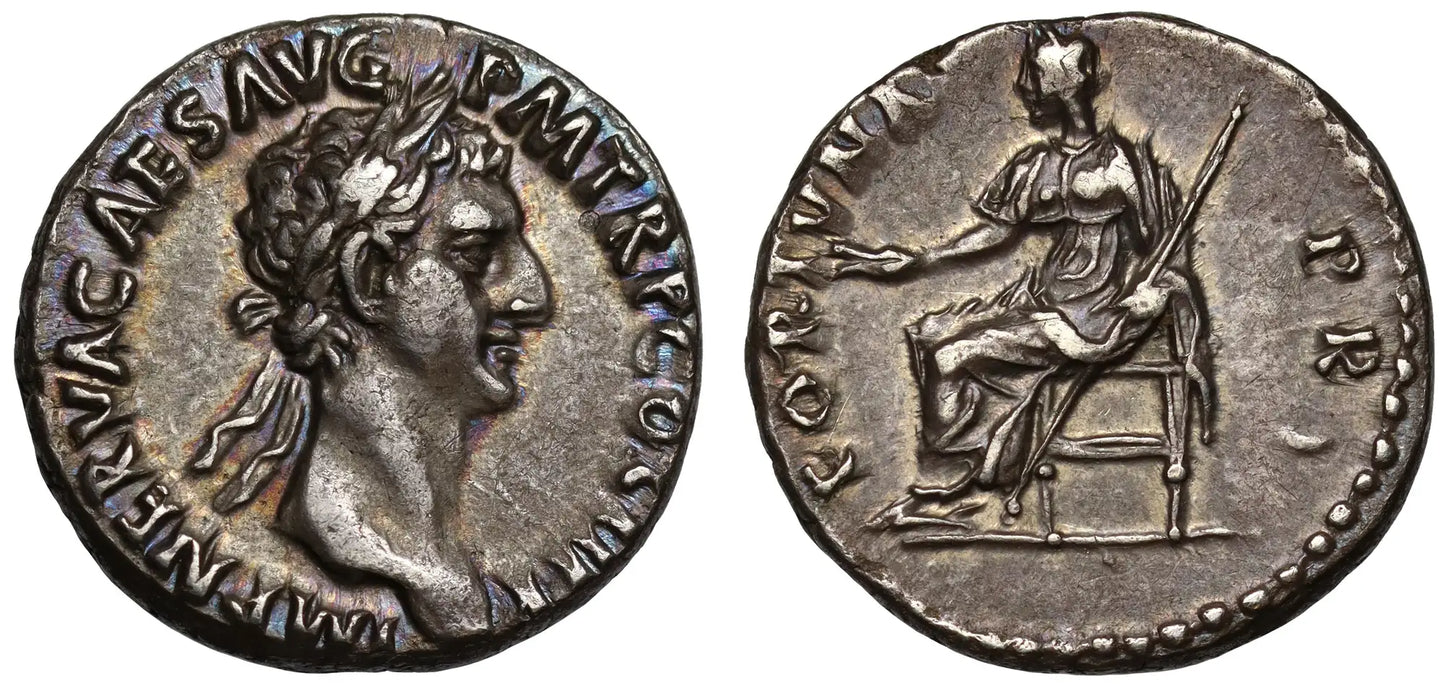
Nerva (96-98 AD), silver Denarius, Rome 96 AD, IMP NERVA CAES AVG P M TR P COS II P P, laureate head right, rev. FORTVNA - P R, Fortuna seated left, holding corn-ears and sceptre, 3.26g, 6h (RIC 5; RSC 76). About extremely fine and attractively toned.
The silver denarius of Emperor Nerva, struck at Rome in 96 AD, represents the brief and somewhat unremarkable reign of a man who came to power during a period of political instability. Following the assassination of Domitian in September 96 AD, Nerva was proclaimed emperor by the Senate. An elderly senator with little military experience, he was an unexpected choice to lead the Roman Empire, and his reign was largely defined by his attempts to restore stability and repair relations between the emperor and the Senate.
The obverse of this coin features a laureate bust of Nerva facing right, surrounded by the inscription IMP NERVA CAES AVG P M TR P COS II P P. The reverse depicts Fortuna seated left, holding ears of corn and a sceptre, accompanied by the inscription FORTVNA P R. Fortuna was a popular Roman deity associated with luck, prosperity, and the unpredictable nature of fate. Her appearance on this denarius may be interpreted as an expression of hope for the continued wellbeing and good fortune of Rome under its new ruler.
Despite his efforts to govern fairly, Nerva struggled to command the loyalty of the army, particularly following the execution of Domitian's assassins and the continuing influence of the Praetorian Guard. Ultimately, his most significant achievement was adopting Trajan as his successor in 97 AD. This decision secured military support and established the beginning of an exceptionally successful period of Roman rule. In hindsight, Nerva's greatest contribution to the empire was arguably not his own reign, but his choice of Trajan, whose leadership would bring Rome to the height of its territorial expansion.
The obverse inscription IMP NERVA CAES AVG P M TR P COS II P P translates to "Supreme Commander Nerva, Caesar, Emperor, High Priest, Holder of Tribunician Power, Consul for the second time, Father of the Nation."
The reverse inscription FORTVNA - P R translates to "The Fortune of the Roman People."
FAQs
What makes a coin valuable?
I have coins to sell, what’s the next step?
How will my purchases be shipped?
What happens if I’m not entirely happy with my purchase?
Popular Coins
View all-
Elizabeth II 2022 silver proof 2oz City Views London
Regular price £220Regular priceUnit price per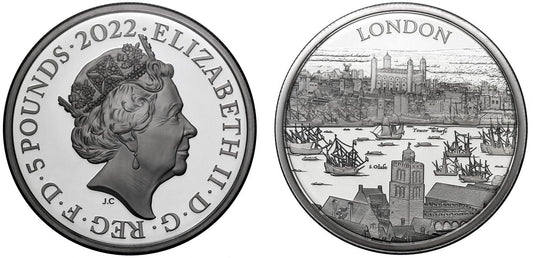
-
Charles III 2024 gold proof 1/4oz Britannia
Regular price £950Regular priceUnit price per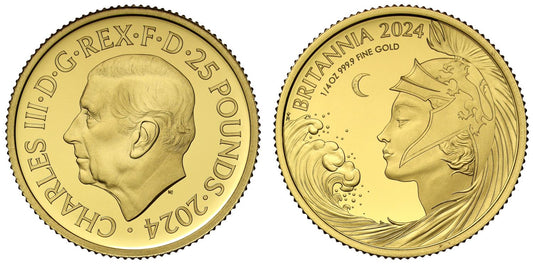
-
Charles III 2025 silver proof 2oz Waterloo Victory
Regular price £260Regular priceUnit price per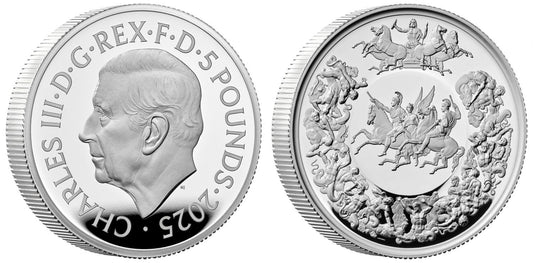
-
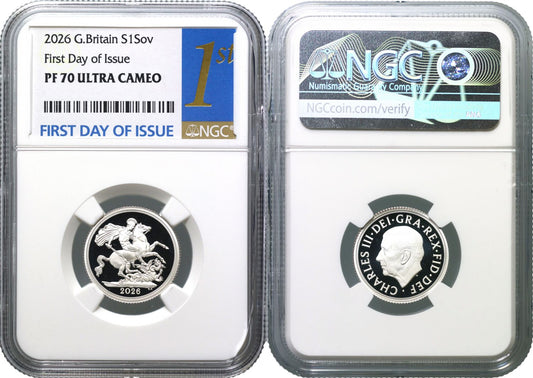
Charles III 2026 silver PF70 UCAM FDI Sovereign
Regular price £125Regular priceUnit price per