 Search


FAQs
What makes a coin valuable?


I have coins to sell, what’s the next step?
How will my purchases be shipped?
What happens if I’m not entirely happy with my purchase?
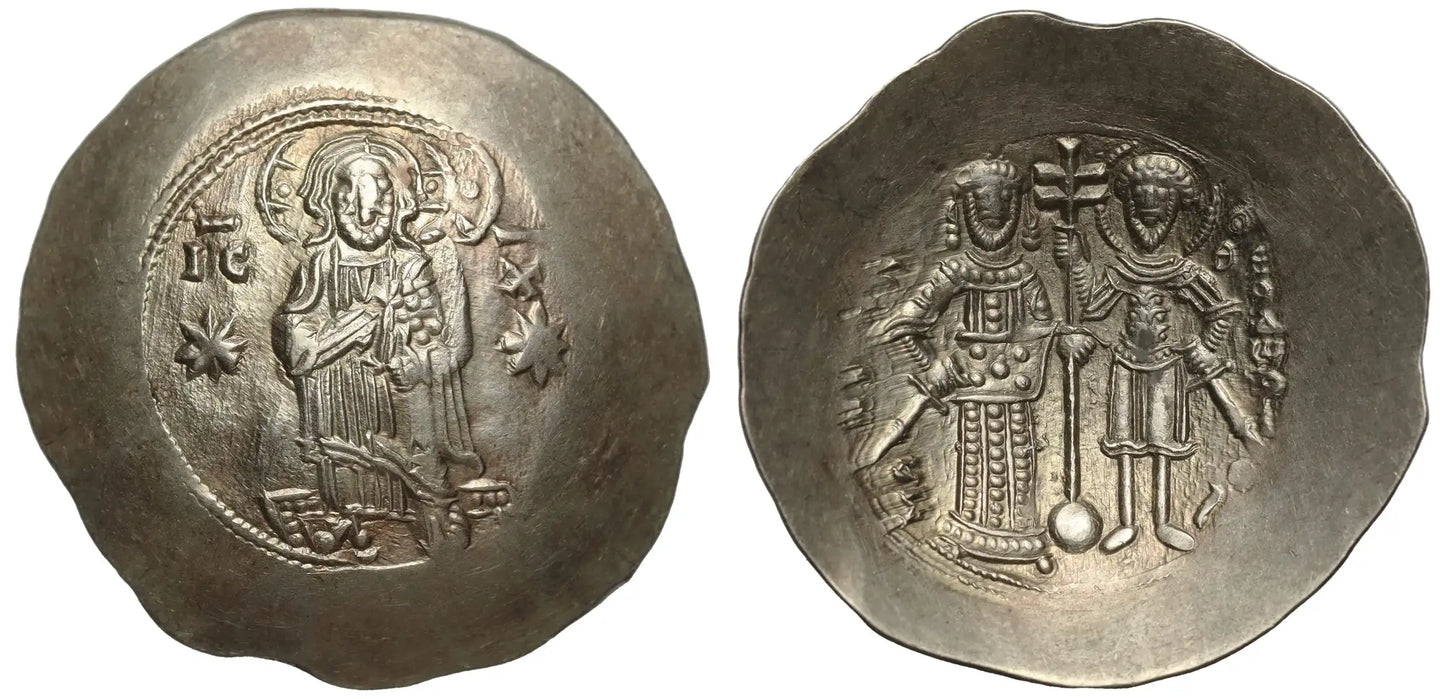
Manuel I, Comnenus (1143-1180), Electrum Aspron Trachy, with St Theodore.
Manuel I, Comnenus (1143-1180), electrum Aspron Trachy, Constantinople, 1160-1164, Christ standing facing, with star on either side, rev., MANȣHΛ - ʘ / ΘE / O / Δ / Ⲱ / P / OS, Manuel I and Saint Theodore standing facing, both holding sword and patriarchal cross on globus base between them, 4.63g, 6h, approx. 31mm (Sear 1959; DO 4b; BCCD 83b). Extremely fine.
Provenance:
Ex Nomos Obolos 16 (2020), 1264
There are two widely venerated yet enigmatic St Theodores, or at least there is St Theodore the Recruit and St Theodore the General. It is possible that they were the same person at different stages in their life. Both are known as St Theodore the Martyr and both were martyred while serving in the Roman military. Manuel's combined ambitions of restoring glory to the Byzantine Empire through expansion, uniting the church and securing the Holy Land for Christianity makes Theodore a very suitable saint to associate himself with - a devout, Christian, holy warrior defeating the spiritual enemies of Byzantium. In iconography, St Theodore is sometimes depicted with St George, and both are shown as mounted dragon-slayers, as well as protector saints. Even beyond the Byzantine Empire, Manuel himself was extremely influential, in part perhaps because of his tendency to embrace European customs. He was arguably the overlord of the Crusader States and is even named within the Church of the Holy Nativity in Bethlehem as the benefactor of restorations carried out there during his reign. He is also considered the last Byzantine emperor who could claim true authority over the Balkans.
FAQs
What makes a coin valuable?
I have coins to sell, what’s the next step?
How will my purchases be shipped?
What happens if I’m not entirely happy with my purchase?
Popular Coins
View all-
Elizabeth II 2022 silver proof 2oz City Views London
Regular price £220Regular priceUnit price per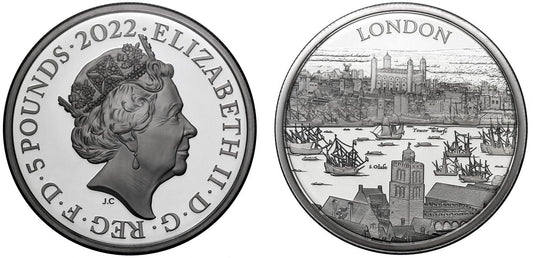
-
Charles III 2024 gold proof 1/4oz Britannia
Regular price £950Regular priceUnit price per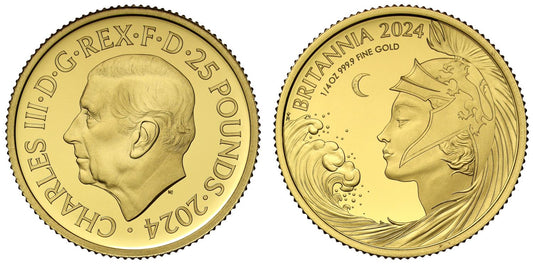
-
Charles III 2025 silver proof 2oz Waterloo Victory
Regular price £260Regular priceUnit price per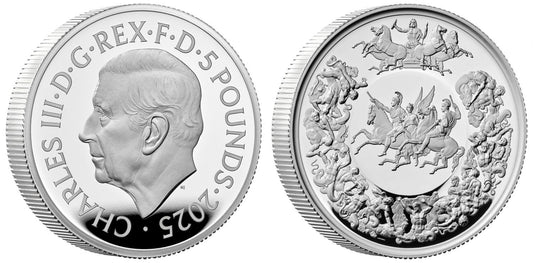
-
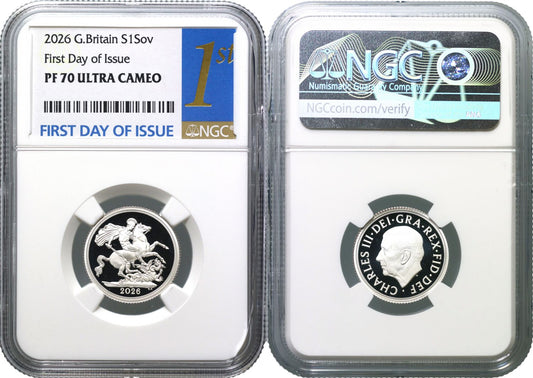
Charles III 2026 silver PF70 UCAM FDI Sovereign
Regular price £125Regular priceUnit price per