 Search


FAQs
What makes a coin valuable?


I have coins to sell, what’s the next step?
How will my purchases be shipped?
What happens if I’m not entirely happy with my purchase?
Macedon, Philip II, Gold Stater, Ch VF 5/5 4/5.
Kings of Macedon, Philip II (359-336 BC), lifetime or early posthumous gold Stater, Amphipolis, c. 340-328 BC, laureate head of Apollo right, rev. ΦΙΛΙΠΠΟΥ, charioteer driving biga right, ear of wheat below, 8.58g, 3h (Le Rider, Amphipolis II, 107, these dies). NGC Ch VF 5/5, 4/5 - label dated 359-336 BC.
NGC Certification 8731320-009
This gold stater of Philip II was struck at Amphipolis around 340-328 BC, during the final years of Philip's reign or shortly after his death. Philip II ruled Macedonia from 359 to 336 BC and transformed the kingdom into one of the most powerful states in the Greek world. His military reforms, political alliances and expansion of Macedonian territory laid the foundations for the later conquests of his son, Alexander the Great.
The obverse depicts the laureate head of Apollo facing right. Apollo was one of the most important gods of the Greek world, and his idealised portrait gives the coin a distinctly classical character. The carefully rendered features and laurel wreath demonstrate the skill of the Macedonian engravers and the importance placed upon the appearance of royal coinage.
On the reverse is the inscription ΦΙΛΙΠΠΟΥ, meaning "of Philip," accompanied by the image of a charioteer driving a two-horse chariot, or biga, towards the right. Beneath the horses is an ear of wheat, which serves as the distinctive symbol of the Amphipolis mint. The chariot scene is traditionally associated with Philip's success at the Olympic Games and his participation in the prestigious equestrian competitions of the Greek world. Victory imagery such as this presented an association with wealth, prestige and divine favour.
The use of Philip's name and imagery continued even after his assassination in 336 BC. His gold staters were highly successful and remained in circulation and production during the early Hellenistic period. This particular example dated around 340-328 BC, therefore belongs to an important transitional period, when Philip's reign was coming to an end and Alexander was beginning his remarkable career.
FAQs
What makes a coin valuable?
I have coins to sell, what’s the next step?
How will my purchases be shipped?
What happens if I’m not entirely happy with my purchase?

Popular Coins
View all-
Elizabeth II 2022 silver proof 2oz City Views London
Regular price £220Regular priceUnit price per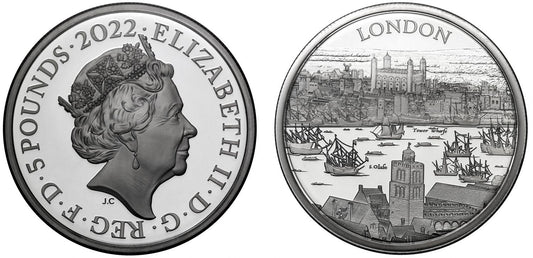
-
Charles III 2024 gold PF70 UC 1/4oz Britannia
Regular price £1,020Regular priceUnit price per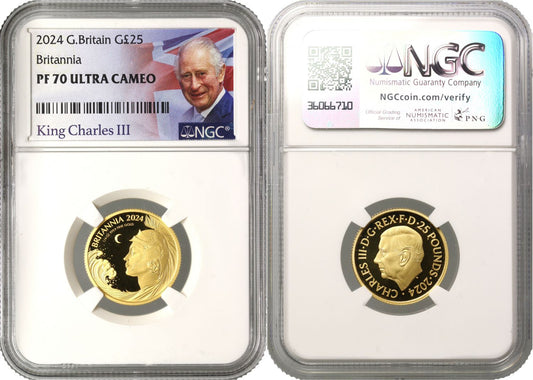
-
Charles III 2024 gold proof 1/4oz Britannia
Regular price £950Regular priceUnit price per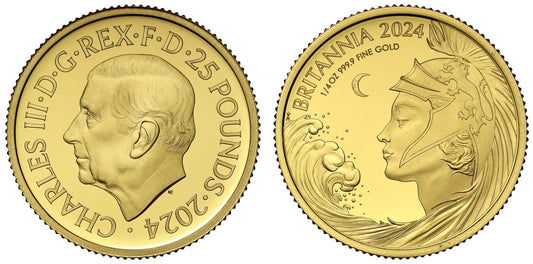
-
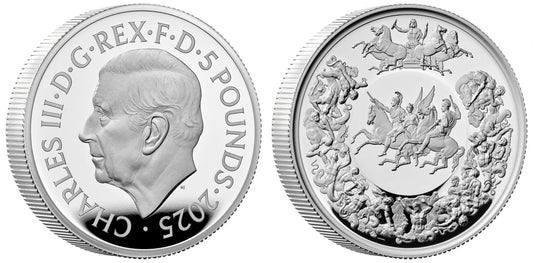
Charles III 2025 silver proof 2oz Waterloo Victory
Regular price £260Regular priceUnit price per