 Search


FAQs
What makes a coin valuable?


I have coins to sell, what’s the next step?
How will my purchases be shipped?
What happens if I’m not entirely happy with my purchase?
Macedon, Alexander the Great, Tetradrachm, Babylon.
Kings of Macedon, Alexander the Great (336-323 BC), silver Tetradrachm, lifetime or early posthumous issue, Babylon, 323-317 BC, head of Herakles wearing lion skin headdress right, rev. [ΒΑΣΙΛΕΩΣ] ΑΛΕΞΑΝΔΡΟΥ, Zeus on ornamented throne to left, holding eagle and sceptre, M in left field, ΛY below throne, 16.38g, 9h (Price 3692). Slightly rough surfaces, ornate style, good very fine.
This silver tetradrachm belongs to the famous coinage of Alexander the Great and was struck at Babylon during the period immediately following his death in 323 BC. Dated approximately 323-317 BC, it is considered a lifetime or early posthumous issue, reflecting the enormous demand for Alexander's coinage as his newly created empire passed into the hands of his successors. The obverse depicts the youthful head of Herakles facing right, wearing the skin of the Nemean lion over his head. Herakles was one of the most celebrated heroes of the Greek world, renowned for his extraordinary strength and legendary labours. The image is not a portrait of Alexander himself, but its powerful and idealised character suited the image of a conquering king. Herakles was also associated with divine ancestry and heroic achievement, themes that resonated strongly with Alexander's own presentation of his rule.
The reverse carries the inscription ΒΑΣΙΛΕΩΣ ΑΛΕΞΑΝΔΡΟΥ, meaning "of King Alexander." Zeus is shown seated on an elaborately ornamented throne, facing left. He holds an eagle in his outstretched hand and a sceptre in the other, presenting a commanding image of divine authority. The composition became one of the most recognisable designs of Alexander's coinage and continued to be produced for generations after his death. The letter M in the left field and the symbol ΛY beneath the throne are mint and control marks associated with this particular issue. Such marks were used to identify individual officials, workshops or emissions and are important to specialists studying the chronology and organisation of Alexander's coinage.
Babylon was one of the most important cities of the ancient Near East and became a major centre within Alexander's empire. Its mint produced substantial quantities of silver coinage, making Babylonian issues an important part of the monetary system that supported Alexander's armies and administration.
The significance of this tetradrachm extends beyond its attractive imagery. Alexander died unexpectedly at Babylon in 323 BC, leaving behind an empire that stretched from Greece to Egypt and deep into Asia. Although his empire soon became divided among his generals, his name and coin types remained in use for many years. This tetradrachm therefore represents both the achievements of Alexander's reign and the beginning of the Hellenistic world that emerged after his death. Its combination of Herakles, Zeus and Alexander's royal name became one of the defining visual statements of ancient Greek and Hellenistic coinage.
FAQs
What makes a coin valuable?
I have coins to sell, what’s the next step?
How will my purchases be shipped?
What happens if I’m not entirely happy with my purchase?


Popular Coins
View all-
Elizabeth II 2022 silver proof 2oz City Views London
Regular price £220Regular priceUnit price per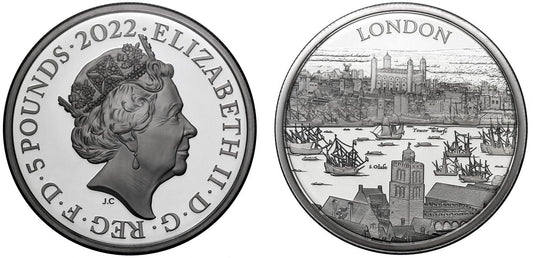
-
Charles III 2024 gold proof 1/4oz Britannia
Regular price £950Regular priceUnit price per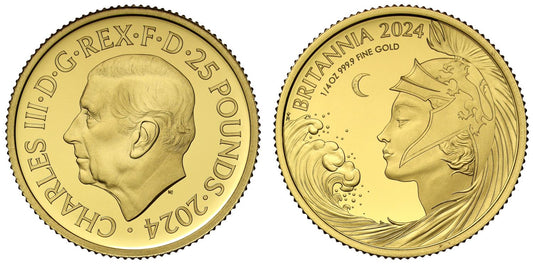
-
Charles III 2025 silver proof 2oz Waterloo Victory
Regular price £260Regular priceUnit price per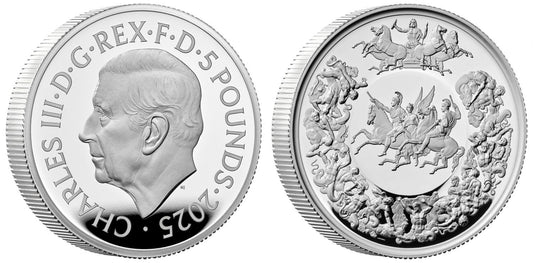
-
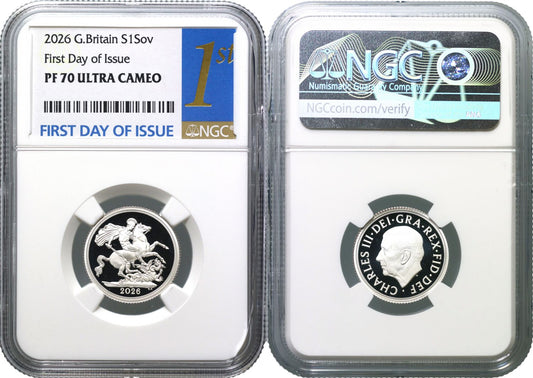
Charles III 2026 silver PF70 UCAM FDI Sovereign
Regular price £125Regular priceUnit price per