 Search


FAQs
What makes a coin valuable?


I have coins to sell, what’s the next step?
How will my purchases be shipped?
What happens if I’m not entirely happy with my purchase?
Lysimachos, Gold Stater, with USA provenance to 1978.
Lysimachos (323-281 BC), gold Stater, Pella, after 286 BC, diademed head of Alexander right, with the horn of Ammon, rev. ΒΑΣΙΛΕΩΣ ΛΥΣΙΜΑΧΟΥ, Athena enthroned left, holding Nike who crowns the name of Lysimachus with a laurel wreath, monogram under arm, K beneath throne, 8.51g, 11h (Thompson 241). Extremely fine.
Provenance:
Ex Numismatic Fine Arts Auction 5, February 1978, Beverly Hills (USA), lot 66
This gold stater of Lysimachos is a remarkable example of early Hellenistic royal coinage, struck at Pella after 286 BC. Lysimachos was one of the leading successors of Alexander the Great and ruled large territories in Thrace and Asia Minor. His coinage deliberately celebrated the memory and divine status of Alexander, whose image remained an extraordinarily powerful symbol of legitimacy long after his death.
The obverse presents the idealised head of Alexander the Great facing right, wearing a royal diadem and the distinctive horn of Ammon behind his ear. The horn identifies Alexander with the Egyptian god Ammon, with whom Alexander was famously associated following his visit to the oracle at Siwa. Rather than being a realistic portrait, the image represents Alexander as a heroic and semi-divine figure. The finely modelled features and carefully arranged hair create one of the most celebrated portrait types of the Hellenistic period.
The reverse bears the inscription ΒΑΣΙΛΕΩΣ ΛΥΣΙΜΑΧΟΥ, meaning "of King Lysimachos." Athena is shown seated to the left on an elaborately decorated throne, holding Nike in her outstretched hand. Nike, the goddess of victory, crowns the name of Lysimachos with a laurel wreath, creating a direct visual association between the king and military success. A monogram appears beneath Athena's arm, while the letter K beneath the throne provides an additional control mark connected with the production of the coin.
Gold coinage of this quality was particularly suited to royal payments, military expenditure and high-value transactions. The extremely fine preservation of this example allows the sophisticated engraving and details of the design to be appreciated clearly.
The coin also has an interesting modern history. It appeared as lot 66 in Numismatic Fine Arts Auction 5, held in Beverly Hills in February 1978. Its survival through the centuries, followed by its appearance in a major specialist auction, adds an additional layer to its provenance.
FAQs
What makes a coin valuable?
I have coins to sell, what’s the next step?
How will my purchases be shipped?
What happens if I’m not entirely happy with my purchase?

Popular Coins
View all-
Elizabeth II 2022 silver proof 2oz City Views London
Regular price £220Regular priceUnit price per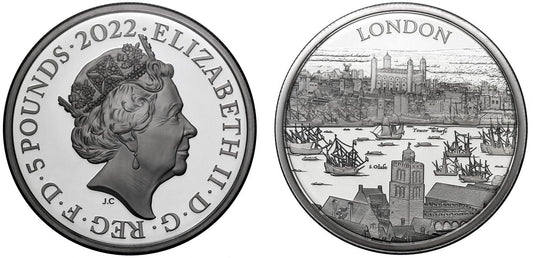
-
Charles III 2024 gold proof 1/4oz Britannia
Regular price £950Regular priceUnit price per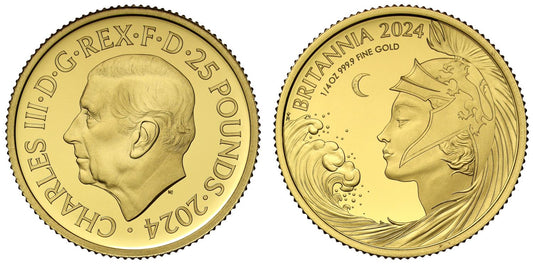
-
Charles III 2025 silver proof 2oz Waterloo Victory
Regular price £260Regular priceUnit price per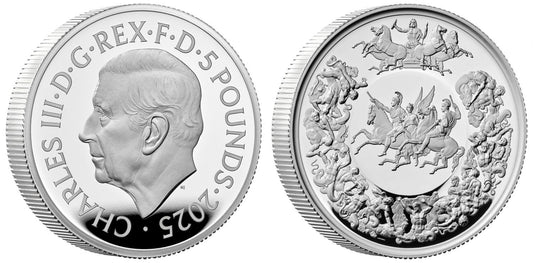
-
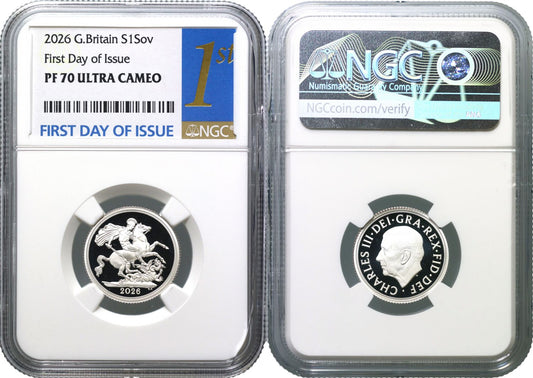
Charles III 2026 silver PF70 UCAM FDI Sovereign
Regular price £125Regular priceUnit price per