 Search


FAQs
What makes a coin valuable?


I have coins to sell, what’s the next step?
How will my purchases be shipped?
What happens if I’m not entirely happy with my purchase?
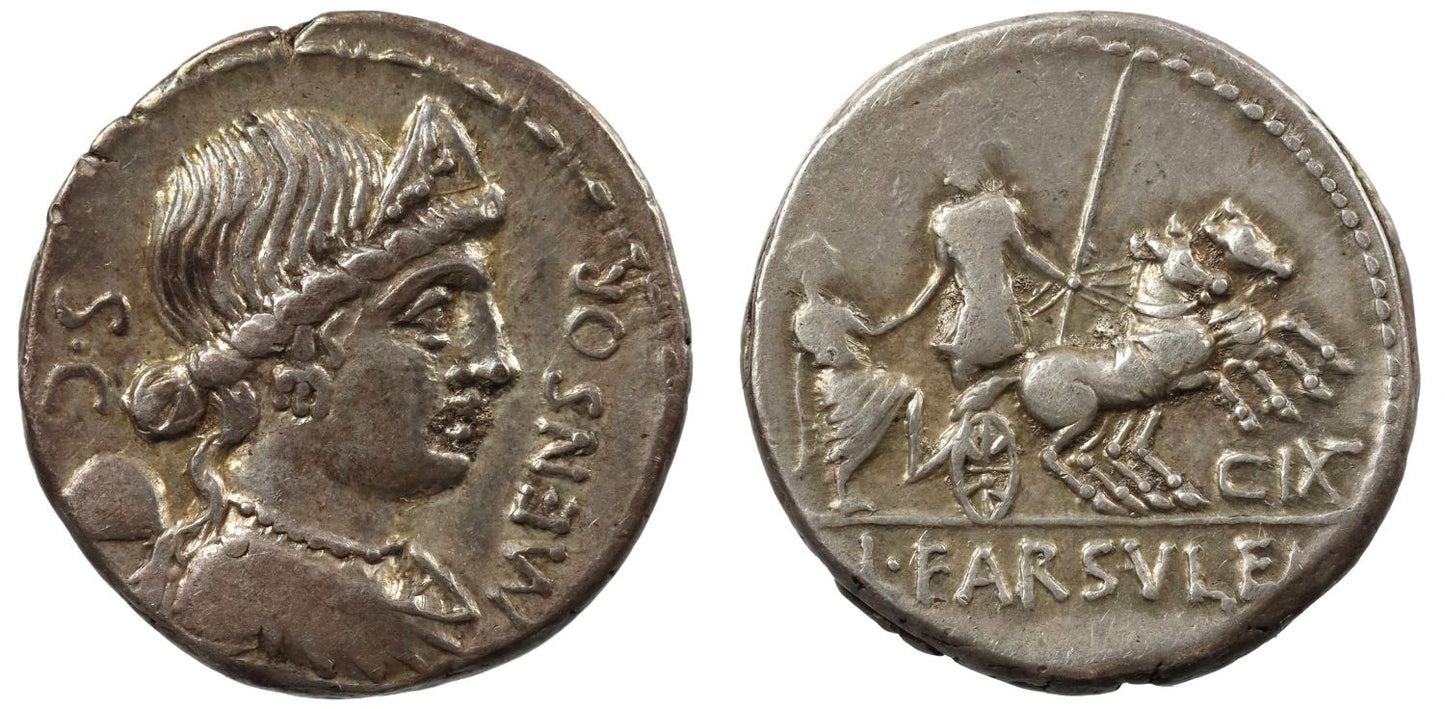
L Farsuleius Mensor, Silver Denarius, 75 BC, Rome
Roman Republic, L. Farsuleius Mensor, silver Denarius, Rome, 75 BC, MENSOR, bust of Libertas right, pileus and SC behind head, rev. warrior welcomes togate figure into biga, control mark CIX below forelegs of horses, 3.98g, 6h (Cr 392/1b; Sydenham 789; RBW 1431 var [control mark]). Old cabinet tone, good very fine.
As an individual in the historical record, Lucius Farsuleius Mensor remains entirely a ghost, known to history almost exclusively through this single issue of silver denarii minted in 75 BC. He belonged to the gens Farsuleia, an obscure plebeian family that left behind no literary works, political chronicles, or mentions in the surviving texts of Roman historians like Livy or Cicero. Serving as a moneyer the official responsible for supervising the minting of state coinage was typically a stepping stone for ambitious young aristocrats entering the cursus honorum, yet Mensor seems to have issued his coins and then vanished from public life entirely. His family cognomen, Mensor, translates to "measurer" or "surveyor," which some modern numismatists connect to potential family ties with land distribution or popularis political leanings. This subtle hint aligns with the prominent display of Libertas (the goddess of liberty) and the freedom cap (pileus) on his coin's obverse. Furthermore, the intricate and somewhat mysterious imagery on the reverse featuring a warrior helping a citizen into a chariot has sparked endless scholarly debate regarding whether it alludes to civil reconciliation, new civic rights, or contemporary military campaigns. Ultimately, while his personal ambitions and career trajectory are lost to time, Mensor's brief tenure as a moneyer ensured that his name was permanently etched into the monetary history of the Roman Republic.
The Obverse legend MENSOR translates to ""measurer," "surveyor," or "architect."
The reverse legend L FARSVLEI translates to "of Lucius Farsuleius."
FAQs
What makes a coin valuable?
I have coins to sell, what’s the next step?
How will my purchases be shipped?
What happens if I’m not entirely happy with my purchase?
Popular Coins
View all-
Elizabeth II 2022 silver proof 2oz City Views London
Regular price £220Regular priceUnit price per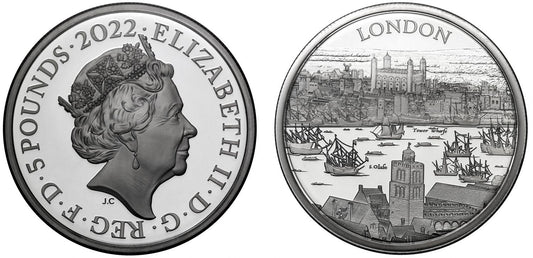
-
Charles III 2024 gold proof 1/4oz Britannia
Regular price £950Regular priceUnit price per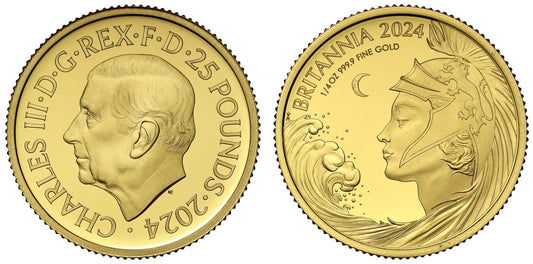
-
Charles III 2025 silver proof 2oz Waterloo Victory
Regular price £260Regular priceUnit price per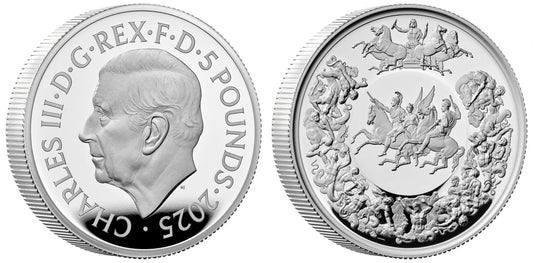
-
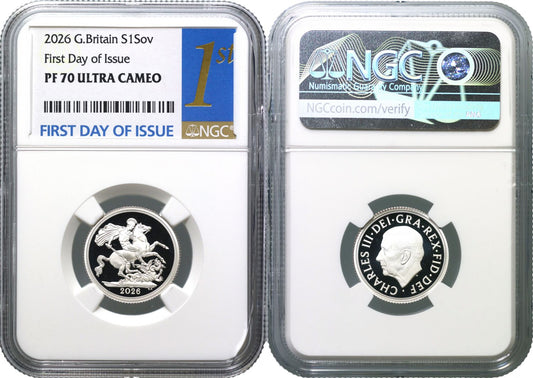
Charles III 2026 silver PF70 UCAM FDI Sovereign
Regular price £125Regular priceUnit price per