 Search


FAQs
What makes a coin valuable?


I have coins to sell, what’s the next step?
How will my purchases be shipped?
What happens if I’m not entirely happy with my purchase?
Kings of Paeonia, Patraos, silver Tetradrachm
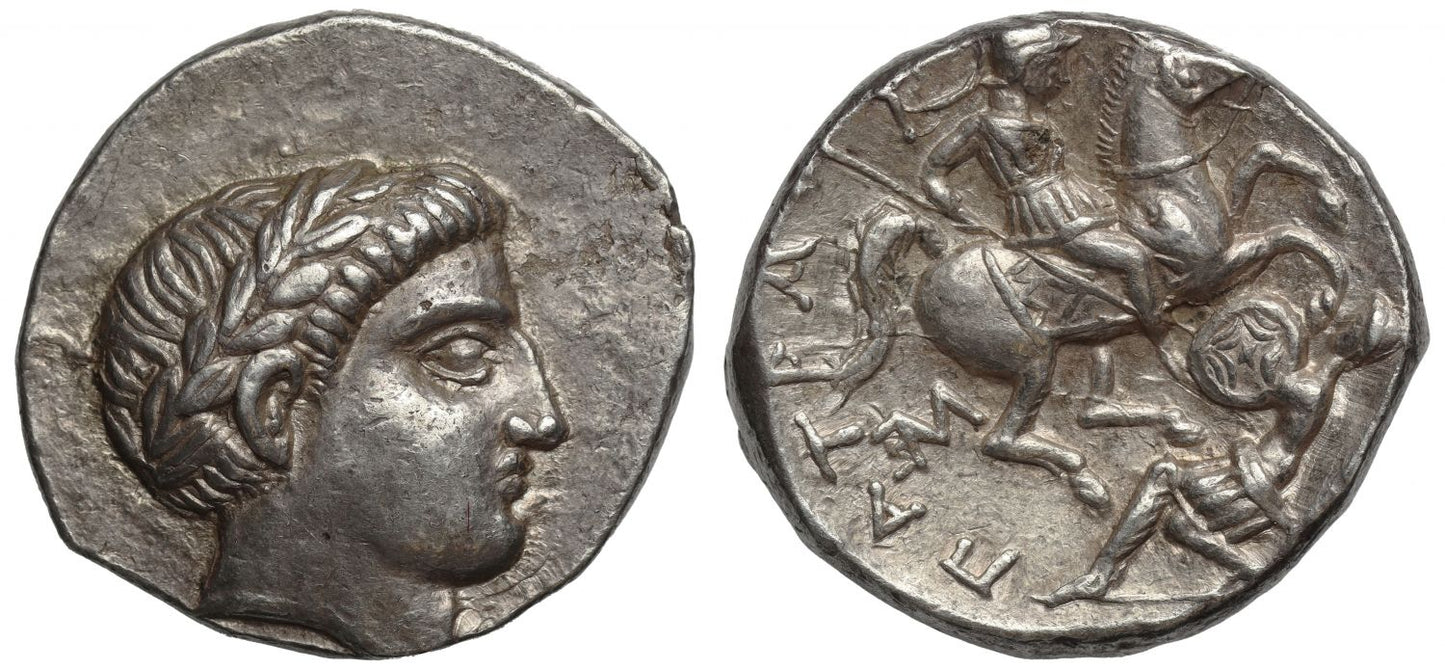
Kings of Paeonia, Patraos (340-315), silver Tetradrachm, head of Apollo right, rev. ΠΑΤΡΑΟΥ, horseman running down foe, 12.12g, 12h (Paeonian Hoard 416). Extremely fine.
This silver tetradrachm was issued by Patraos, king of Paeonia, who ruled approximately from 340 to 315 BC. Paeonia was an ancient kingdom situated north of Macedonia, occupying parts of what is now North Macedonia and surrounding regions. During the 4th century BC, the kingdom stood at an important crossroads between the Greek world, Thrace and Macedonia, and its rulers were increasingly drawn into the political and military struggles of the period.
The obverse of the tetradrachm depicts the head of Apollo facing right. Apollo was one of the most important deities of the ancient Greek world, associated with prophecy, music, healing and divine protection. His idealised portrait reflects the strong influence of Greek artistic and religious traditions on Paeonian coinage. The use of Apollo also helped give the coinage a distinctly Hellenic character despite Paeonia's position on the northern fringes of the Greek world.
The reverse carries the inscription ΠΑΤΡΑΟΥ, identifying the coin as belonging to Patraos. The central scene is dramatic, a mounted horseman is shown riding at speed while striking down a fallen enemy. The image is highly dynamic, capturing the moment of military victory. The horseman is generally understood to represent a victorious Paeonian warrior or ruler, emphasising the military strength and authority of the king.
The choice of this powerful scene was particularly appropriate for the tough political environment of the 4th century BC. Paeonia was surrounded by powerful neighbours, especially Macedonia, and its rulers needed to maintain military strength and independence in a rapidly changing political landscape. The tetradrachm's imagery therefore served not only an economic purpose but also communicated ideas of kingship, victory and martial power.
FAQs
What makes a coin valuable?
I have coins to sell, what’s the next step?
How will my purchases be shipped?
What happens if I’m not entirely happy with my purchase?
Popular Coins
View all-
Elizabeth II 2022 silver proof 2oz City Views London
Regular price £220Regular priceUnit price per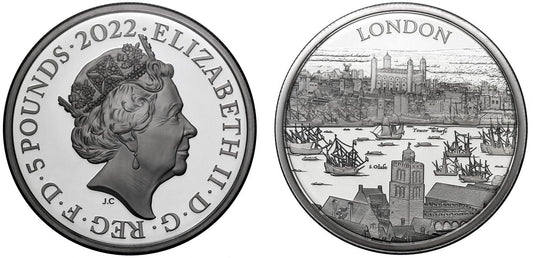
-
Charles III 2024 gold proof 1/4oz Britannia
Regular price £950Regular priceUnit price per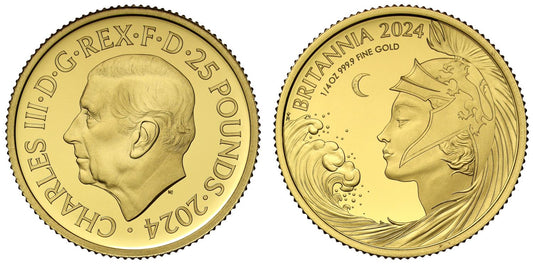
-
Charles III 2025 silver proof 2oz Waterloo Victory
Regular price £260Regular priceUnit price per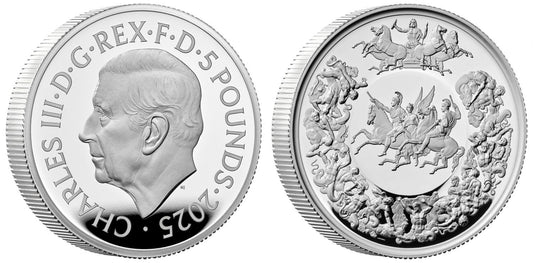
-
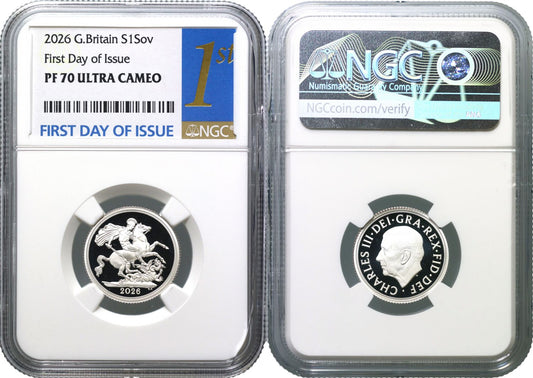
Charles III 2026 silver PF70 UCAM FDI Sovereign
Regular price £125Regular priceUnit price per