 Search


FAQs
What makes a coin valuable?


I have coins to sell, what’s the next step?
How will my purchases be shipped?
What happens if I’m not entirely happy with my purchase?
Kings of Paeonia, Audoleon, silver Tetradrachm, Astibos or Demastaion
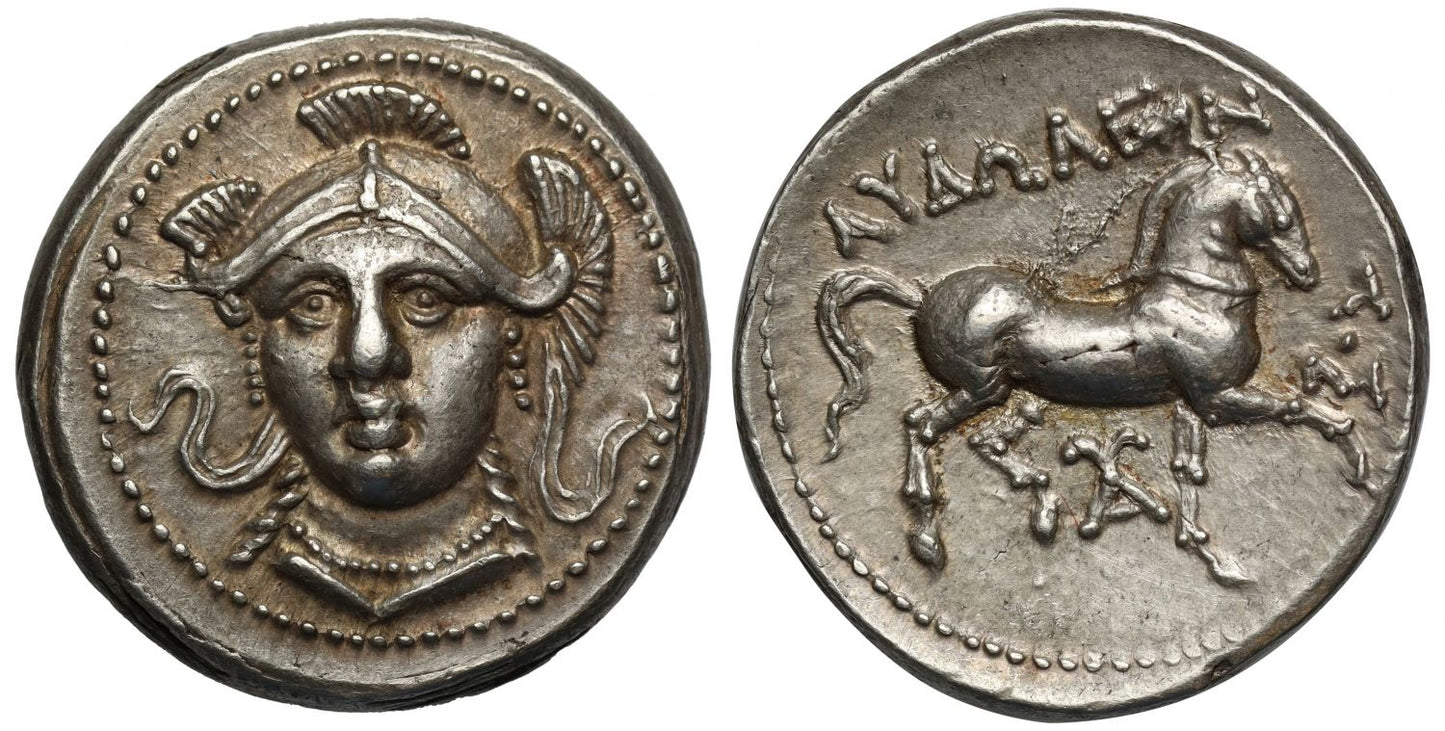
Kings of Paeonia, Audoleon (315-286 BC), silver Tetradrachm, Astibos or Demastaion, facing head of Athena, slightly left, wearing triple-crested Attic helmet, rev. horse walking right, monogram below, 12.65g, 4h (AMNG III/2, 1; SNG ANS 1054). Fine style and extremely fine.
This silver tetradrachm was issued by Audoleon, king of Paeonia, who ruled approximately from 315 to 286 BC. Paeonia was an ancient kingdom located to the north of Macedonia, in an area corresponding broadly to parts of modern North Macedonia and surrounding regions. During Audoleon's reign, Paeonia existed within a politically complex landscape dominated by the competing powers of the Hellenistic world.
The obverse presents a facing head of Athena, turned slightly to the left. She wears a distinctive triple-crested Attic helmet, an impressive piece of military equipment that immediately emphasises her martial character. Athena was the Greek goddess most closely associated with strategic warfare, wisdom and protection, making her an appropriate figure for the coinage of a warrior king. The frontal treatment of her head is particularly striking and gives the design a powerful, almost monumental appearance.
The reverse depicts a horse walking calmly towards the right, accompanied by a monogram beneath. The horse was an important symbol throughout the ancient Balkans and was especially appropriate for Paeonian coinage. Horses played an important role in warfare, transport and the status of the aristocracy, while the region itself had long-standing equestrian traditions.
The contrast between the two sides of the coin is particularly effective. Athena represents military intelligence, protection and strategic power, while the horse conveys movement, strength and the importance of cavalry. Together, the designs create a distinctly martial character without relying on a scene of battle or conquest.
The tetradrachm was a substantial silver denomination and would have been suitable for significant payments, trade and military expenditure. Its large surface also provided the engraver with enough space to produce a detailed portrait of Athena and a clearly defined horse. The use of Greek artistic conventions demonstrates the cultural influence of the Hellenistic world on Paeonia, even though the kingdom remained geographically and politically distinct from the major successor states.
The attribution of this issue to Astibos or Demastaion reflects the uncertainty surrounding some Paeonian mint locations. These ancient mints were active within the wider monetary networks of the region and produced coinage that circulated beyond the immediate borders of the kingdom.
Audoleon's tetradrachm is therefore an attractive representation of Paeonian royal coinage. Its imposing portrait of Athena, distinctive triple-crested helmet and elegant horse combine Greek artistic traditions with the regional identity of a northern Balkan kingdom during the early Hellenistic period.
FAQs
What makes a coin valuable?
I have coins to sell, what’s the next step?
How will my purchases be shipped?
What happens if I’m not entirely happy with my purchase?
Popular Coins
View all-
Elizabeth II 2022 silver proof 2oz City Views London
Regular price £220Regular priceUnit price per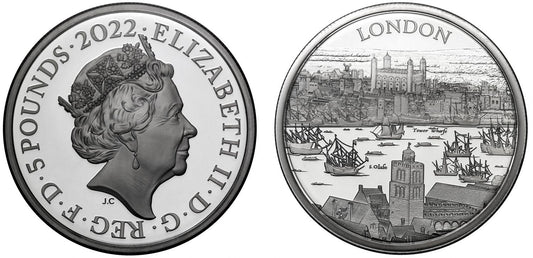
-
Charles III 2024 gold PF70 UC 1/4oz Britannia
Regular price £1,020Regular priceUnit price per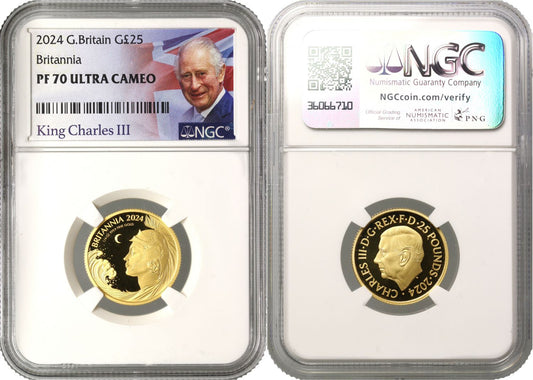
-
Charles III 2024 gold proof 1/4oz Britannia
Regular price £950Regular priceUnit price per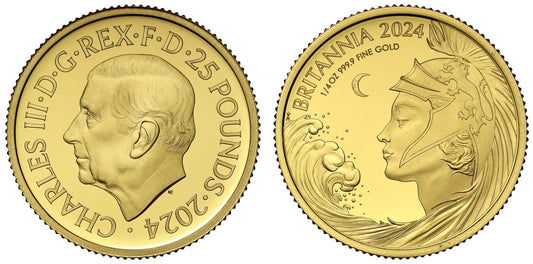
-
Charles III 2025 silver proof 2oz Waterloo Victory
Regular price £260Regular priceUnit price per