 Search


FAQs
What makes a coin valuable?


I have coins to sell, what’s the next step?
How will my purchases be shipped?
What happens if I’m not entirely happy with my purchase?
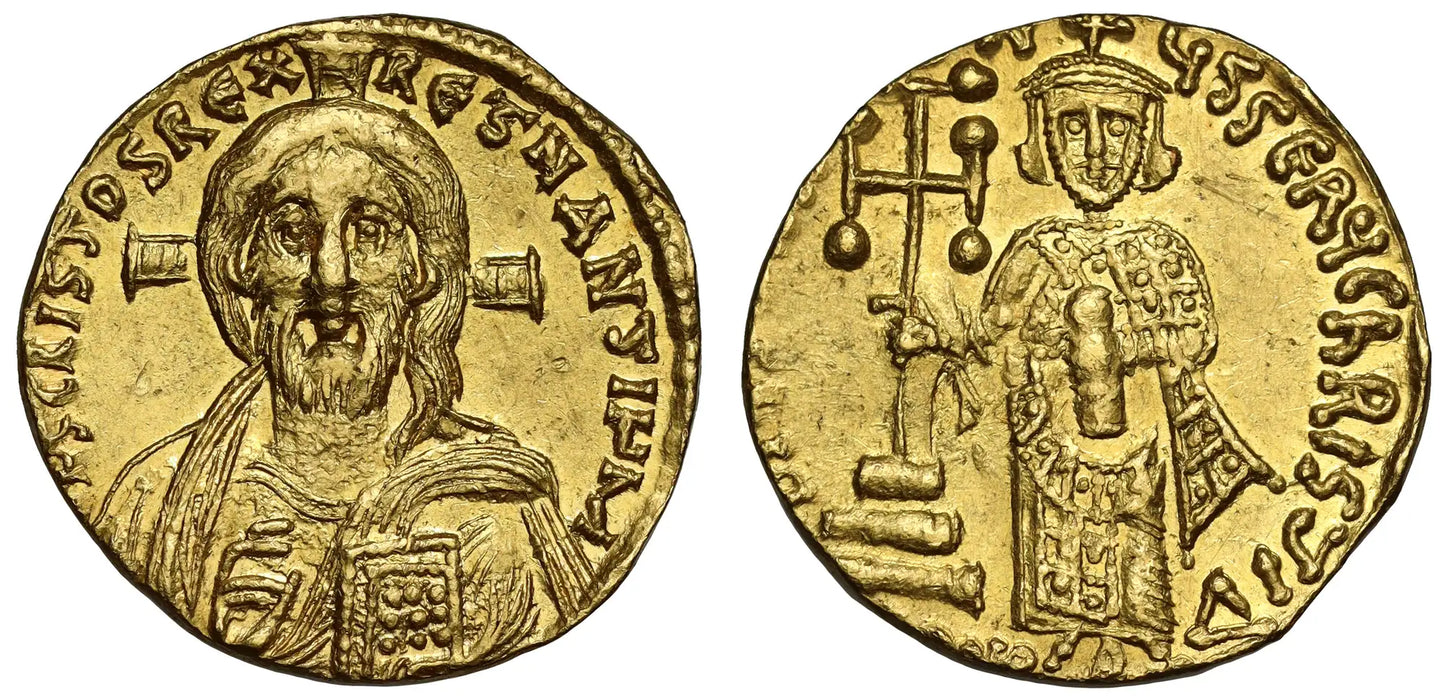
Justinian II, Gold Solidus, Constantinople, First Depiction of Christ
Justinian II (first reign, 685-695 AD), gold Solidus, Constantinople, 692-95 AD, 4th officina, IhS CRISTOS REX REGNANTIЧM, bust of Christ facing with cross behind head, raising right hand in benediction and holding book of Gospels in left, rev. D IЧS[TINI-A]N-ЧS SERЧ ChRISTI Δ, Justinian standing facing, wearing crown and loros, holding cross potent on two steps, and akakia, 4.37g, 6h (Sear 1248; DO 7; MIB 8; BCC 809). Good extremely fine.
Provenance:
Künker 318 (2019), 2115; Hess-Divo 328 (2015), 333; Lanz 154 (2012), 578.
The gold solidus of Justinian II, struck at Constantinople between 692 and 695 AD during his first reign, represents a landmark in the history of Byzantine coinage. Most significantly, it is widely recognised as the first coin to depict Christ on its obverse, marking a revolutionary development in the relationship between imperial authority and Christian belief.
The obverse features a frontal bust of Christ, with a cross-shaped halo behind His head. He raises His right hand in benediction while holding the Book of Gospels in His left. Surrounding the image is the inscription IhS CRISTOS REX REGNANTIЧM, meaning "Jesus Christ, King of those who rule." This declaration is particularly important: Christ is presented not merely as a religious figure, but as the supreme ruler above all earthly sovereigns. By placing His image on the empire's principal gold coin, Justinian II made a powerful statement about the divine foundation of imperial authority. Although Christ had appeared in Christian art and on other objects before this period, His prominent introduction onto Byzantine imperial coinage established a new visual and political precedent.
The reverse depicts Justinian II standing frontally, wearing an imperial crown and the elaborate loros, a ceremonial garment associated with Byzantine rulership. He holds a cross potent, resting on two steps, and an akakia, a cylindrical object symbolising imperial authority and humility. The surrounding inscription, D IЧS[TINI-A]N-ЧS SERЧ ChRISTI, identifies him as "Justinian, servant of Christ," reinforcing the idea that the emperor governed under divine authority.
The obverse inscription IhS CRISTOS REX REGNANTIЧM translates to "Jesus Christ, King of Kings."
The reverse inscription D IЧS[TINI-A]N-ЧS SERЧ ChRISTI Δ translates to "Emperor Justinian, Servant of Christ."
FAQs
What makes a coin valuable?
I have coins to sell, what’s the next step?
How will my purchases be shipped?
What happens if I’m not entirely happy with my purchase?
Popular Coins
View all-
Elizabeth II 2022 silver proof 2oz City Views London
Regular price £220Regular priceUnit price per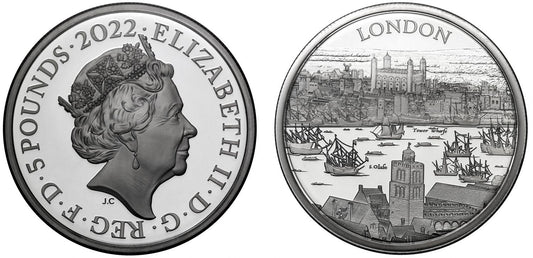
-
Charles III 2024 gold proof 1/4oz Britannia
Regular price £950Regular priceUnit price per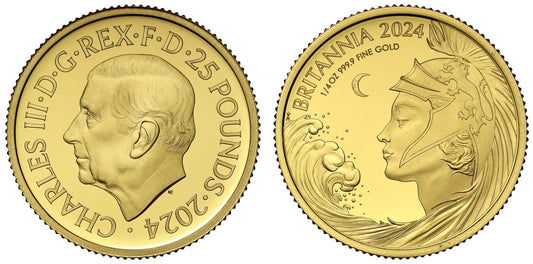
-
Charles III 2025 silver proof 2oz Waterloo Victory
Regular price £260Regular priceUnit price per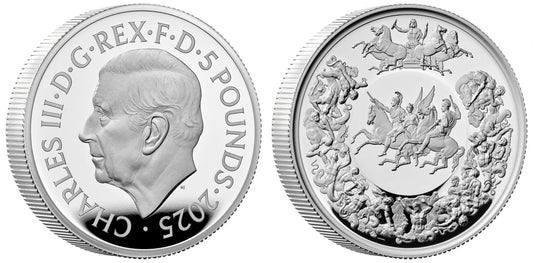
-
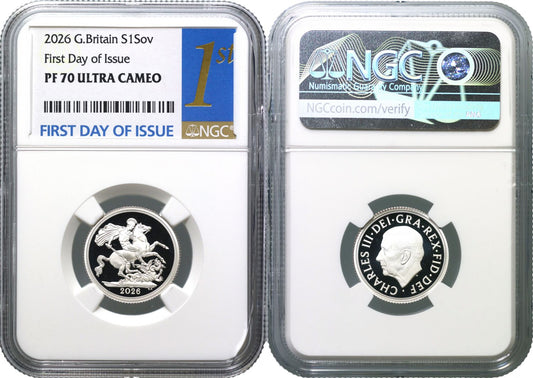
Charles III 2026 silver PF70 UCAM FDI Sovereign
Regular price £125Regular priceUnit price per