 Search


FAQs
What makes a coin valuable?


I have coins to sell, what’s the next step?
How will my purchases be shipped?
What happens if I’m not entirely happy with my purchase?
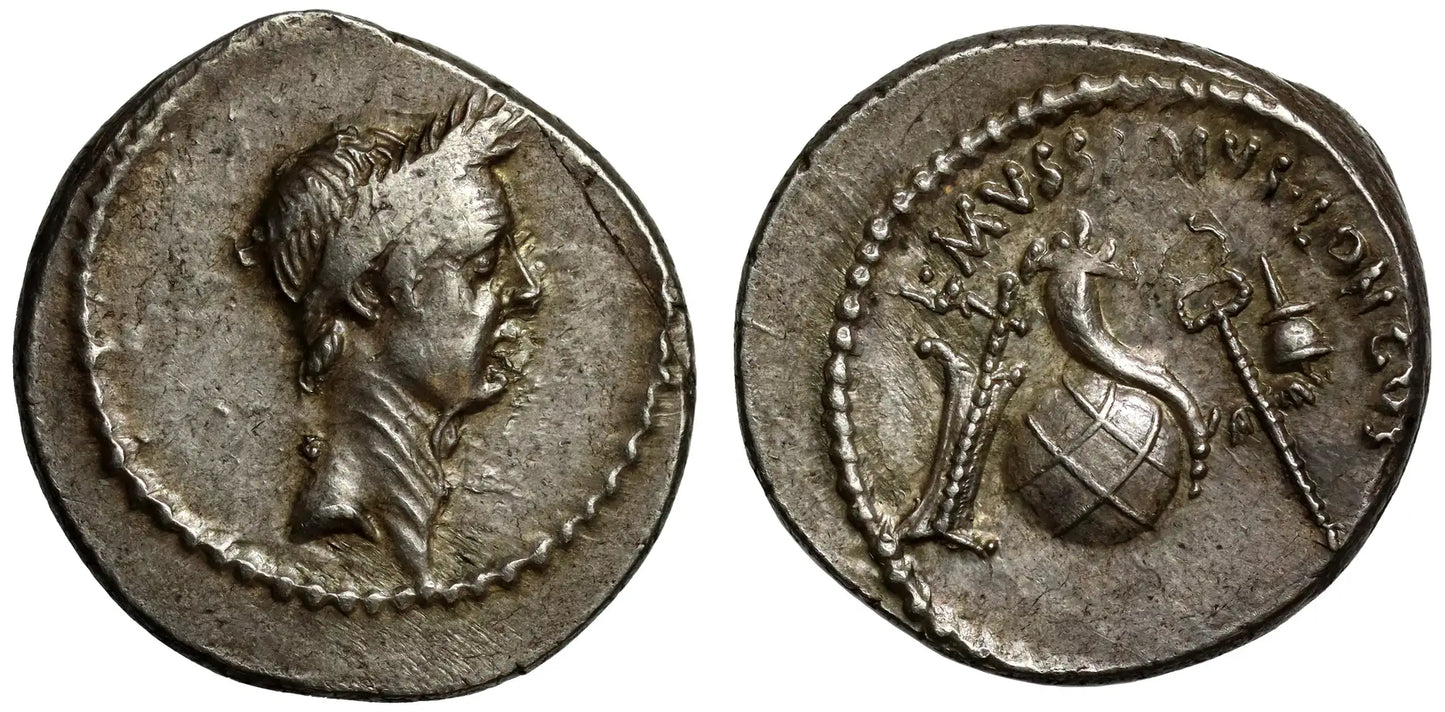
Julius Caesar, 42 BC, Silver Denarius, L Mussidius Longus
Julius Caesar, 42 BC, silver Denarius, Rome mint, L. Mussidius Longus, moneyer, laureate head right, rev. rudder, cornucopia on globe, winged caduceus, and apex, L MVSSIDIVS LONGVS in semicircle above, 3.76g, 10h (Crawford 494/39a; CRI 116; Sydenham 1096a; RSC 29; BMCRR Rome 4238-9; Kestner 3750; RBW 1742).Good portrait, small flat spot on wreath so near extremely fine.
This silver denarius, struck at Rome in 42 BC by the moneyer Lucius Mussidius Longus, belongs to a deadly period of Roman history, shortly after the assassination of Julius Caesar in 44 BC. The coin reflects the political uncertainty and changing power structures of the late Roman Republic, when Caesar's memory and legacy remained central to Roman public life.
The obverse features a laureate head of Julius Caesar facing right. The laurel wreath was a traditional symbol of victory and distinction, reinforcing Caesar's image as Rome's victorious military leader and extraordinary statesman. His portrait also represents the growing importance of individual political figures in Roman coinage. Caesar had famously broken with Republican tradition by allowing his portrait to appear on coins during his lifetime, establishing a precedent that would become increasingly significant under the emperors.
The reverse displays an intriguing collection of symbolic objects: a rudder, a cornucopia resting upon a globe, a winged caduceus and an apex, with the inscription L MVSSIDIVS LONGVS arranged in a semicircle above. Together, these attributes evoke themes of prosperity, good fortune, commerce, divine favour and religious authority. The globe suggests universal dominion or Rome's expanding influence, while the rudder may symbolise guidance and control over political destiny. The apex, the distinctive pointed cap worn by Roman priests, introduces a religious dimension to the design.
This denarius is therefore more than a monetary object, it is a historical document from a pivotal moment in Roman history, combining Caesar's enduring political image with traditional Roman symbols of authority, prosperity and divine protection.
FAQs
What makes a coin valuable?
I have coins to sell, what’s the next step?
How will my purchases be shipped?
What happens if I’m not entirely happy with my purchase?
Popular Coins
View all-
Elizabeth II 2022 silver proof 2oz City Views London
Regular price £220Regular priceUnit price per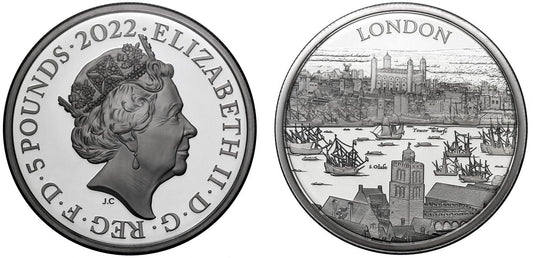
-
Charles III 2024 gold proof 1/4oz Britannia
Regular price £950Regular priceUnit price per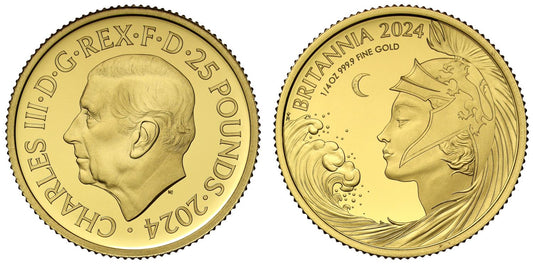
-
Charles III 2025 silver proof 2oz Waterloo Victory
Regular price £260Regular priceUnit price per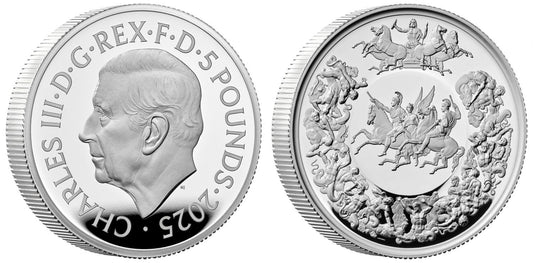
-
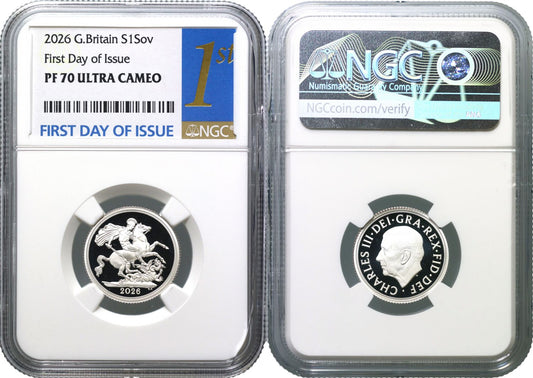
Charles III 2026 silver PF70 UCAM FDI Sovereign
Regular price £125Regular priceUnit price per