 Search


FAQs
What makes a coin valuable?


I have coins to sell, what’s the next step?
How will my purchases be shipped?
What happens if I’m not entirely happy with my purchase?
Italy, Bruttium, Kroton, Silver Nomos, XF 4/5 4/5
Bruttium, Kroton, silver Nomos, c. 530-500 BC, tripod with lion's feet, legs surmounted by wreaths, two snakes rising from within, rev. incuse, save for snakes which are in relief, 7.69g, 12h (HM Italy 2075). NGC XF 4/5 4/5 (brushed).
NGC Certification 8220314-001
Provenance:
Ex Pegasi 42, 2020, lot 51
This remarkable silver nomos from Kroton (modern Crotone) in Bruttium, southern Italy, dates to approximately 530-500 BC, during the early Classical period of Greek settlement in Italy. Kroton was one of the most important Greek cities of Magna Graecia, founded by Achaean Greeks in the late 8th century BC. Situated on the Ionian coast, the city became prosperous through agriculture, trade and its strategic position within the Greek world. The obverse depicts a tripod with lion's feet, its legs surmounted by wreaths, with two snakes rising from within the tripod. The tripod was one of the most important symbols of Kroton and was closely associated with the city's religious identity. It is generally connected with Apollo, whose sanctuary at Delphi was famed for its sacred tripod. The combination of the tripod and serpents creates a particularly distinctive and sophisticated design, reflecting the strong religious character of early Greek coinage.
The reverse is striking for its incuse design, the same basic type is rendered in a recessed form. This unusual technique is characteristic of some of the earliest coinage of Magna Graecia. Rather than simply repeating the obverse design, the reverse was created by striking the coin between dies, producing a deeply recessed image. The contrast between the incuse field and the raised snakes gives the coin an extraordinary sculptural quality. Kroton flourished during this period and became renowned throughout the Greek world. The city was also associated with the philosopher and mathematician Pythagoras, who established his influential philosophical community there in the late 6th century BC. These coins therefore belong to a fascinating period when Greek culture, religion, philosophy and commerce were becoming firmly established in southern Italy.
The obverse ϘΡΟ is the beginning/abbreviation of ΚΡΟΤΩΝ (KROTON). The first character, Ϙ (koppa), is an archaic Greek letter that was used in place of K in some early coin inscriptions
FAQs
What makes a coin valuable?
I have coins to sell, what’s the next step?
How will my purchases be shipped?
What happens if I’m not entirely happy with my purchase?

Popular Coins
View all-
Elizabeth II 2022 silver proof 2oz City Views London
Regular price £220Regular priceUnit price per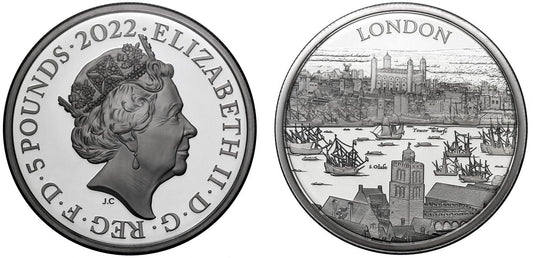
-
Charles III 2024 gold proof 1/4oz Britannia
Regular price £950Regular priceUnit price per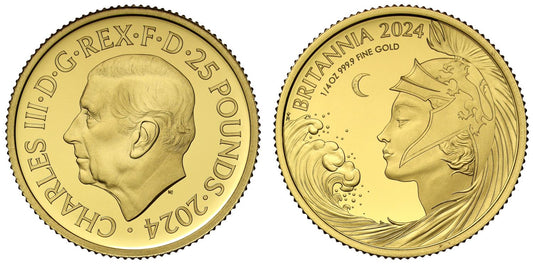
-
Charles III 2025 silver proof 2oz Waterloo Victory
Regular price £260Regular priceUnit price per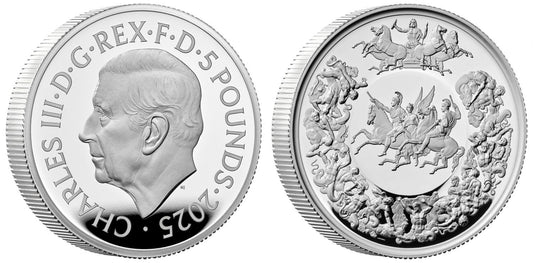
-
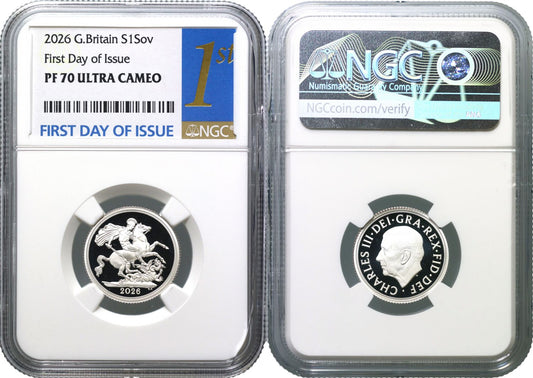
Charles III 2026 silver PF70 UCAM FDI Sovereign
Regular price £125Regular priceUnit price per