 Search


FAQs
What makes a coin valuable?


I have coins to sell, what’s the next step?
How will my purchases be shipped?
What happens if I’m not entirely happy with my purchase?
Islands off Troas, Tenedos, Silver Drachm.
Islands off Troas, Tenedos, silver Drachm, after 189 BC, Janiform male and female heads, respectively laureate and diademed, rev. ΤΕΝΕΔΙΩΝ, double headed axe, monogram, grapes and tripod below, all within wreath, 3.73g, 1h (SNG Copenhagen 524 var. [different symbol]; de Callataÿ, Tenedos, Essays Price 48 [this obverse die]). Heavy patina, nearly extremely fine and very rare.
Provenance:
Ex NAC Auction 100, 29 May 2017, lot 152
Ex Numismatic Naumann, Auction 44, 7 June 2016, lot 253
This silver drachm was struck on the island of Tenedos, located off the coast of the Troad in the northeastern Aegean, after 189 BC. Tenedos was an important island community with a long history of distinctive coinage, and its coins frequently drew upon local religious traditions and symbols. The obverse of this drachm is particularly interesting, depicting the conjoined or janiform heads of a male and female figure. The male head is laureate, while the female head wears a diadem, creating a deliberately balanced and unusual composition in which two faces look in opposite directions. Janiform imagery was associated with the religious and civic traditions of Tenedos and gives the coin a distinctive character among Hellenistic issues. The reverse bears the inscription ΤΕΝΕΔΙΩΝ, meaning "of the Tenedians," surrounding one of the island's most recognisable symbols: a double-headed axe. This emblem was closely associated with Tenedos and appears prominently on its coinage over several centuries. Beneath the axe are additional symbols, including a monogram, grapes and a tripod, while the entire composition is enclosed within a wreath. The grape bunch reflects the importance of viticulture and wine production in the Aegean, while the tripod carried religious associations and may have referred to ritual or sanctuary traditions. The wreath provides a decorative frame that unifies the various symbols. The date of the coin, after 189 BC, places it within the Hellenistic period, when Tenedos was situated within a complex political environment shaped by the rival interests of the Hellenistic kingdoms and the growing influence of Rome. Despite these changes, the island retained its distinctive civic identity, expressed clearly through its coinage. This drachm is therefore an excellent example of Tenedian numismatic tradition, combining unusual janiform portraiture with the island's characteristic double axe and a series of symbols reflecting its religious, agricultural and civic identity.
FAQs
What makes a coin valuable?
I have coins to sell, what’s the next step?
How will my purchases be shipped?
What happens if I’m not entirely happy with my purchase?

Popular Coins
View all-
Elizabeth II 2022 silver proof 2oz City Views London
Regular price £220Regular priceUnit price per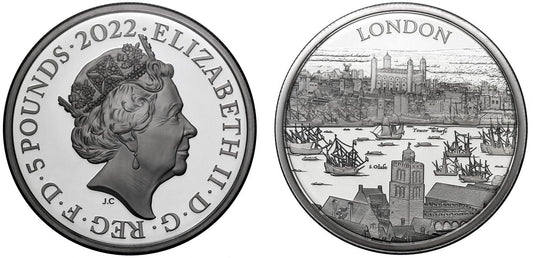
-
Charles III 2024 gold proof 1/4oz Britannia
Regular price £950Regular priceUnit price per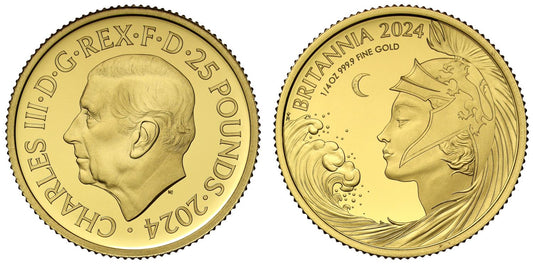
-
Charles III 2025 silver proof 2oz Waterloo Victory
Regular price £260Regular priceUnit price per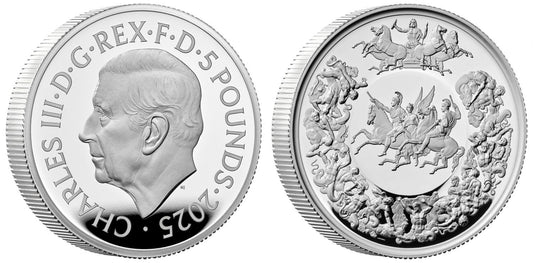
-
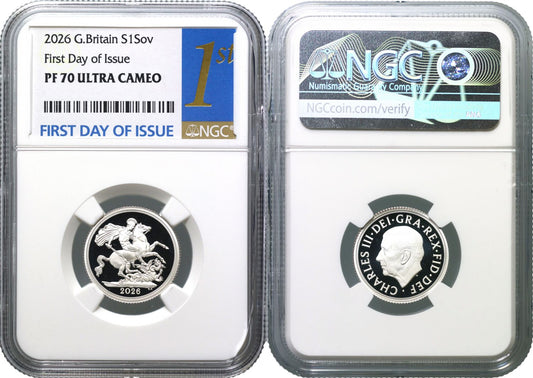
Charles III 2026 silver PF70 UCAM FDI Sovereign
Regular price £125Regular priceUnit price per