 Search


FAQs
What makes a coin valuable?


I have coins to sell, what’s the next step?
How will my purchases be shipped?
What happens if I’m not entirely happy with my purchase?
Ireland, Richard III Groat, 1st issue, Drogheda
Ireland, Richard III (1483-85), silver Groat, First Issue, Drogheda Mint, facing crowned head with neck and shoulders, rose to left of crown, sun to right of crown, sun to left of neck, rose to right of neck, surrounded by tressure of nine arcs, beaded circle and legend surrounding all, initial mark rose obscured, [*R]ICARDVSx DEIx GRAx D[nSx HIB], rev. large rose at centre over long cross pattée, beaded circles with inner and outer legends surrounding, inner reads VILL Axx DR O[G]h EDA, outer reads, *POSVI D[EVxx A DIVTOR] Exx mEVm, last two letters double entered, weight 2.00g (DF 165; S.6406A). Weakly struck in one portion of outer legend, the important wording elements visible and with a great facing portrait with the sun and rose symbols, about very fine and extremely rare.
The legends translate on obverse as "Richard by the grace of God, Lord of Ireland" and reverse "I have made God my helper" in the outer circle and "Town of Drogheda" on the inner circle.
We note a slightly more fuller example of this extreme rarity sold in the Noel Simpson collection at Spink for £15,000 hammer + 20% buyers premium at Spink earlier this year, the first at auction in over a decade.
Richard III was born on the 2ndOctober 1452 at Fotheringhay castle to Richard the third Duke of York and his wife Cecily Neville. He was created Duke of Gloucester aged just nine on 28thJune 1461 after the accession of his elder brother Edward IV and went on to marry Anne Neville the widow of Edward Westminster the son of Henry VI in 1472. They had a son Edward of Middleham who pre-deceased them both still aged under ten on 9thApril 1484, and seen by some as some sort of divine retribution to leave Richard without a legitimate heir, after the manner in which he ascended the throne. The boy King Edward V, the nephew of Richard was dominated by his uncle as Lord Protector. Edward V was gone by the 25thJune 1483 never to be publicly seen again, and deposed by an act entitled Titulus Regius. Richard had kept postponing the coronation of Edward V after his arrival in London at the Tower on 19thMay 1483. In support of Richard, Ralph Shaa a theologian preached a sermon on 22ndJune 1483 that declared Edward IV had been already betrothed to Lady Eleanor Butler (1436-68) when he married Elizabeth Woodville rendering the marriage invalid and the children issued from it illegitimate. The children of Richard's older brother the Duke of Clarence were barred from the throne by their Fathers attainder who had been killed for high treason. Therefore, the path became clear for Richard who at an assembly of the Lords and Commons on the 25thJune 1483 was declared the legitimate King and he ascended the throne the next day. Edward V and his younger brother were taken to apartments in the inner Tower where at some point they disappeared presumed murdered. Richard was coronated on the 6thJuly 1483 upon which followed two major rebellions, an unsuccessful one in October 1483 led by Henry Stafford the second Duke of Buckingham leading to his beheading on the 2ndNovember, then what turned out to be a most successful one for Henry Tudor with his uncle Jasper, who in August 1485 landed in south Wales with French troops and marched through Pembrokeshire recruiting soldiers along the way, leading on to the Battle of Bosworth Field in Leicestershire on 22ndAugust 1485. Richard became the last English King to die in battle after leading a cavalry charge into the Tudor ranks in an attempt to kill Henry directly, but was unfortunately surrounded in marshy ground and struck down. The body was carried back to Leicester and after a period of display as some sources suggest, was interred at Grey Friars and a monument erected later for which Henry Tudor paid £50 and may have been visible as late as 1612 until the location was lost to history.
Fast forward to the 21st Century and the modern-day Ricardian Society members working with archaeologists rediscovered the burial site in 2012 exhuming the skeleton, proving by DNA sequencing it was Richard III, and ending with a procession through the streets of Leicester with the remains on 22nd March 2015, for a reburial at Leicester Cathedral on the 26th March 2015.
FAQs
What makes a coin valuable?
I have coins to sell, what’s the next step?
How will my purchases be shipped?
What happens if I’m not entirely happy with my purchase?

Popular Coins
View all-
Elizabeth II 2022 silver proof 2oz City Views London
Regular price £220Regular priceUnit price per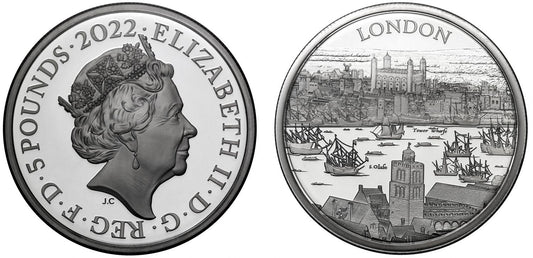
-
Charles III 2024 gold PF70 UC 1/4oz Britannia
Regular price £1,020Regular priceUnit price per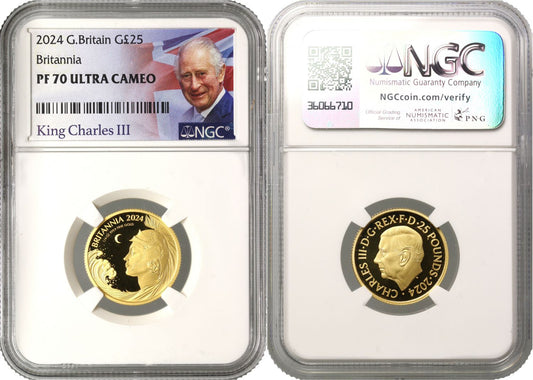
-
Charles III 2024 gold proof 1/4oz Britannia
Regular price £950Regular priceUnit price per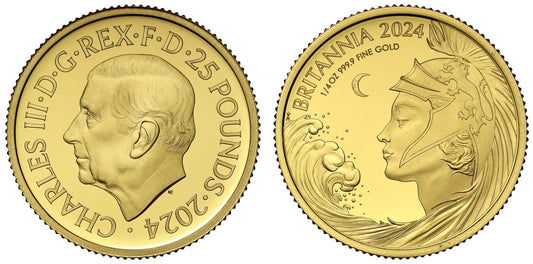
-
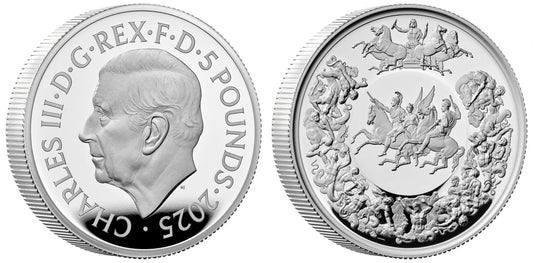
Charles III 2025 silver proof 2oz Waterloo Victory
Regular price £260Regular priceUnit price per