 Search


FAQs
What makes a coin valuable?


I have coins to sell, what’s the next step?
How will my purchases be shipped?
What happens if I’m not entirely happy with my purchase?
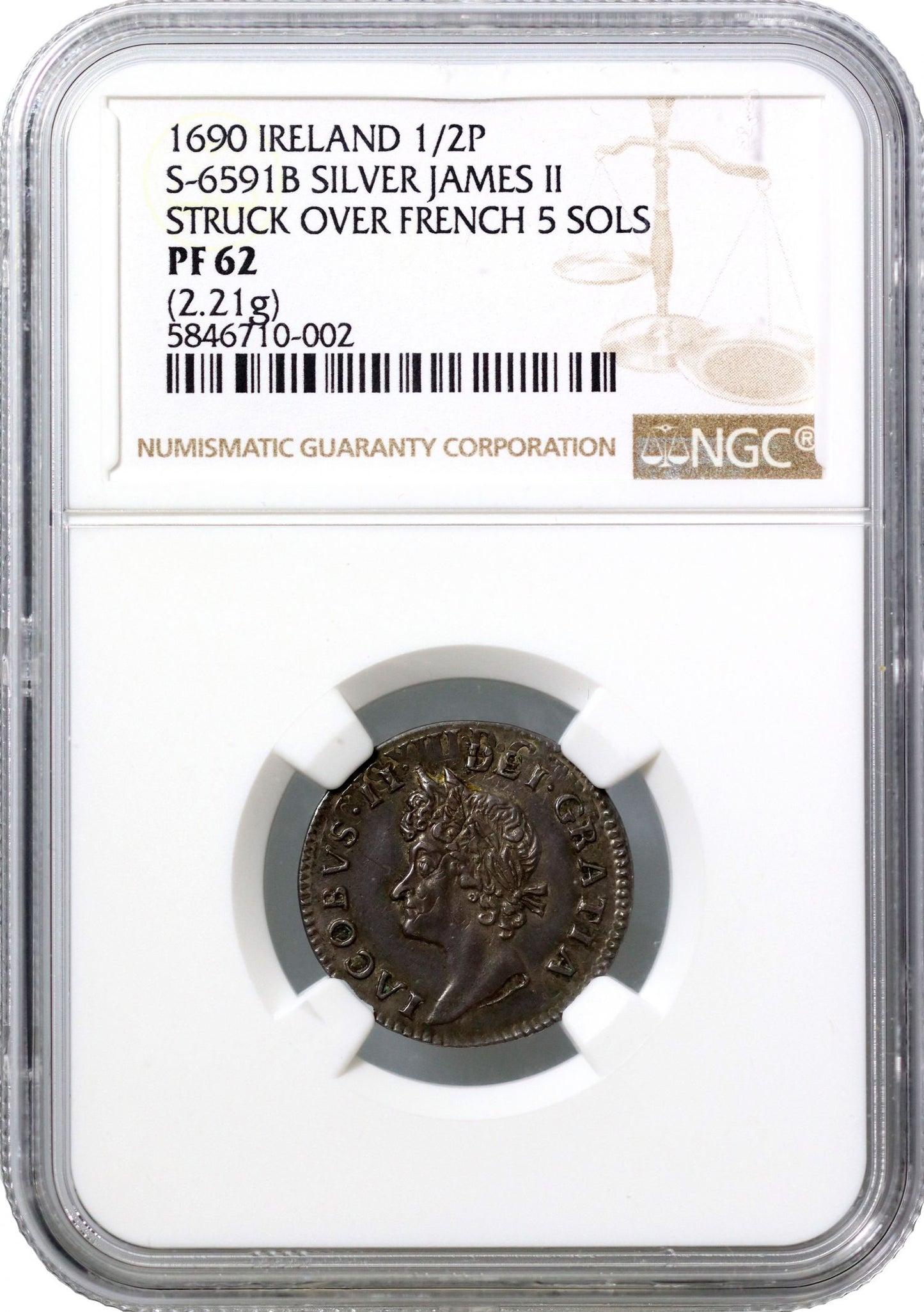
Ireland, James II 1690 silver Halfpenny, struck over French 5 Sols NGC PF62
James II (1685-88), silver Proof striking of pewter money, Halfpenny, 1690, overstruck on a French Five Sols of Louis XIV, laureate head left, Latin legend and toothed border surrounding, IACOBVS. II. DEI. GRATIA, rev. inverted die axis, crowned Irish harp with eleven strings, date above, abbreviated Latin legend and toothed border surrounding, .MAG. BR. FRA. ET. HIB. REX. edge plain, weight 2.21g (Timmins TS00Y-1C R5; D&F 483; S.6591B). Attractively toned, with just a touch of light wear to high points, undertype of French Five Sols showing through at top part of rim on obverse, and corresponding bottom rim of reverse, has been slabbed and graded by NGC as PF62 and a particularly nice example of this extremely rare overstruck issue which is much rarer than the regular silver proof.
NGC Certification 5846710-002 - we note as of February 2026 that this coin is the second finest graded of this extremely rare overstruck variety.
The abbreviated Latin legends translate as "James the Second by the grace of God" on the obverse, and "King of Great Britain, France and Ireland" on the reverse.
The reasons for striking silver proof versions of what was a white metal issue of currency halfpennies is unknown though they were obviously struck as presentation pieces probably for officials involved in the Irish campaign. Silver strikings are usually seen on virgin metal flans however the much rarer version is that struck over a French 5 Sols coin. Silver was obviously in short supply at the time of striking and as there was a large French contingent supporting James in Ireland some of their silver coinage would have been available to repurpose and strike into these silver proofs. The Five Sols coin was the right size to fit the dies and these extremely rare survivors are a nice record of an off-metal proof strike which has the undertype of the French host coin partly apparent. The design of these silver proofs is slightly different to the currency white metal pieces meaning the dies for these proofs is exclusive to this issue. The French engraver Hupiere was in Ireland with James II from March to September 1690 so it is likely he prepared the dies to strike these pieces though no documentary evidence survives.
FAQs
What makes a coin valuable?
I have coins to sell, what’s the next step?
How will my purchases be shipped?
What happens if I’m not entirely happy with my purchase?

Popular Coins
View all-
Elizabeth II 2022 silver proof 2oz City Views London
Regular price £220Regular priceUnit price per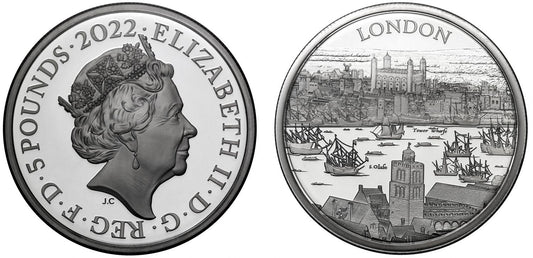
-
Charles III 2024 gold PF70 UC 1/4oz Britannia
Regular price £1,040Regular priceUnit price per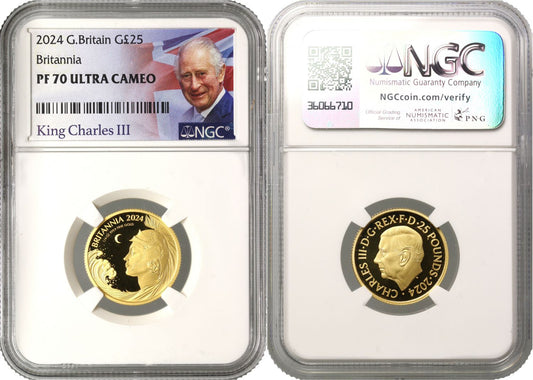
-
Charles III 2024 gold proof 1/4oz Britannia
Regular price £990Regular priceUnit price per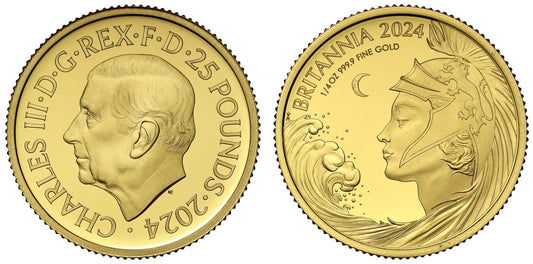
-
Charles III 2025 silver proof 2oz Waterloo Victory
Regular price £255Regular priceUnit price per