 Search



FAQs
What makes a coin valuable?


I have coins to sell, what’s the next step?
How will my purchases be shipped?
What happens if I’m not entirely happy with my purchase?
Henry VIII Halfgroat, second coinage, Canterbury, Archbishop Cranmer
Henry VIII (1509-47), silver Half-Groat, Canterbury Mint, second coinage (1526-44), issued under Archbishop Cranmer (1532-54), crowned bust right within beaded circle, Latin legend around, initial mark catherine wheel (1533-44), hEnRIC'x VIII'x D'x G'x R'x AGL'xZx F'x, rev. long cross fourchée over quartered shield of arms, T to left, C to right for Archbishop Thomas Cranmer, beaded circles and legend surrounding, xxCIVI 'TASxx xxCAn TORx weight 1.25g (N.1804; S.2345). Toned with some weakness to strike in one quarter both sides, otherwise a bold very fine.
The abbreviated Latin legends translate as on the obverse, "Henry the Eighth, by the grace of God, King of England and France." and on the reverse inner legend "City of Canterbury"
This mint mark Catherine wheel is only used at the Canterbury Mint in this reign and is perhaps a reference to Saint Catherine of Alexandria who after converting thousands of people to Christianity in the reign of Roman Emperor Maximian (286-305), was scourged and imprisoned after winning in a religious debate with 50 of the best Pagan philosophers of the time orchestrated by Maxentius, son of the Emperor. Catherine was left to starve in prison, but her wounds were miraculously healed and a dove brought her daily sustenance so when she emerged she was more beautiful than ever before. Maxentius proposed marriage to her, but Catherine refused and she was condemned to be broken upon the wheel. However, as soon as she touched the spinning wheel of torture it shattered beyond repair, whereupon Maxentius ordered her to be beheaded. Her corpse bled a milk like substance rather than blood and she was martyred. Some 1,100 years later in the time Cranmer this saint had built up a major following and Joan of Arc said that Saint Catherine was one of the Saints that had appeared to her. Therefore, the Catherine wheel is seen as an ecclesiastical mint mark on the coinage as well as being still today a popular firework that symbolises the shattering of the wheel of torture by St Catherine.
Thomas Cranmer (1489-1556) a Cambridge Don first comes to prominence in the reign of Henry VIII in 1527 when he became involved with the annulment proceedings of Henry's first wife Catherine of Aragon. Cranmer was installed as Archbishop of Canterbury on the 3rd December 1532 and consecrated on 30th March 1533. On the 23rd May 1533 Cranmer pronounced the marriage with Catherine against the law of God and Henry was free to marry again, which he did five days later to Anne Boleyn on the 28th May (Henry had wed her secretly in January). Cranmer personally crowned and anointed Anne as Queen on the 1st June 1533 and the Royal couple had a daughter Elizabeth on 7th September who Cranmer immediately baptised as was Godfather to.
Cranmer was responsible for the first doctrinal and liturgical structures of the Church of England once Henry had made himself Supreme Head, and continued to serve Henry until his passing and through the reigns of Edward VI until early into the reign of Mary Tudor, when due to his recent support for Lady Jane Grey to be Queen he was brought for trial for treason on the 13th November 1553 and subsequently condemned to death. Cranmer spent much time imprisoned and subsequently endured a second trial for heresy after which on the 4th December 1555 he was deprived of his Archbishopric. He was burned at the stake after Mary became determined to make an example of him on the 21st March 1556.
Provenance:
Ex Noble Numismatics, Auction 122, 19-21st November 2019, lot 2874.
FAQs
What makes a coin valuable?
I have coins to sell, what’s the next step?
How will my purchases be shipped?
What happens if I’m not entirely happy with my purchase?
Popular Coins
View all-
Elizabeth II 2022 silver proof 2oz City Views London
Regular price £220Regular priceUnit price per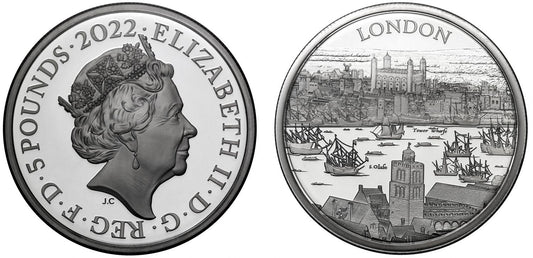
-
Charles III 2024 gold PF70 UC 1/4oz Britannia
Regular price £1,040Regular priceUnit price per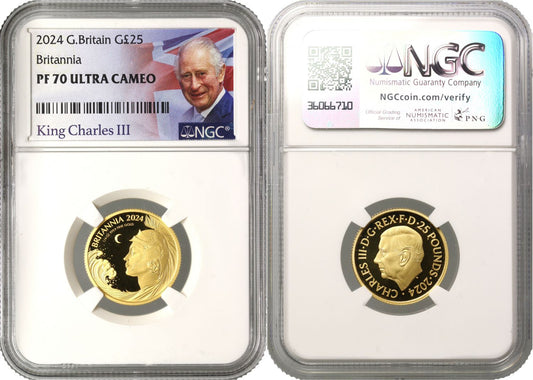
-
Charles III 2024 gold proof 1/4oz Britannia
Regular price £990Regular priceUnit price per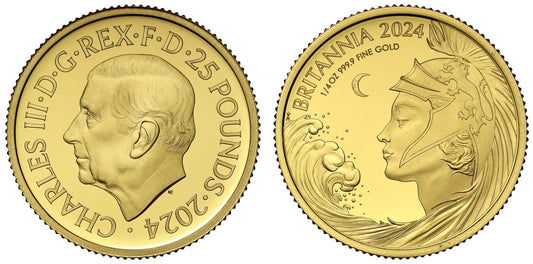
-
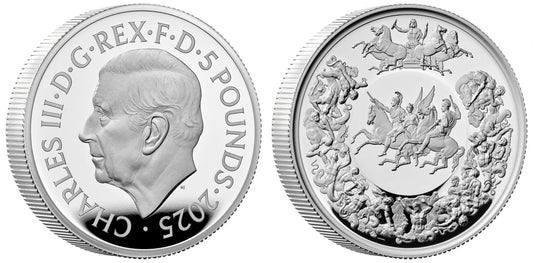
Charles III 2025 silver proof 2oz Waterloo Victory
Regular price £260Regular priceUnit price per