 Search


FAQs
What makes a coin valuable?


I have coins to sell, what’s the next step?
How will my purchases be shipped?
What happens if I’m not entirely happy with my purchase?
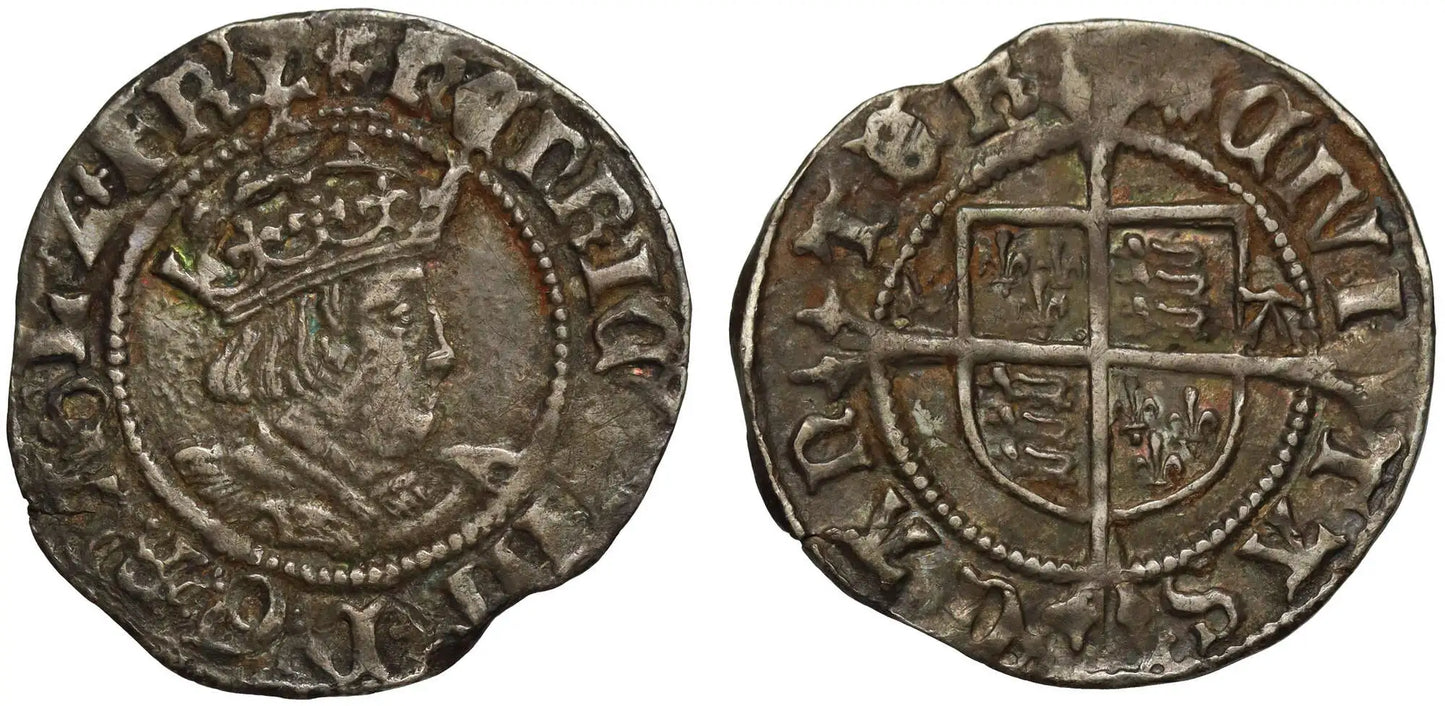
Henry VIII Halfgroat, Canterbury, W A for Archbishop Warham with his mark
Henry VIII (1509-47), silver Half-Groat, Canterbury Mint, second coinage (1526-44), issued under Archbishop Warham, crowned bust right within beaded circle, Latin legend around, initial mark Archbishop Warham's mark (1526-32) both sides, hEnRIC'x VIII'x DI'x Gx R'x AGL'xZx FR', rev.long cross fourchee over quartered shield of arms, W to left, A to right for Archbishop Warham, beaded circles and legend surrounding, CIVI TAS'x xxCAn TORx, the letter O struck over a T, weight 1.33g (N.1802; S.2343). Toned, rim chip, otherwise a bold to good very fine.
The abbreviated Latin legends translate as on the obverse, "Henry the Eighth, by the grace of God, King of England and France." and on the reverse inner legend "City of Canterbury"
This mint mark is known to relate to Archbishop William Warham (c.1450-1532) as his initials appear on the coin, but what the actual mark (or badge?) represents is still uncertain.
William Warham was born around 1450 in Oakley, Hampshire and was later educated at Winchester College and later graduated as a Fellow of New College, Oxford. He became a Doctor of Law in 1486 and entered the holy orders in 1493 as a priest. He became Archdeacon of Huntingdon in 1496 and rose to become Bishop of London in 1501. He then succeeded Henry Deane on his death in February 1503 to be ordained as Archbishop of Canterbury on 29th November 1503. Warham had already become a trusted advisor to Henry VII and was part of the team that negotiated the marriage of Catherine of Aragon to Arthur Prince of Wales in 1496 resulting in their nuptials on the 14th November 1501at which Warham assisted the Archbishop of Canterbury at old St Pauls. In 1497 Warham was sent to Scotland to negotiate peace with King James IV with a treaty which included the subsequent marriage of Margaret Tudor to the Scottish monarch. Warham was sent on a mission to the Holy Roman Empire to negotiate successful commercial and political agreements with Maximilian I including commitments to extract English rebels who posed a threat to King Henry VII. In 1502 Warham became Lord Chancellor and Keeper of the Great Seal of King Henry VII. As Archbishop of Canterbury he became so revered that his elaborate tomb commenced construction in 1507 a full quarter of a century before he died.
When King Henry died on 21st April 1509 Warham was part of the council in place to administer the country until Henry VIII reached his majority and he officiated at the wedding of the King to Catherine of Aragon on 11th June of 1509 and their joint coronation a couple of weeks later on 24th June. Warham found himself sidelined by the young King in 1512 though when he chose to speak out in favour of peace with France rather than conflict and an ambitious Thomas Wolsey soon took his place as an advisor. In 1515 Warham resigned as Lord Chancellor again to be succeeded by Wolsey, though Warham was relieved to give up that position. Warham as Archbishop of Canterbury was present for the extravagant and elaborate diplomatic summit known as the Field of the Cloth of Gold in France in 1520 and the King and Queen and their court stopped off at Warham's residence Otford Palace in Kent en route. From 1527 William Warham was chosen by Catherine of Aragon to represent her in negotiations with Henry which eventually led to their marriage annulment in 1533 but he was not of much use to Catherine for his overriding fear of upsetting the King. In 1531 Archbishop Warham accepts to Act placing Henry VIII as Head of the Church of England but added his own caveat "as far as the law of Christ allows". However, in a statement of 24th February 1531 Warham said that certain acts of the King since November 1529 has "violated the rights of Rome" and in June 1532 Warham was served with a writ of praemunire meaning he has been seen to act above his authority and against the will of the King. This most likely would have led to his trial and execution but William Warham died aged 82 of natural causes on 22nd August 1532. He was succeeded to the Archbishopric by Thomas Wolsey.
FAQs
What makes a coin valuable?
I have coins to sell, what’s the next step?
How will my purchases be shipped?
What happens if I’m not entirely happy with my purchase?
Popular Coins
View all-
Elizabeth II 2022 silver proof 2oz City Views London
Regular price £220Regular priceUnit price per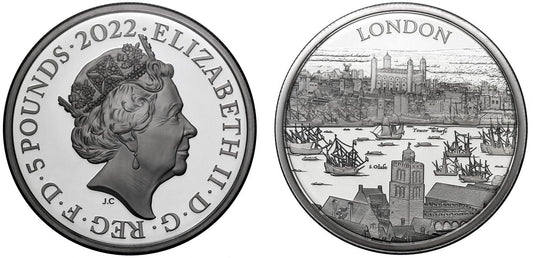
-
Charles III 2024 gold proof 1/4oz Britannia
Regular price £950Regular priceUnit price per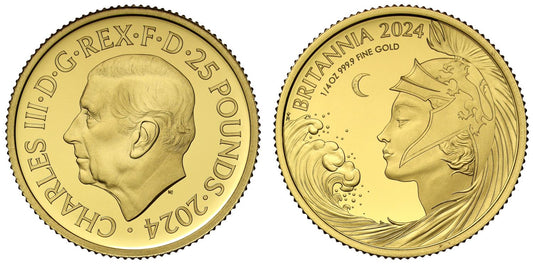
-
Charles III 2025 silver proof 2oz Waterloo Victory
Regular price £260Regular priceUnit price per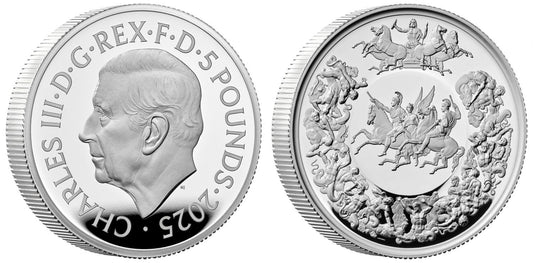
-
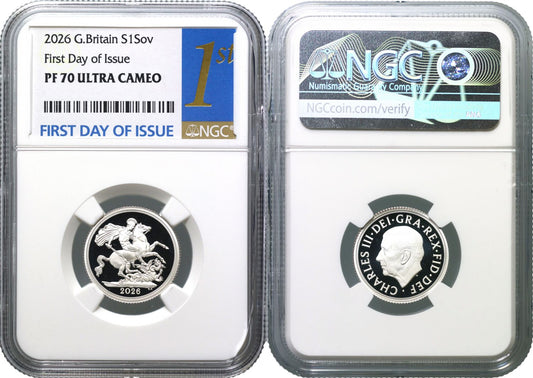
Charles III 2026 silver PF70 UCAM FDI Sovereign
Regular price £125Regular priceUnit price per