 Search


FAQs
What makes a coin valuable?


I have coins to sell, what’s the next step?
How will my purchases be shipped?
What happens if I’m not entirely happy with my purchase?
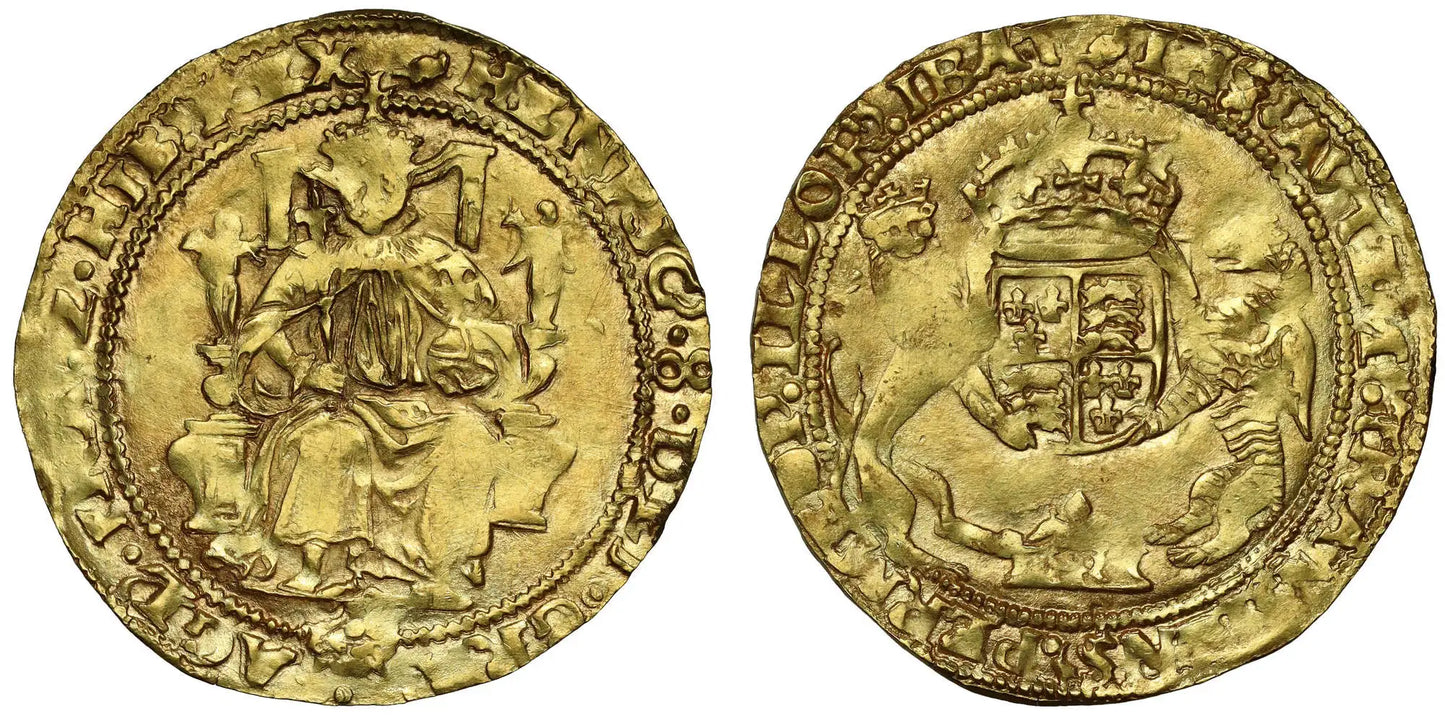
Henry VIII Half-Sovereign, posthumous issue, ex Cheddleton Hoard
Henry VIII (1509-47), Posthumous issue first period (1547-49) under Edward VI (1547-53), gold Half-Sovereign of Ten Shillings struck in 20 carat gold, Tower II Mint, facing crowned robed figure of boy King Edward on ornate throne, rose below, 8 type Latin legend in name of his late Father, with Roman lettering and beaded border surrounding, initial mark martlet both sides, pellet punctuation, HENRIC'. 8. DEI. GRA. AGL'. FRA. Z. HIB'. REX, rev. crowned quartered shield of arms, with lion and dragon supporters, banner below, Latin legend with Gothic lettering and beaded border surrounding, HIS'. AVTEM'. TRANSIENS'. PER MEDI'. ILLOR'. IBAT, weight 6.26g (cf.Schneider 660; Hill H134 R2; N.1865; S.2391). Lightly toned with some striking weaknesses and flat areas, has been conserved with deposit removed, otherwise good fine with Cheddleton Hoard provenance.
The abbreviated Latin legends translate as on the obverse "Henry the Eighth by the Grace of God, King of England and France and Lord of Ireland"; and on the reverse "But Jesus, passing through the midst of them, went His way" taken from the Bible.
The debased gold period started at the end of the reign of King Henry VIII with the fineness reduced to 20 carat and this had to continue into the reign of King Edward VI. The young boy King was astute in that he did not want his name at least associated with debasement, so though his portrait appears on this coinage, the name of his Father who was responsible for the low fineness of metal continues prominently.
The mint mark martlet at Tower II was issued by authority of the Under-Treasurer Stephen Vaughan (25th March 1544-25th December 1549). The martlet mark show in the accounts combined with mint mark grapple across two commissions, an earlier one at 20 carats for the year of 1548 and a subsequent commission from early to late 1549 for 22 carat gold. As both issues weigh the same, the only way to really tell what carat this coin is would be by x-ray fluorescence.
We have taken an x-ray fluorescence reading of the metal content of this coin and it worked out at 19.88 carat.
The gold output is only known as a grand total for each of these periods of time across all mints in operation (Tower I and II, Southwark and Bristol in the earlier period), the earlier first period came to £439,467/10/- total across mint marks arrow and lis at Tower I, K, grapple and martlet at Tower II, E at Southwark and WS at Bristol. The second later period totalled £82,518 of gold for mint marks arrow, 6 and swan at Tower I, grapple and martlet at Tower II and Y and lis at Southwark.
Provenance:
Found as part of the "Cheddleton Hoard" on Saturday 29th April 2023 by Peter Astley at Ashcombe Park Hall, Staffordshire which was formerly known as Botham Hall built around the time of the hoard deposit.
Recorded with the portable antiquity scheme as PAS LVPL-797522 reported to Liverpool coroner. Subsequent British Museum treasure identification number 2023 T695 - coin 7.
There are pictures online of the hoard in its uncleansed state.
Ex Spink Coin Auction, 4th June 2026, lot 1551.
FAQs
What makes a coin valuable?
I have coins to sell, what’s the next step?
How will my purchases be shipped?
What happens if I’m not entirely happy with my purchase?
Popular Coins
View all-
Elizabeth II 2022 silver proof 2oz City Views London
Regular price £220Regular priceUnit price per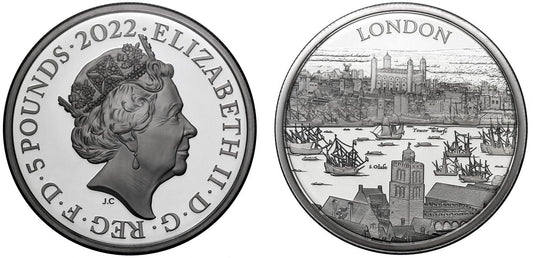
-
Charles III 2024 gold proof 1/4oz Britannia
Regular price £950Regular priceUnit price per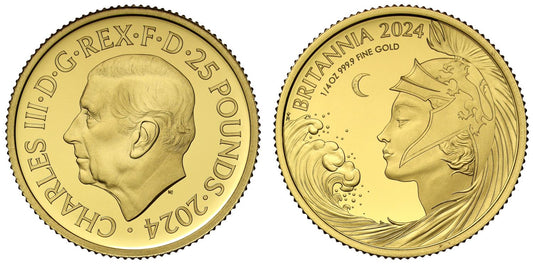
-
Charles III 2025 silver proof 2oz Waterloo Victory
Regular price £260Regular priceUnit price per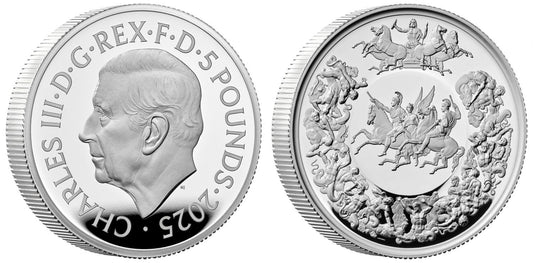
-
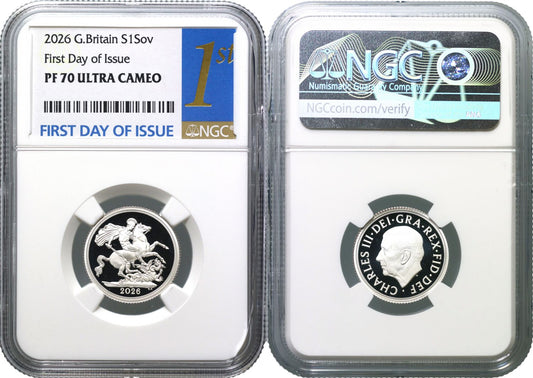
Charles III 2026 silver PF70 UCAM FDI Sovereign
Regular price £125Regular priceUnit price per