 Search


FAQs
What makes a coin valuable?


I have coins to sell, what’s the next step?
How will my purchases be shipped?
What happens if I’m not entirely happy with my purchase?
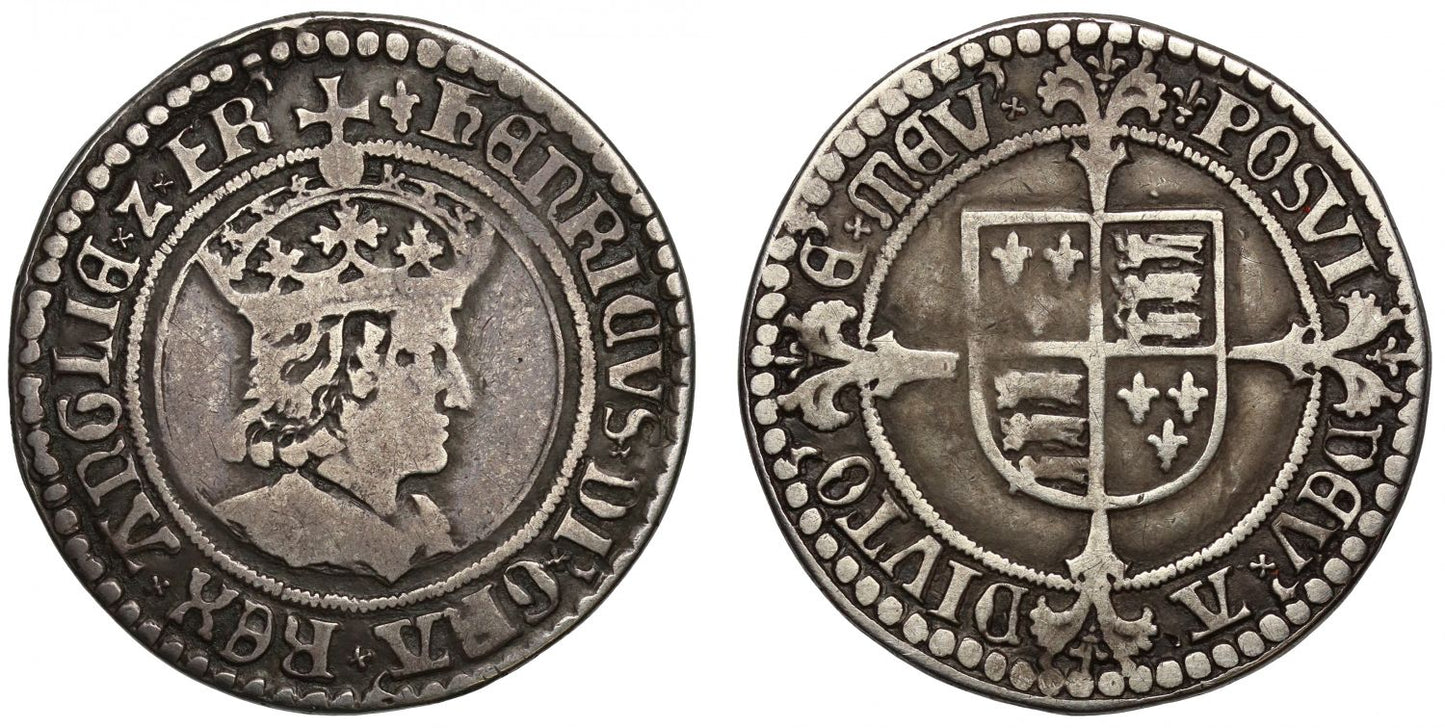
Henry VII Testoon of One Shilling, Type 1 dies 1/1, earliest type of Shilling of UK
Henry VII (1485-1509), silver Testoon of One Shilling (1502-04), profile issue, crowned bust facing right, large cross on crown breaks linear and beaded circles surrounding, initial mark lis, legend and beaded outer border surround all, hEnRICVSx DIxx GRAx REXx AnGLIEx Zx FR', rev. quartered shield of arms over long cross fleury, lis in each fork of fleury beyond inner beaded circle, legend and outer beaded border surrounding, initial mark lis, POSVI DEV'x A DIVTO' E'x MEV'x, weight 8.81g (P&W 1; N.1740; Oddie 1, dies 1/1; Stewartby 1a; S.2251). Toned, well struck with good detail though with even wear across both sides, a pleasing well-centred coin, a bold fine and a striking combination from the first pair of dies of the first silver Shilling value coin of England, extremely rare with a great provenance.
The Latin legends translate as on obverse "Henry by the grace of God, King of England and France" and on the reverse "I have my God my helper" a Psalm from the Bible.
This spectacular coin design is the largest silver coin of this reign. A reign of great coinage reform, famed for the introduction of new senior denominations like the gold fine Sovereign and Ryal as well as this silver Testoon denomination of twelve pence or One Shilling. These new innovative coins made the best attempt to portray the King with a life-like portrait some of which predate surviving portrait paintings of the King. The Testoon name interestingly emanates from the Latin word "testa" for head, French word "tete", as the coin shows a profile image of the King's head and shoulders facing right and marks a new zenith in artistic coin engraving with an elaborate design both sides.
Potter and Winstanley writing in their article on the coinage of Henry VII in the 1962 volume of the British Numismatic Journal delineate all the variations of the Testoon shillings with this coin being of the earliest type 1 as cited above in the referencing. They record at that time the existence of twelve examples of which five are in museum collections and this coin is cited as the "RCB" provenance for Raymond Carlyon Britton. They go on to define this as type 1 due to the King's name being given in full without his numeral and that a number survive as would be expected for the first issue of any new denomination being kept aside at the time as a novel introduction, as well as the use of a small lis mint mark both sides which would seem more experimental for an initial issue to introduce the denomination.
The earliest example of an English Shilling is a true rarity of the series for a collector to own and the provenance trail back to 1914 is impressive with the prices fetched on each occasion being perhaps the most valuable silver coin amongst the English in each sale appearance.
Provenance:
Ex Kendall Hazeldine, Sotheby, 3rd April 1914, lot 147, plate V, sold for £14/10/-
Ex Alexander Mann, Sotheby, 29th October 1917, lot 257, plate VI, sole for £24 to Baldwin.
Ex E. H. Wheeler, balance of collection purchased by B. A. Seaby 1930.
Ex T. B. Clarke-Thornhill, part I, Glendining, 24th May 1937, lot 428, plate XII, sold for £43.
Ex Raymond Carlyon-Britton, portions of collections purchased by B. A. Seaby from 1940.
Ex Blake Collection, Seaby Coin and Medal Bulletin, May 1956, item BL81 and plate, priced at £90
Ex K. V. Graham, Glendining, 12th June 1963, lot 275, plate XII, sold for £150 to Spink.
Ex W. J. Zimmermann sold by Spink and Son from 1980.
Ex David Dupree Collection, purchased by Spink, 1989 sold ANA Pittsburgh 1989.
Ex Dr Irving Schneider 860.
It is interesting to note that when Seaby listed this coin in 1956 that it was priced at only £10 less than a Type IV Henry VII Sovereign and at £5 more than a 3rd coinage Henry VIII Sovereign.
Looking back further this coin when part of the 1914 Hazeldine collection sold for more than two fine Sovereigns of Henry VIII, one of Mary Tudor and one of Elizabeth I and for more than a Philip and Mary Angel.
FAQs
What makes a coin valuable?
I have coins to sell, what’s the next step?
How will my purchases be shipped?
What happens if I’m not entirely happy with my purchase?
Popular Coins
View all-
Elizabeth II 2022 silver proof 2oz City Views London
Regular price £220Regular priceUnit price per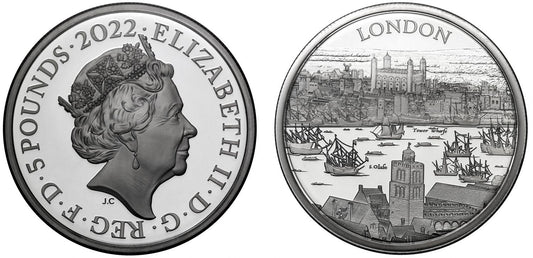
-
Charles III 2024 gold PF70 UC 1/4oz Britannia
Regular price £1,040Regular priceUnit price per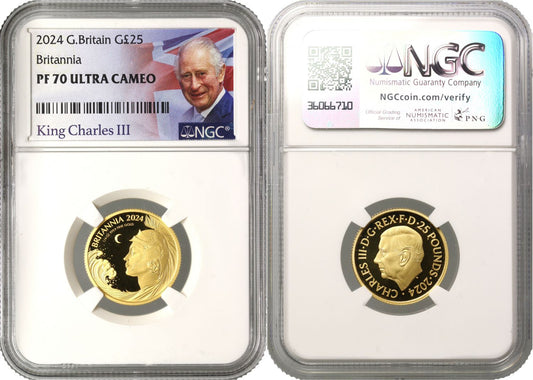
-
Charles III 2024 gold proof 1/4oz Britannia
Regular price £990Regular priceUnit price per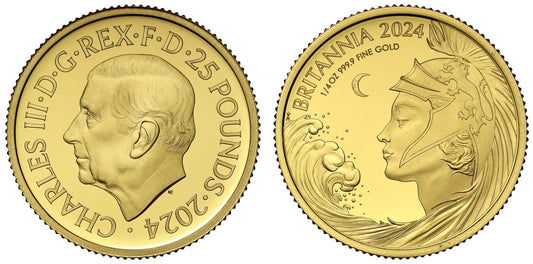
-
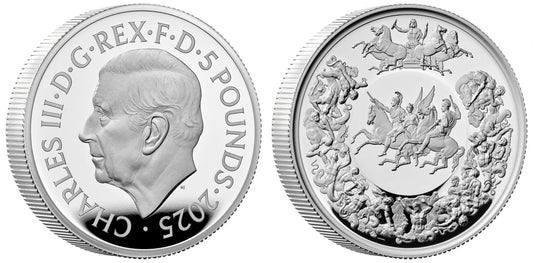
Charles III 2025 silver proof 2oz Waterloo Victory
Regular price £260Regular priceUnit price per