 Search


FAQs
What makes a coin valuable?


I have coins to sell, what’s the next step?
How will my purchases be shipped?
What happens if I’m not entirely happy with my purchase?
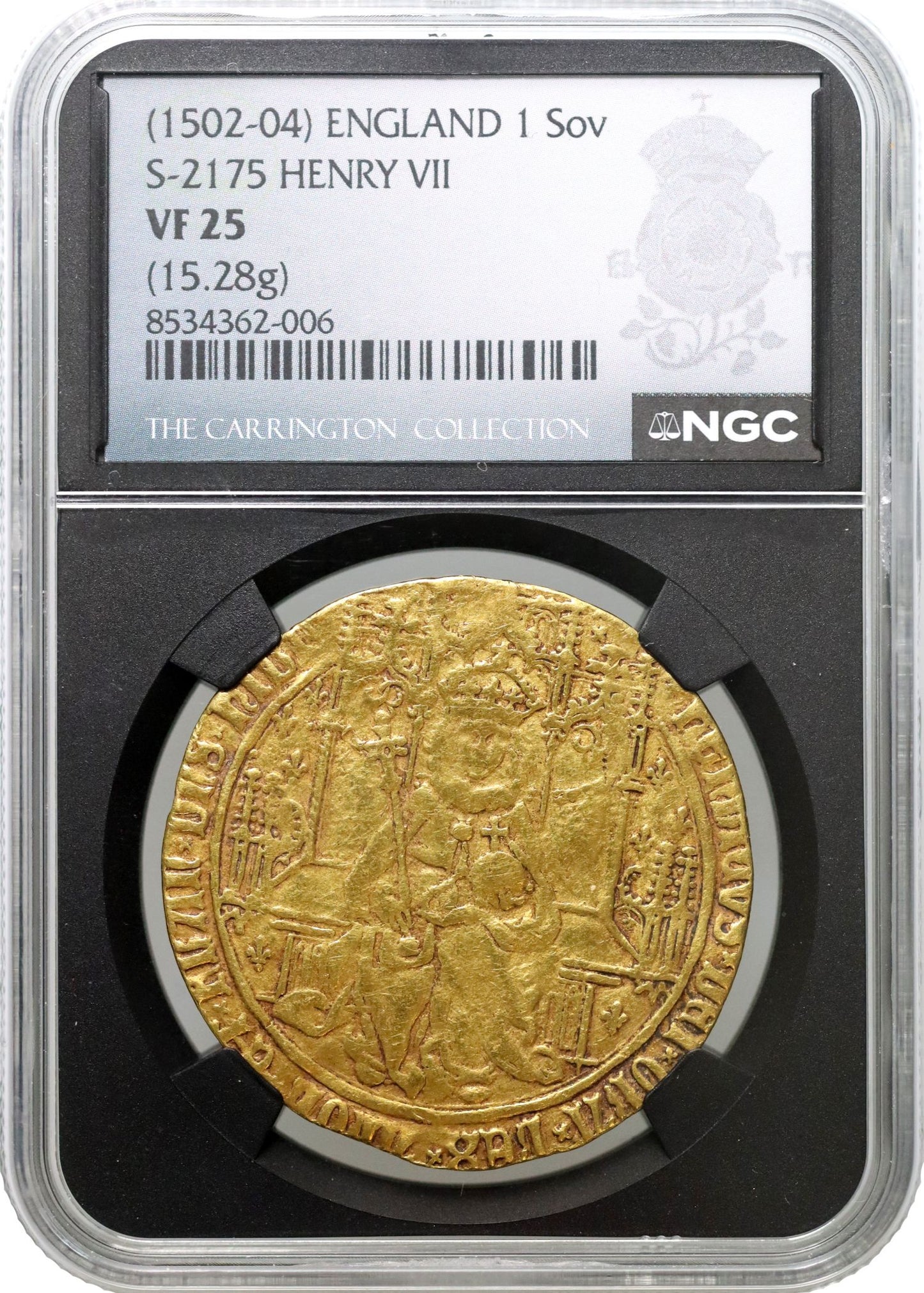
Henry VII fine Sovereign, Type IV, Tower mint, NGC VF25, im lis / dragon
Henry VII (1485-1509), gold fine Sovereign of Twenty Shillings, group IV (issued Michaelmas 1502 - Spring 1504), crowned robed figure of King sitting facing on wide throne, holding orb and sceptre, throne breaks inner beaded circle and extends to top of coin, Latin legend surrounding, initial mark lis, double saltire stops, hENricvsxx DExx GRAx RExx ANGLx etx FRANx Dnsx hIbr', rev. quartered shield of arms upon blooming Tudor rose, within ten arc double tressure of beaded and linear makeup, lion and lis alternation within each arc, saltire in each spandrel, Latin legend with inner and outer beaded border surrounding, saltire stops, initial mark dragon xxIhESVSxx AVTEmxx TRAnSIEnSxx PERxx mEDIVmxx ILLORVmxx IBATxx, weight 15.28g (Schneider 550; SCBI 23:79-80; P&W IV; N.1692/1; S.2175). Toned with circulation wear to high points both sides, with a good depiction of the King, has been slabbed and graded by NGC as VF25, very rare.
NGC Certification 8534362-006 with Carrington Collection label on black core
The fine gold Sovereign of Twenty Shillings was first introduced in England in the Renaissance period by King Henry VII from 28th October 1489 and ran through five different types of design till the end of the reign. The fourth type was issued after a break of nearly seven years from 29th September 1502 and is an aesthetically pleasing improvement on that seen for the previous group III with a sharper design on a throne now extending to the rim with a wider seat. The fourth issue also features the mint mark of dragon which was reserved only for use upon the gold Sovereign coinage and signified the Welsh Tudor descent from Owen Tudor.
The group IV gold Sovereigns are very rare and Potter and Winstanley could only trace twenty examples in museums and private collections when they published their articles on Henry VII and Henry VIII some 60 years ago. Since that time not many more examples have emerged giving a population today in the order of 25-30 examples known of this piece of Tudor art.
Provenance:
Purchased from Seaby in March 1979 for £8,000.
Ex Carrington Collection 610.
FAQs
What makes a coin valuable?
I have coins to sell, what’s the next step?
How will my purchases be shipped?
What happens if I’m not entirely happy with my purchase?

Popular Coins
View all-
* Elizabeth II 2022 silver proof 2oz City Views London
Regular price £180Regular priceUnit price per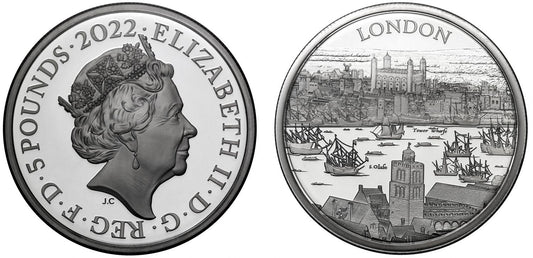
-
* Charles III 2024 gold PF70 UC 1/4oz Britannia
Regular price £940Regular priceUnit price per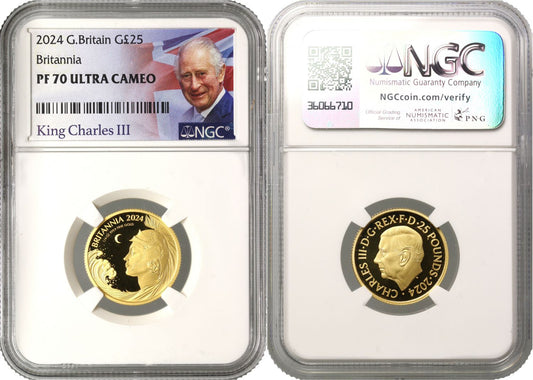
-
* Charles III 2024 gold proof 1/4oz Britannia
Regular price £890Regular priceUnit price per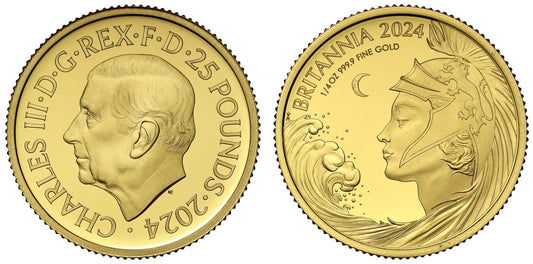
-
* Charles III 2025 silver proof Sovereign Privy PF70 UCAM
Regular price £170Regular priceUnit price per