 Search


FAQs
What makes a coin valuable?


I have coins to sell, what’s the next step?
How will my purchases be shipped?
What happens if I’m not entirely happy with my purchase?
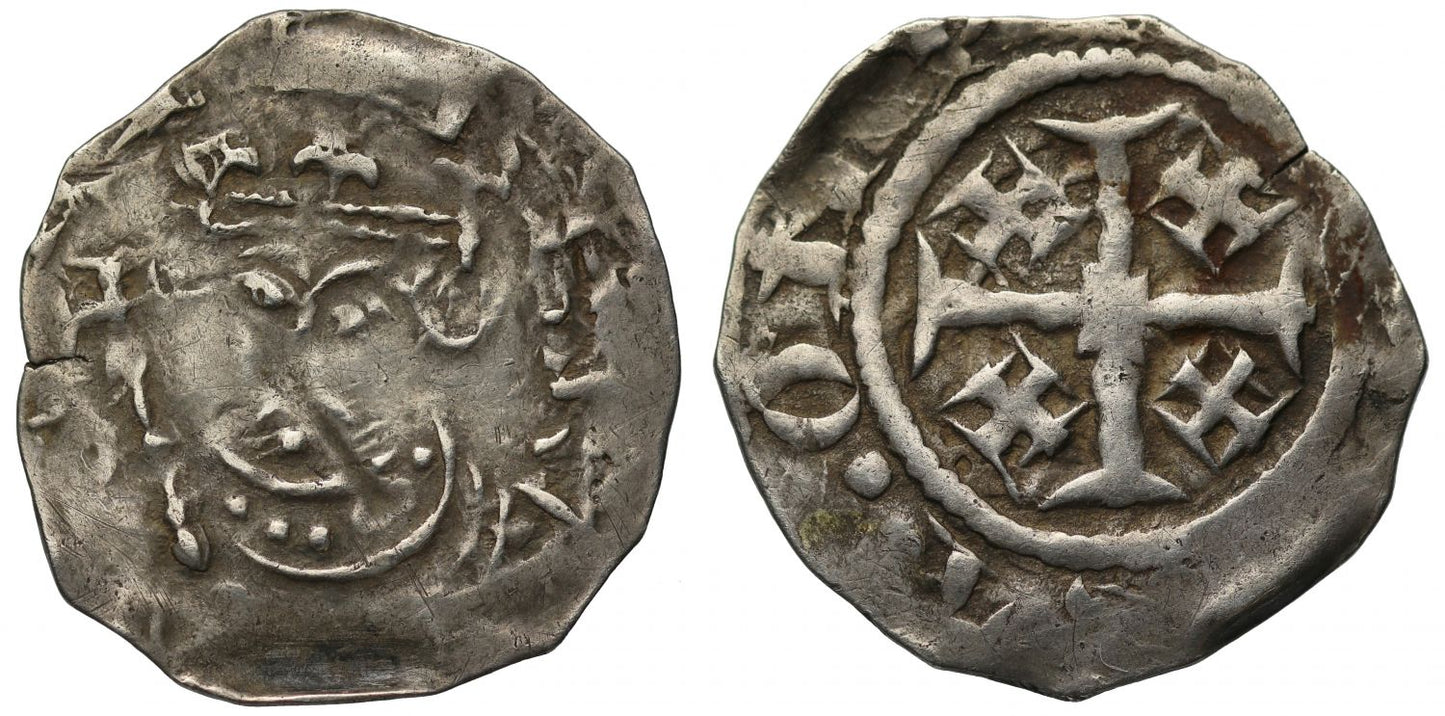
Henry II Penny, Tealby type C2, Winchester, Osbert, ex English Doctor
Henry II (1154-89), silver "Tealby" Penny, Type C2 (c.1163-67), Winchester Mint, moneyer Osbert, facing crowned head with hand holding sceptre to edge, Latin legend and beaded borders surrounding both sides, commences upper left, hENRI. RE, rev. short voided cross pattee, small cross pattee saltire in each angle, [+OSBE]T. ON. P[INC], weight 1.41g (N.953; S.1339). Toned, irregular in shape with flat or off flan areas to legend, slight die clash on obverse otherwise very fine.
The legend reads "Henry King" on the obverse and "Osbert of Winchester" on the reverse.
The cross and crosslets type coinage of King Henry II is more often called "Tealby" because of the enourmous find of a hoard of this coinage in late 1807 which amounted to over 5,700 pieces. They were found at Bayons Manor farm near Tealby in Lincolnshire, and the first report was written in the Stamford Mercury of the 6thNovember 1807. From this hoard alone, 17 new mint towns for the coinage were added to what was known as of 1807, however only some 600 + pieces were saved for the national and other important private collections with 5,127 pieces deemed unworthy and sent to be melted at the Tower of London.
The first Plantagenet King of England Henry Curtmantle, as he was also known was the son of Matilda Empress and Count Geoffrey V of Anjou born on the 5th March 1133, ruled England from 19th December 1154 to 6th July 1189. He was made Duke of Normandy age 17 in 1150 by King Louis VII of France, and became Count of Anjou and Maine a year later upon the death of his Father. He married Eleanor of Aquitaine making him Duke of that region in 1152 after her marriage to Louis VIII had been annulled. He later also became Count of Nantes by a treaty in 1158 meaning that before even the age of 40 he was in control of a great swarth of land stretching from parts of Wales and eastern Ireland across to the western part of France later called the Angevin Empire. At times during his reign he also partially controlled Scotland and the Duchy of Britanny. He became King of England after King Stephen agreed to a peace treaty in the light of Henry's military expedition of 1153 meaning that he would inherit the kingdom on Stephen's death which duly happened the year after. After the turmoil of the previous reign Henry successfully restored Royal administration and built the kingdom back up to be similar to what it had been under his grandfather Henry I with a hegemony over Wales as well as control of lands in Anjou, Maine and Touraine. However his attempts to forge a relationship with the church resulted in a conflict with former ally and Archbishop of Canterbury Thomas Becket through the 1160s until Becket's infamous murder by knights in the sanctity of Canterbury Cathedral in 1170. He also faced a "cold war" conflict with King Louis VII of France for several decades having expanded his empire at Louis' expense.
Henry produced eight children with Eleanor, five sons and three daughters. His second son Henry was made co-ruler with his Father and was known as Henry the Young King but would pre-decease his Father by six years, the eldest son William who was the ninth Count of Poitier had died at the age of 3. Henry the Young King did rebel against his Father over tensions of inheritance and was supported by younger brothers Richard (later the Lion Heart) and Geoffrey as well as their mother Eleanor. The rebel alliance was supported by France under King Louis and later his son Philip II, Scotland, Brittany, Flanders and Boulogne and the Great Revolt of 1173-74 was only silenced by King Henry's swift military action spearheaded by talented local commanders. The revolt arose again a decade later in 1183 which culminated in the death of Henry the Young King at the age of 28. Meanwhile the Norman invasion of Ireland from 1169 until 1177 resulted in King Henry declaring his son John, later King, as Lord of Ireland and claiming all lands though his Norman knights there had to continue to gradually fight and physically adopt the territory as part of the Angevin Empire.
A final rebellion in 1189 caused by Richard's fears that John would be made the next King rather than the proper succession of himself as the elder surviving brother, led to King Henry being defeated by Richard and Philip II and retreating to Chinon Castle suffering from a bleeding ulcer where he died and was succeeded by Richard.
The City of Winchester on the River Itchen in Hampshire was the Capital of the West Saxon Kingdom and seat of their bishop and mentioned in the Burghal Hidage. The Royal Treasury was here with coinage perhaps struck here as early as the reign of Beorhtric, the first time the mint name appears is on a Penny of Alfred the Great. The town was stormed by Danes in 860 and submitted without resisting to Swein in 1013. Henry of Blois was Bishop of Winchester in the reign of Stephen and the town visited by Matilda proclaimed as "Lady and Queen of England" in 1141, though she later had to flee as it was burnt. Later King John was driven from Winchester in 1216. Minting activity occurs from the reign of Alfred the Great, Aethelstan and then Eadwig to Henry III.
Provenance:
Ex Dix Noonan and Webb, Auction 191, 4th May 2021, lot 181.
Ex Collection of an English Doctor part III, Sovereign Rarities fixed price list online August 2022.
FAQs
What makes a coin valuable?
I have coins to sell, what’s the next step?
How will my purchases be shipped?
What happens if I’m not entirely happy with my purchase?
Popular Coins
View all-
Elizabeth II 2022 silver proof 2oz City Views London
Regular price £220Regular priceUnit price per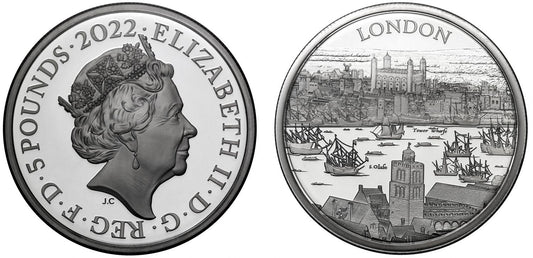
-
Charles III 2024 gold PF70 UC 1/4oz Britannia
Regular price £1,020Regular priceUnit price per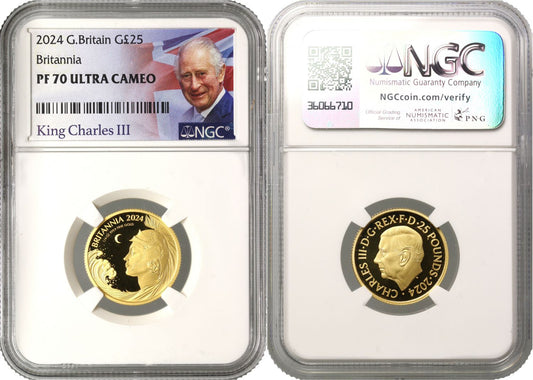
-
Charles III 2024 gold proof 1/4oz Britannia
Regular price £950Regular priceUnit price per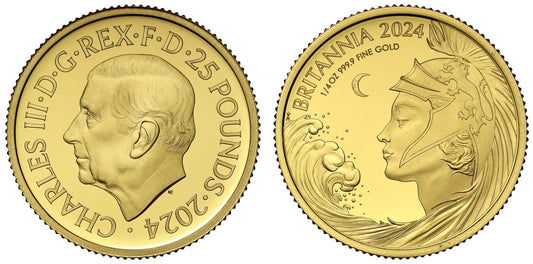
-
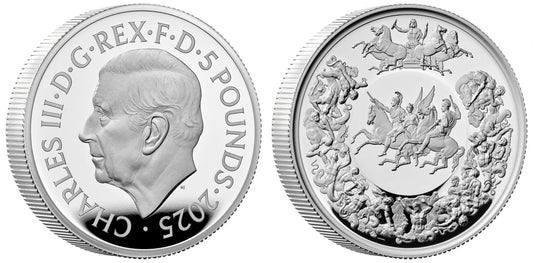
Charles III 2025 silver proof 2oz Waterloo Victory
Regular price £260Regular priceUnit price per