 Search



FAQs
What makes a coin valuable?


I have coins to sell, what’s the next step?
How will my purchases be shipped?
What happens if I’m not entirely happy with my purchase?
George V 1927 Matt proof Crown of highest rarity PF66
George V (1910-36), 0.500 silver Matt Proof Crown, 1927, struck from sand-blasted dies, bare head left, BM raised on truncation for engraver Bertram Mackennal, Latin legend and toothed border surrounding, GEORGIVS V DEI GRA: BRITT: OMN: REX rev. struck en medaille, Imperial crown, date above, emblematic wreath surrounding of roses, shamrocks and thistles, small K.G. to right of lowest rose for engraver Kruger Gray, denomination in words at bottom, Latin legend surrounding, .FID. .DEF. .IND. .IMP (cf.Linecar & Stone 37; Bull 3632 R7; ESC 367A; Davies 1630; S.4036). Toned practically as struck, has been graded and slabbed by NGC as PF66 Matte; of the highest rarity with only one other example known to us in private hands.
NGC certification 4377122-001
The legends translate across both sides as "George the Fifth by the grace of God, King of all the Britons, Defender of the Faith, Emperor of India."
The matt proof finish to what are usually brilliant proof coins was used especially at the Royal Mint for photographic purposes, from around the mid-1920's until as late as the mid 1970's. As flash photography was used to illustrate promotional material, the brilliant proofs caused too much reflection in the resulting imaging at this period of time, to be acceptable and it was much easier to literally strike one or two examples with a satin matt finish, to not reflect the flash bulb in those days before digital imaging was possible.
Bertram Mackennal (1863-1931) was the Australian engraver (later knighted) responsible for the obverse design. George Kruger Gray (1880-1943) was responsible for designing and engraving all the reverse designs.
FAQs
What makes a coin valuable?
I have coins to sell, what’s the next step?
How will my purchases be shipped?
What happens if I’m not entirely happy with my purchase?
Popular Coins
View all-
Elizabeth II 2022 silver proof 2oz City Views London
Regular price £220Regular priceUnit price per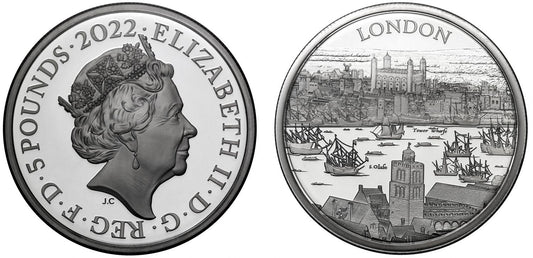
-
Charles III 2024 gold proof 1/4oz Britannia
Regular price £950Regular priceUnit price per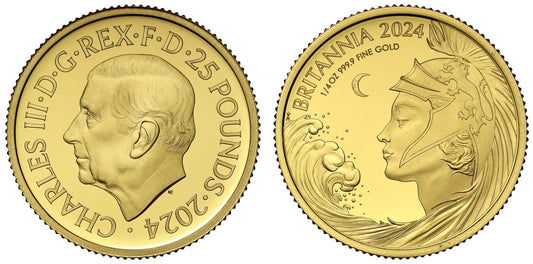
-
Charles III 2025 silver proof 2oz Waterloo Victory
Regular price £260Regular priceUnit price per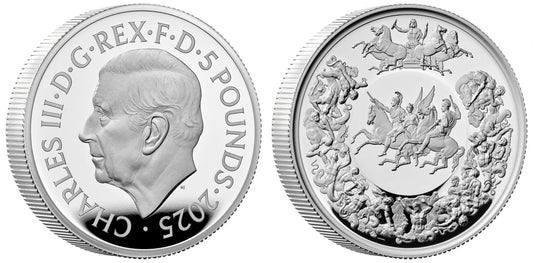
-
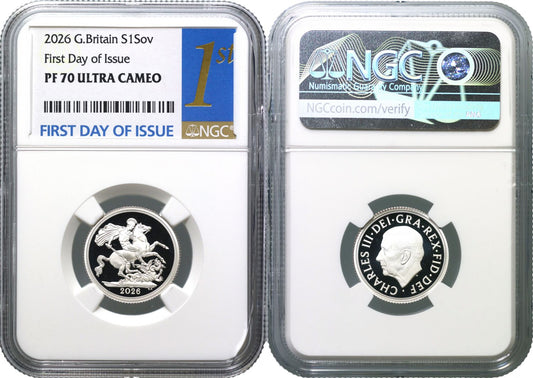
Charles III 2026 silver PF70 UCAM FDI Sovereign
Regular price £125Regular priceUnit price per