 Search



FAQs
What makes a coin valuable?


I have coins to sell, what’s the next step?
How will my purchases be shipped?
What happens if I’m not entirely happy with my purchase?
George IV 1823 Two-Pounds, MS61
George IV (1820-30), gold Two-Pounds, 1823, bare head left, tiny J.B.M. below truncation for engraver Jean Baptiste Merlen, abbreviated Latin legend and toothed border surrounding, GEORGIUS IIII D:G: BRITANNIAR: REX F:D:, rev. St George and dragon right, W.W.P. below broken lance on ground-line for Mint Master William Wellesley Pole, date in exergue, initials B.P. to upper right of exergue for engraver Benedetto Pistrucci, edge engraved in raised letters, DECUS ET TUTAMEN. ANNO REGNI IV., weight 16.00g (Schneider 635; MCE 470; S.3798; Fr.375; KM.690). Lightly toned, has been slabbed and graded by NGC as MS61.
NGC Certification 5880617-022.
The Latin legends translate as "George the Fourth by the Grace of God, King of all the Britons, Defender of the Faith" and on the edge as "An ornament and a safeguard, in the fourth year of the reign". The various initials that feature on the coin are for the engravers and Master of the Mint as shown above. William Wellesley Pole was the elder brother of the Duke of Wellington.
The gold output of £759,749 for the calendar year of 1823 is actually the lowest of the reign which is paradoxical as this is the only year where there are three currency denominations struck from Double-Sovereign to Half-Sovereign. The next lowest is 1828 with just over a million pounds of gold produced whereas all the other years of the reign range from £2.3million to £9.5million.
FAQs
What makes a coin valuable?
I have coins to sell, what’s the next step?
How will my purchases be shipped?
What happens if I’m not entirely happy with my purchase?
Popular Coins
View all-
Elizabeth II 2022 silver proof 2oz City Views London
Regular price £220Regular priceUnit price per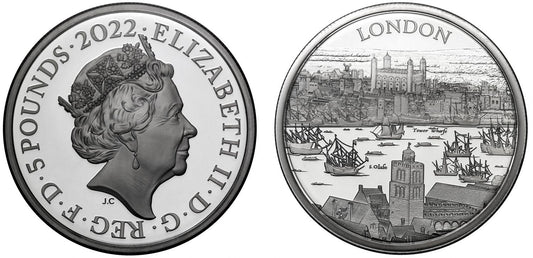
-
Charles III 2024 gold proof 1/4oz Britannia
Regular price £950Regular priceUnit price per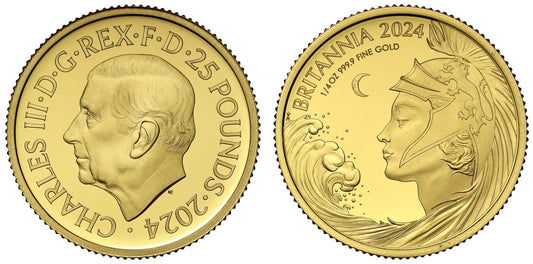
-
Charles III 2025 silver proof 2oz Waterloo Victory
Regular price £260Regular priceUnit price per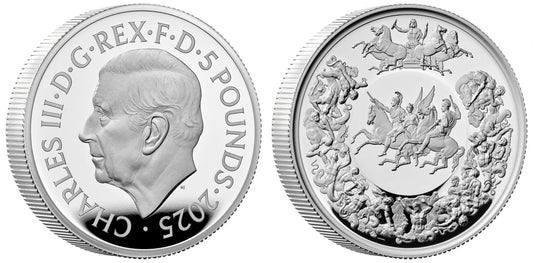
-
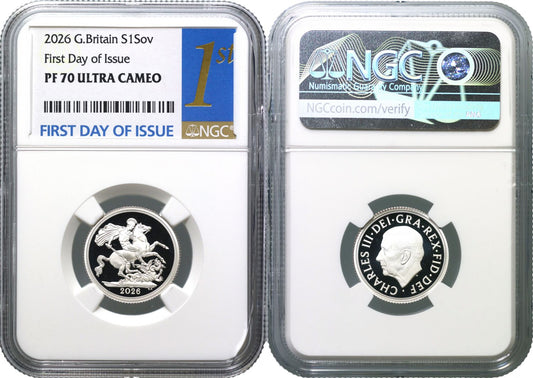
Charles III 2026 silver PF70 UCAM FDI Sovereign
Regular price £125Regular priceUnit price per