 Search



FAQs
What makes a coin valuable?


I have coins to sell, what’s the next step?
How will my purchases be shipped?
What happens if I’m not entirely happy with my purchase?
George II 1729 EIC Five-Guineas, East India Company gold
George II (1727-60), gold Five Guineas, 1729 E.I.C. initials of the East India Company below young laureate head left, GEORGIVS.II. DEI.GRATIA, rev. crowned quartered shield of arms, date either side of crown, M.B.FE. ET. H. REX. F.D. B.ET. L. D. S. R. I. A. T ET. E. edge inscribed in raised letter and dated, +DECVS. ET. TVTAMEN ANNO. REGNI. TERTIO, inverted N's in ANNO (Schneider 556; Schneider dies 2/2; MCE 279; S.3664). Toned with some red colour, with some light surface marks, scratch in field behind head, otherwise good very fine.
The East India Company provided quantities of gold bullion from their trading activities to the Royal Mint to strike coinage with their provenance mark "E.I.C." at various times in the reign of King George II, probably as they were also responsible for taking great quantities of silver out of the country for export. The edges of these spectacular gold coins also carry an inscriptions as an "ornament and a safeguard" against the old practice of clipping with a further statement that this coin was issued in the third year of the King's reign. However the Mint's official output figures show no gold produced in the calendar year of 1729 and Woodhead notes in the output tables in Schneider that the EIC gold coinage was not included the official figures until 1731 when the gold output was £305,768 which is on the smaller side of gold outputs for the reign. Nevertheless, the "Samuel King" Survey co-authored by this cataloguer published in May 2005 showed that 189 examples of these coins were traded in a 45 year period on the British coin market 1960-2005, the most prolific of this reign. Perhaps this is because more of the EIC type Five Guineas were saved from circulation especially if the company originally gave such coins out to backers and favoured persons as gifts to cherish rather than use and spend. There is a record of Queen Caroline for instance receiving East India Company gold.
FAQs
What makes a coin valuable?
I have coins to sell, what’s the next step?
How will my purchases be shipped?
What happens if I’m not entirely happy with my purchase?
Popular Coins
View all-
Elizabeth II 2022 silver proof 2oz City Views London
Regular price £220Regular priceUnit price per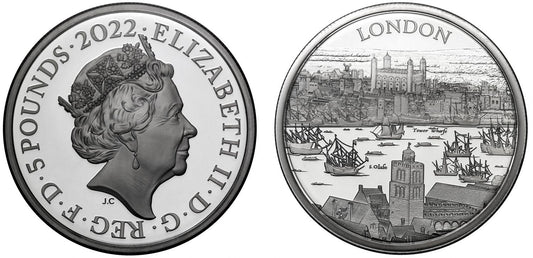
-
Tudor Beasts Completer 2027 1oz silver proof Charles III
Regular price £185Regular priceUnit price per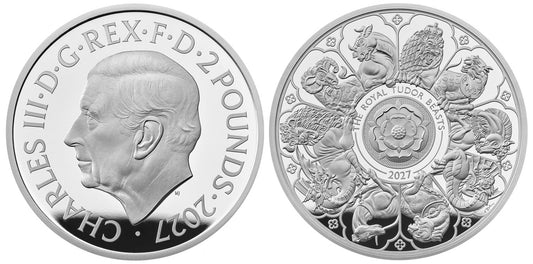
-
Charles III 2024 gold PF70 UC 1/4oz Britannia
Regular price £1,020Regular priceUnit price per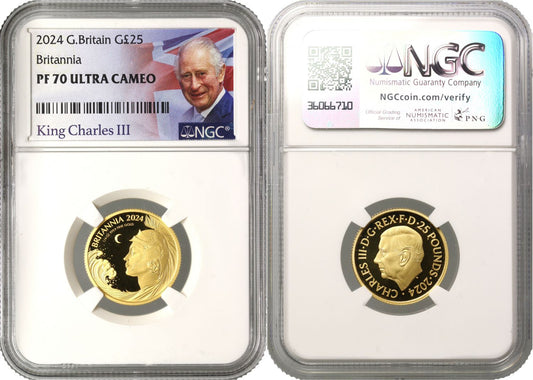
-
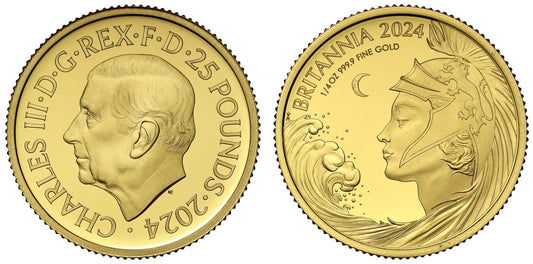
Charles III 2024 gold proof 1/4oz Britannia
Regular price £950Regular priceUnit price per