 Search


FAQs
What makes a coin valuable?


I have coins to sell, what’s the next step?
How will my purchases be shipped?
What happens if I’m not entirely happy with my purchase?
George I 1717 Two-Guineas, 1st use by Newton of "Guinea" in official papers
George I (1714-27), gold Two Guineas, 1717, laureate head right, legend and toothed border surrounding, GEORGIVS. D.G. M.B.FE. ET. HIB. REX. F.D., rev. die axis a little off-centre, crowned cruciform shields, incorporating the Arms of Hanover, sceptres in angles, garter star at centre, date either side of top crown, BRVN ET. L. DVX S.R.I.A.TH ET. EL., edge, diagonally grained, weight 16.61g (Schneider -; Bull EGC 499; MCE 242; S.3627). Toned, retaining a little brilliance in legends almost very fine.
The abbreviated Latin legends translate as on the obverse "George by the Grace of God, King of Great Britain, France and Ireland, Defender of the Faith" and on the reverse as "Duke of Brunswick and Luneberg, High Treasurer and Elector of the Holy Roman Empire."
1717 is the first year for the gold Two Guineas of George I, and the calendar year output of gold was £675,777. Sir Isaac Newton was the Master Worker of the Mint at this time and was the first to officially call the gold coinage the "guinea" in a report made in the Mint papers of 1717. The gold coins had been called Guineas colloquially since the time that gold dust and metal began to be imported from the African country of Guinea, during the reign of Charles II.
FAQs
What makes a coin valuable?
I have coins to sell, what’s the next step?
How will my purchases be shipped?
What happens if I’m not entirely happy with my purchase?

Popular Coins
View all-
Elizabeth II 2022 silver proof 2oz City Views London
Regular price £220Regular priceUnit price per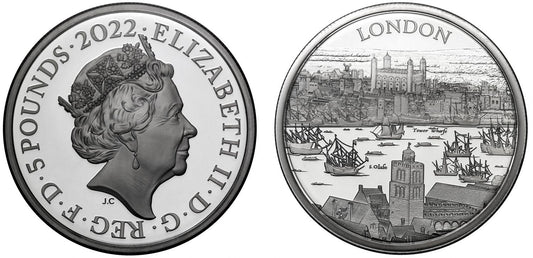
-
Charles III 2024 gold PF70 UC 1/4oz Britannia
Regular price £1,020Regular priceUnit price per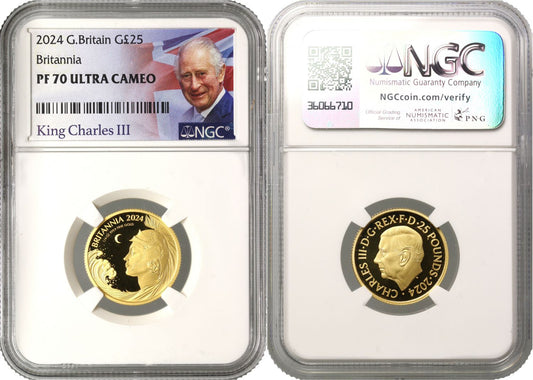
-
Charles III 2024 gold proof 1/4oz Britannia
Regular price £950Regular priceUnit price per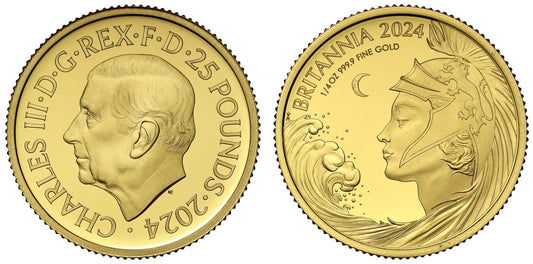
-
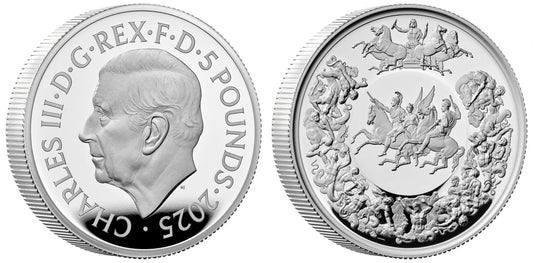
Charles III 2025 silver proof 2oz Waterloo Victory
Regular price £260Regular priceUnit price per