 Search


FAQs
What makes a coin valuable?


I have coins to sell, what’s the next step?
How will my purchases be shipped?
What happens if I’m not entirely happy with my purchase?
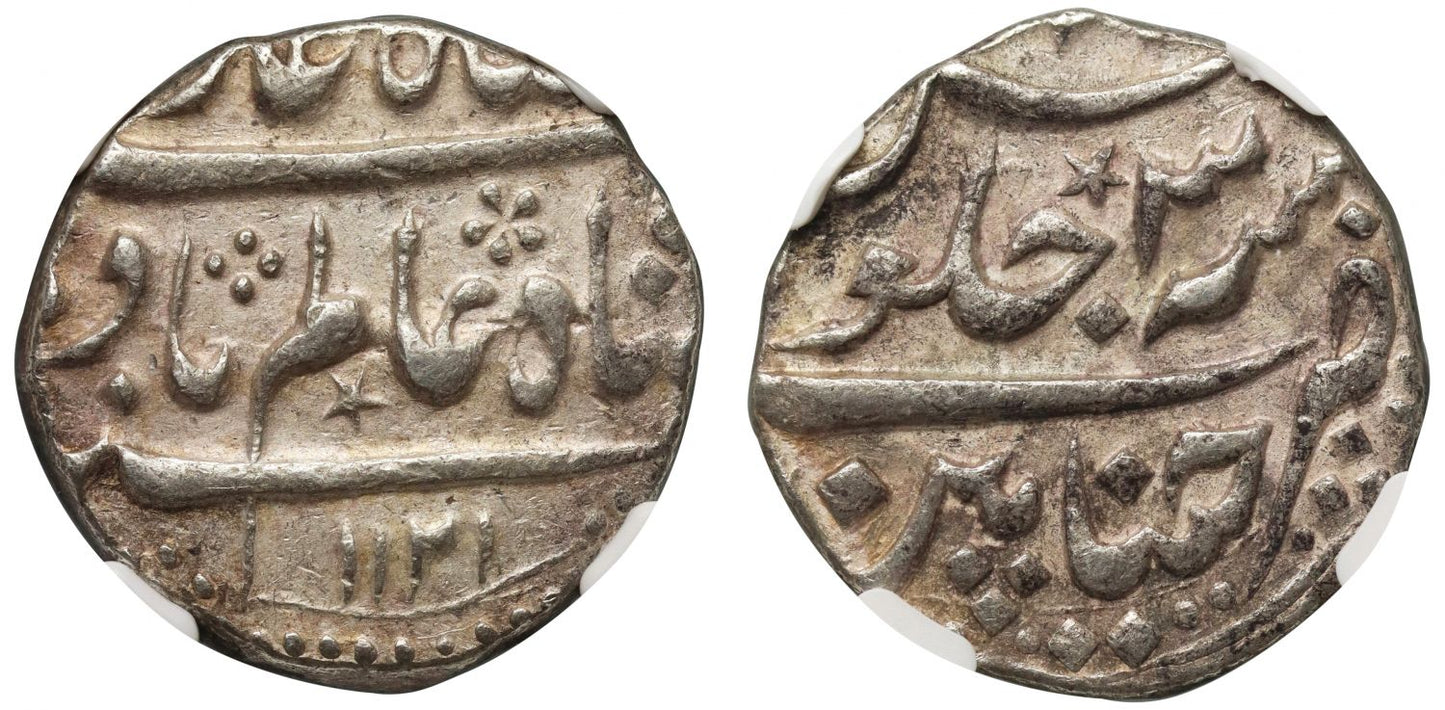
EIC, Madras Presidency, silver Rupee, Chinapatan, AH 1121, year 3, ex Puddester.
India, British India, East India Company, Madras Presidency, Mughal-style silver Rupee, in the name of Shah Alam I Bahadur (AH 1119-24/1707-12), Chinapatan, AH 1121, yr 3 [1709/10], shah alam badshah ghazi sanah 1121 [Shah Alam, victorious Emperor, 1121], rev. zarb chinapatan sanah 3 julus [Struck at Chinapatan in the 3rd year of his reign], 11.62g, 9h (Prid. 121 [not in Sale]; Stevens 2.17; KM. A302). A little discolouration on reverse, otherwise extremely fine and well-centred, full flan, clear mint and date. NGC XF45.
NGC Certification 6322252-066
Provenance:
Ex Puddester Collection, Part One, Noonans, 8-9 February, 2023, Lot 57
Facing competition, sabotage and attempted assassination from other European companies, the agents of the East India Company sought various locations for strongholds, trading-centres and factories. In 1640 Fort St George was established on what was then uninhabited land, and an EIC mint was striking local-style coinage, Pagodas and Cash, by 1643. When the Mughal Emperor Aurangzeb conquered the state of Golconda in 1687, Mughal-style coinage began to be used in the south of India. To facilitate trade, the East India Company negotiated permission from the emperor to strike Mughal-style coins in the area, in 1692. Initially the mint name on these coins was Chinapatan, the local name for Madras which is now the metropolis Chennai.
FAQs
What makes a coin valuable?
I have coins to sell, what’s the next step?
How will my purchases be shipped?
What happens if I’m not entirely happy with my purchase?
Popular Coins
View all-
Elizabeth II 2022 silver proof 2oz City Views London
Regular price £220Regular priceUnit price per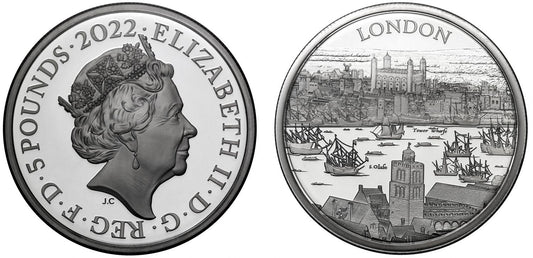
-
Charles III 2024 gold PF70 UC 1/4oz Britannia
Regular price £1,020Regular priceUnit price per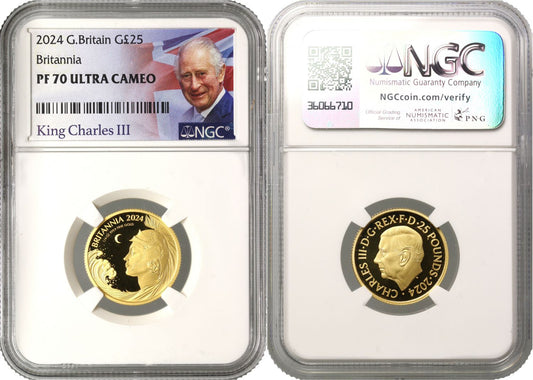
-
Charles III 2024 gold proof 1/4oz Britannia
Regular price £950Regular priceUnit price per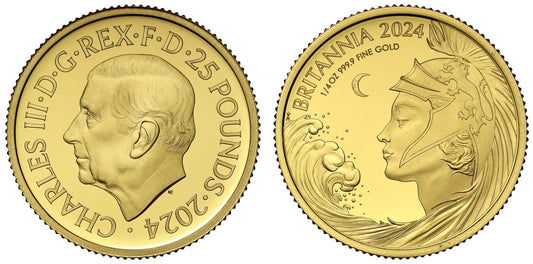
-
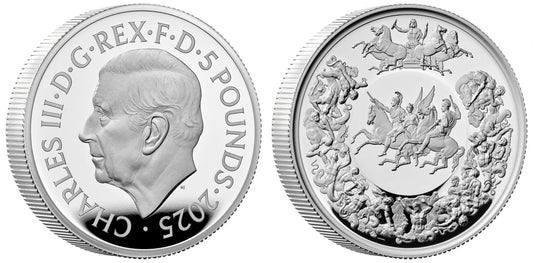
Charles III 2025 silver proof 2oz Waterloo Victory
Regular price £260Regular priceUnit price per