 Search


FAQs
What makes a coin valuable?


I have coins to sell, what’s the next step?
How will my purchases be shipped?
What happens if I’m not entirely happy with my purchase?
Edward II silver Piedfort Penny, S.1466, Canterbury, exceptional rarity, ex Lawrence
Edward II (1307-27), Pattern piedfort silver Penny, uncertain class, possibly 11 (1317-20), Canterbury Mint, facing crowned head of King, crown with bifoliate side fleurs, beaded circles and partly legible legend surrounding, +EDW------D--, legends with closed E, rev., struck en medaille, long cross pattée, trio of pellets in each angle, beaded circles and Roman style partly legible legend surrounding, --VI TAS -A- --R, 5.54g / 85.5 grains, thickness 1.5mm (cf.N.1060-62; Wren page 170; Lawrence 10; S.1466). Toned, worn, mediocre to poor, but clearly an Edward II type long cross Penny, Canterbury Mint and most certainly a much thicker than usual piece, of the highest rarity.
For further reading see British Numismatic Journal, volume XVI, 1921-22, article by L.A. Lawrence, English Piedforts and Their Purposes. Lawrence noted three piedfort Pennies for the reign of King Edward II all of the Canterbury Mint weighing between 66 grains and 86 grains with two as class XI and the other unidentifiable which is this piece, chances are it is also class 11. One more Edward II Canterbury piedfort has emerged since as part of the Archbishop Sharp property sold in 2019 by Morton and Eden and we are unaware of any others. The weights all vary but this coin is notably over 4 times heavier than a regular currency penny.
Whilst the precise status of such heavyweight pieces is unknown, they were clearly not meant for circulation. Some believe they were trials used in the testing or checking new dies, but this seems unlikely with this piece as it has two lettering styles on the obverse side. More likely is the suggestion that these pieces as a pattern to demonstrate styles to be used by die-cutters in their workshop, to show how the various punches perhaps display once a die is cut and finished. The thicker coin patterns could be displayed prominently as an example and not mistakenly taken for use as a currency piece. The fact that Lawrence recorded in his 1922 article only 20 different piedfort pieces existing from the reign of Edward I till Henry VII, just over 200 years of minting, seems meaningful for this theory.
Provenance:
Ex L. A. Lawrence collection, Glendining, 28th November 1951, lot 1099 part and listed as number 10 in his 1921-22 article on the piedfort subject.
Ex A. H. Baldwin, sold privately July 1959 - ticket most likely in the hand of Peter Woodhead.
Ex Spink & Son Ltd, circa 1996 - ticket in the hand of Antony Wilson sold privately to USA.
FAQs
What makes a coin valuable?
I have coins to sell, what’s the next step?
How will my purchases be shipped?
What happens if I’m not entirely happy with my purchase?

Popular Coins
View all-
Elizabeth II 2022 silver proof 2oz City Views London
Regular price £220Regular priceUnit price per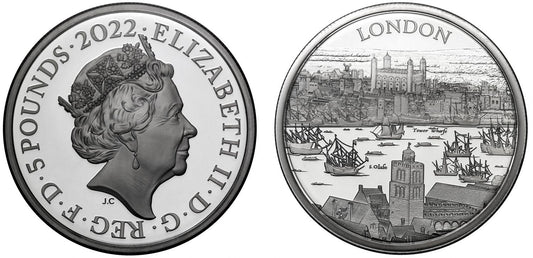
-
Charles III 2024 gold PF70 UC 1/4oz Britannia
Regular price £1,020Regular priceUnit price per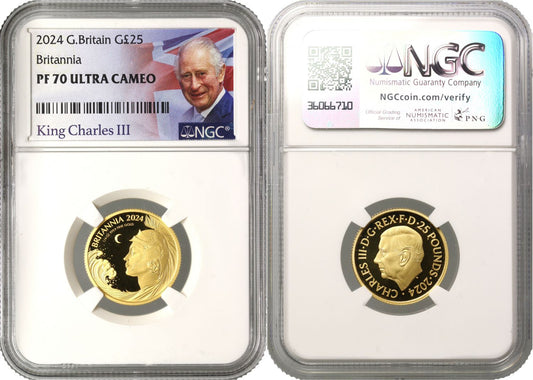
-
Charles III 2024 gold proof 1/4oz Britannia
Regular price £950Regular priceUnit price per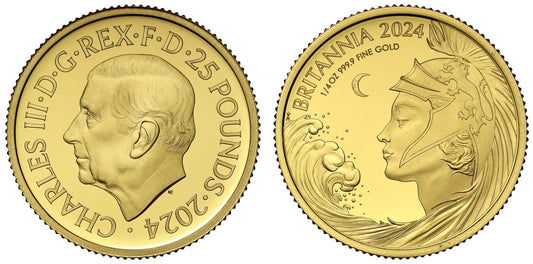
-
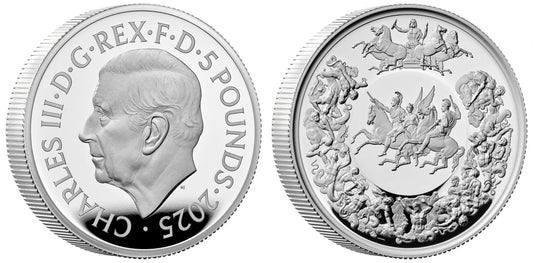
Charles III 2025 silver proof 2oz Waterloo Victory
Regular price £260Regular priceUnit price per