 Search


FAQs
What makes a coin valuable?


I have coins to sell, what’s the next step?
How will my purchases be shipped?
What happens if I’m not entirely happy with my purchase?
Constantius II, Gold Solidus, Antioch, AD 347-55
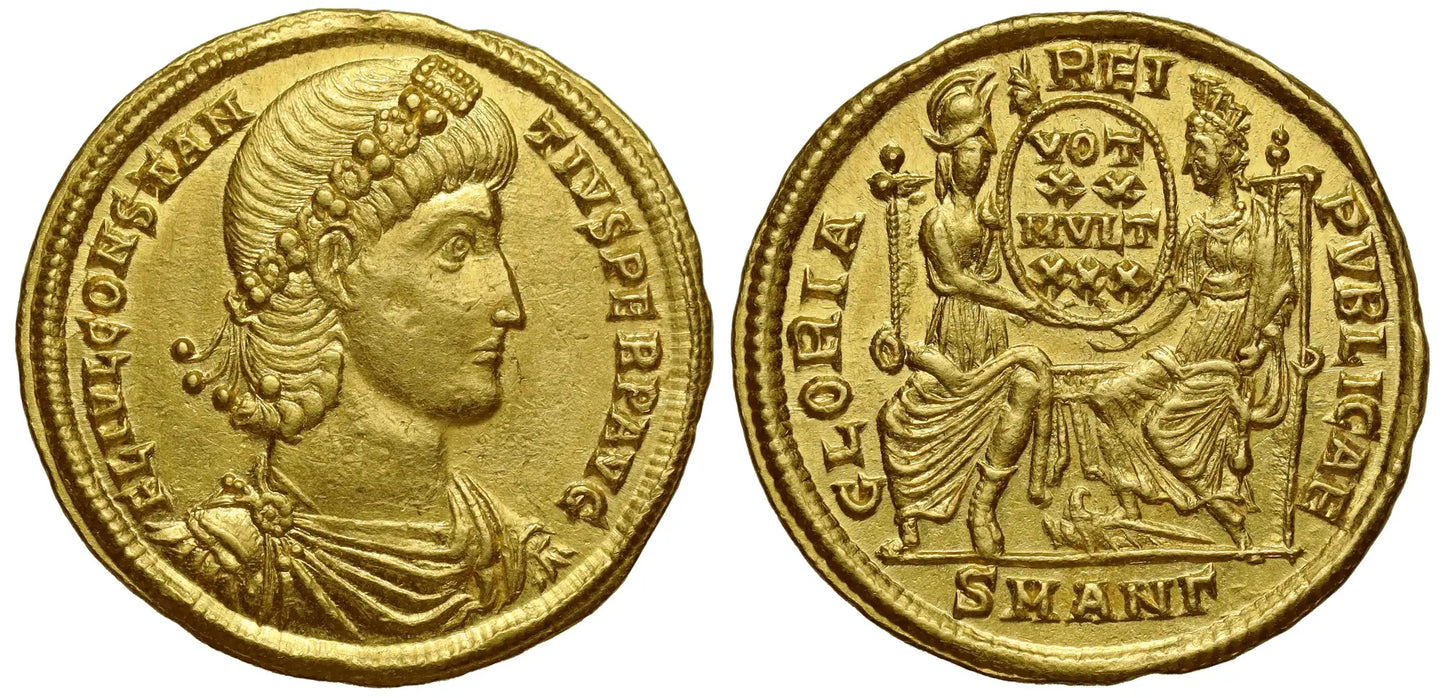
Constantius II (A.D. 337-361), gold Solidus, Antioch, A.D. 347-55, FL IVL CONSTAN-TIVS P F AVG, pearl and rosette-diademed, draped and cuirassed bust right, rev. GLORIA REI PVBLICAE, Roma, holding a spear, and Constantinopolis, holding a sceptre and resting her right foot on a prow, enthroned, supporting between them a wreath inscribed VOT / XX / MVLT / XXX, SMANΓ in exergue, 4.40g., 6h (RIC 84; C 108; Depeyrot 6/3). Some lustre, extremely fine, rare.
This gold solidus was struck at Antioch between 347-355 AD during the reign of Constantius II, one of the principal emperors of the later Roman Empire. The obverse shows a pearl- and rosette-diademed Constantius II facing right, wearing military armour and a draped cloak. The inscription FL IVL CONSTAN-TIVS P F AVG identifies him and shows his imperial authority and traditional virtues.
The reverse shows Roma and Constantinopolis seated together on a throne, supporting a wreath between them containing the inscription VOT / XX / MVLT / XXX. This refers to vows made for the emperor's twentieth anniversary of rule, with hopes for another thirty years. The imagery symbolically unites Rome, represented by the goddess Roma, with Constantinople, the increasingly important imperial capital in the East.
Constantius II was born in 317 AD and became emperor in 337 AD following the death of his father, Constantine the Great. He ruled the eastern part of the Roman Empire while his brothers, Constantine II and Constans, initially governed the western territories. After a series of conflicts between the brothers, Constantius eventually became sole emperor in 353 AD and ruled until his death in 361 AD.
His reign was dominated by military conflicts, particularly against the Persian Empire, as well as religious disputes surrounding Christianity and the competing Arian and Nicene traditions. The solidus reflects the political priorities of his reign, military strength, imperial longevity, and the unity of the Roman state. The presence of both Roma and Constantinopolis is particularly important, illustrating the continuing connection between Rome's traditional authority and the empire's eastern centre of power.
The obverse legend FL IVL CONSTANTIVS P F AVG translates to "Flavius Julius Constantius, Pius Felix, Augustus."
The reverse legend GLORIA REI PVBLICAE translates to "Glory of the Roman Republic"
The shield inscription VOT XX MVLT XXX translates to "Vows for 20 years [of the emperor's reign], [wishing for] many more, up to 30 years."
FAQs
What makes a coin valuable?
I have coins to sell, what’s the next step?
How will my purchases be shipped?
What happens if I’m not entirely happy with my purchase?
Popular Coins
View all-
Elizabeth II 2022 silver proof 2oz City Views London
Regular price £220Regular priceUnit price per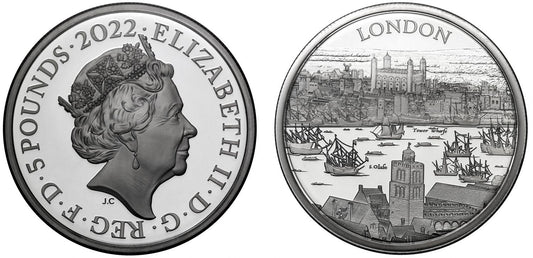
-
Charles III 2024 gold proof 1/4oz Britannia
Regular price £950Regular priceUnit price per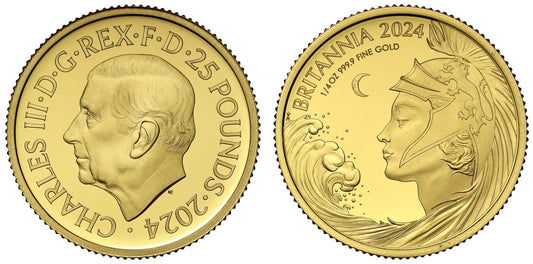
-
Charles III 2025 silver proof 2oz Waterloo Victory
Regular price £260Regular priceUnit price per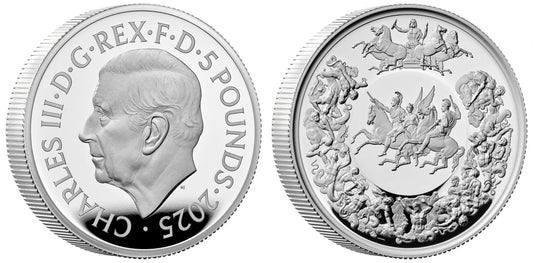
-
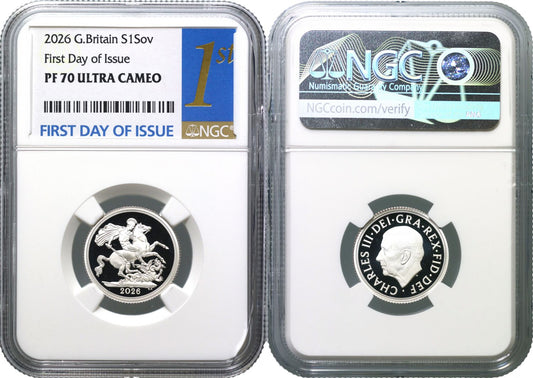
Charles III 2026 silver PF70 UCAM FDI Sovereign
Regular price £125Regular priceUnit price per