 Search


FAQs
What makes a coin valuable?


I have coins to sell, what’s the next step?
How will my purchases be shipped?
What happens if I’m not entirely happy with my purchase?
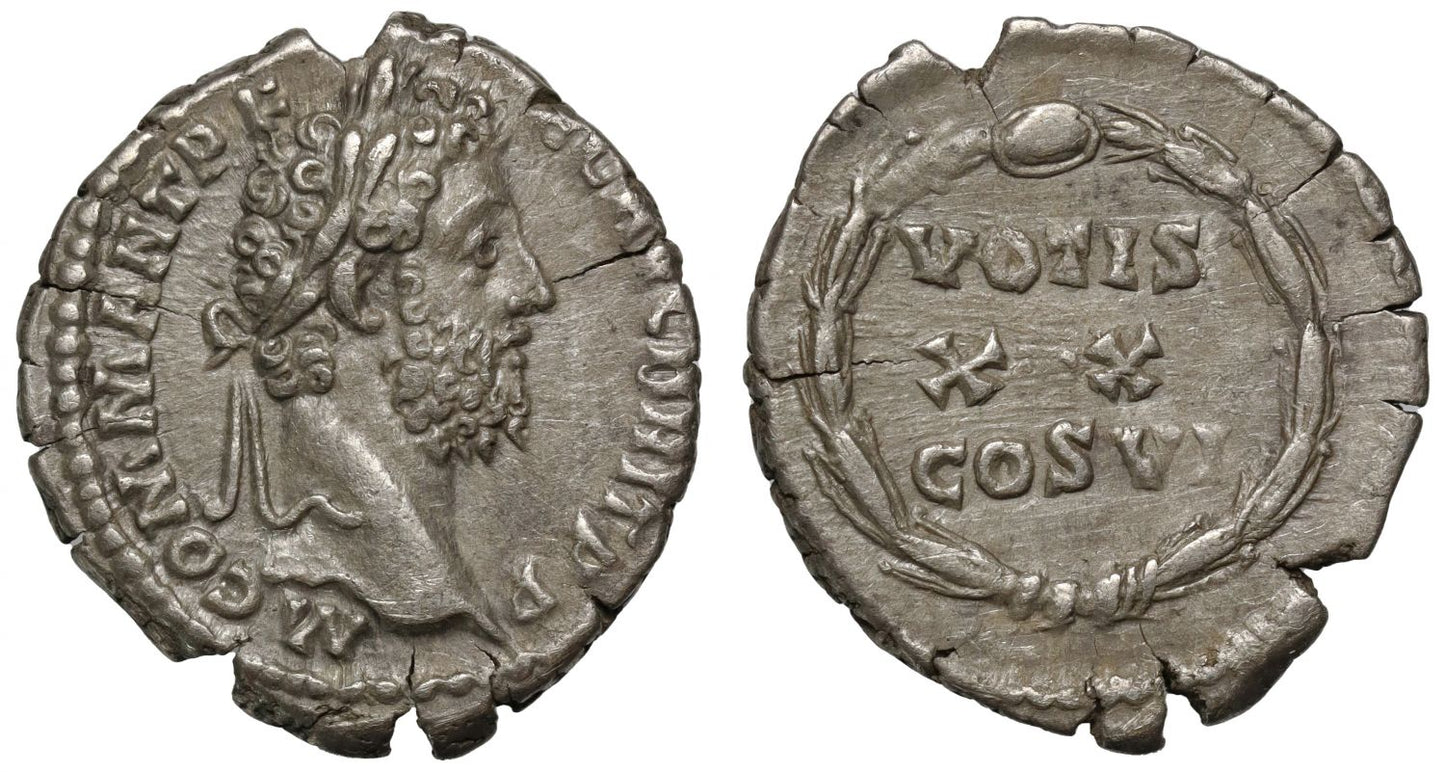
Commodus (AD 177–192), Denarius for the vota vicennalia suscepta.
Commodus (AD 177-192), silver Denarius for the vota vicennalia suscepta, Rome, AD 191, M COMM ANT P FEL AVG BRIT PP, laureate head right, rev. VOTIS / XX / COS VI within laurel wreath, oval medallion at top, 2.73g, 12h (RIC III, 229; Burgess, NC 1988, pl. 23, 1 = British Museum 1982, 1222.2 [same reverse die]). Good very fine, very scarce.
An emperor's vota suscepta, promises made to the gods in the anticipation of their reciprocal favours, became vota soluta, once both sides had fulfilled their obligations. Burgess [QUINQUENNIAL VOTA, NC 1988, p.77 ff] discusses how this process took place every five years, with renewed vows undertaken publicly and with great ceremony, at the start of each fifth year. This coin therefore was struck in AD 191, in the 15th year of Commodus's reign and before he took his 7th consulship, in AD 192. In this year he celebrated the gods' endorsements so far and undertook vows to secure their support until his 20th year in power. Ironically, he would be assassinated the very next year. The concept that a leader must have the backing of the gods is common throughout history, from the Mandate of Heaven in the east to the Divine Right of Kings in the west, and is still represented in numismatics today in the phrase dei gratia rex, King by the Grace of God.
The obverse legend M COMM ANT P FEL AVG BRIT PP translates to "Marcus Commodus Antoninus, Pius, Felix, Augustus, conqueror of Britain, father of the nation."
The reverse legend VOTIS / XX / COS VI translates to "Vows for the 20th [year of the emperor's reign], [made during his] sixth consulship."
FAQs
What makes a coin valuable?
I have coins to sell, what’s the next step?
How will my purchases be shipped?
What happens if I’m not entirely happy with my purchase?
Popular Coins
View all-
Elizabeth II 2022 silver proof 2oz City Views London
Regular price £220Regular priceUnit price per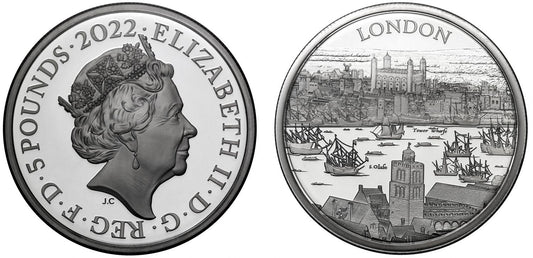
-
Tudor Beasts Completer 2027 1oz silver proof Charles III
Regular price £185Regular priceUnit price per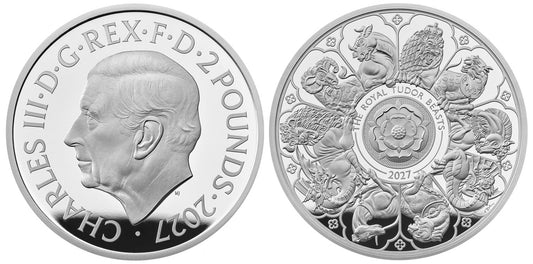
-
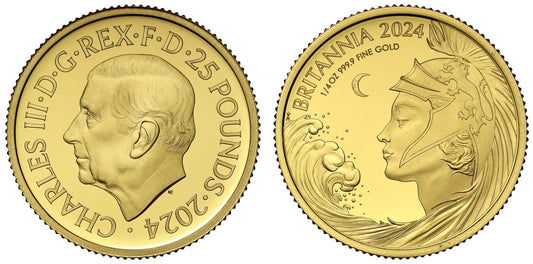
Charles III 2024 gold PF70 UC 1/4oz Britannia
Regular price £1,020Regular priceUnit price per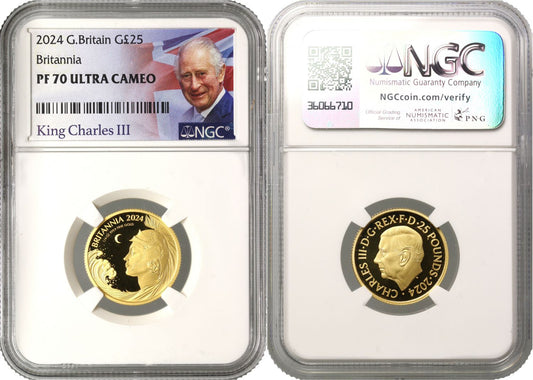
-
Charles III 2024 gold proof 1/4oz Britannia
Regular price £950Regular priceUnit price per