 Search


FAQs
What makes a coin valuable?


I have coins to sell, what’s the next step?
How will my purchases be shipped?
What happens if I’m not entirely happy with my purchase?
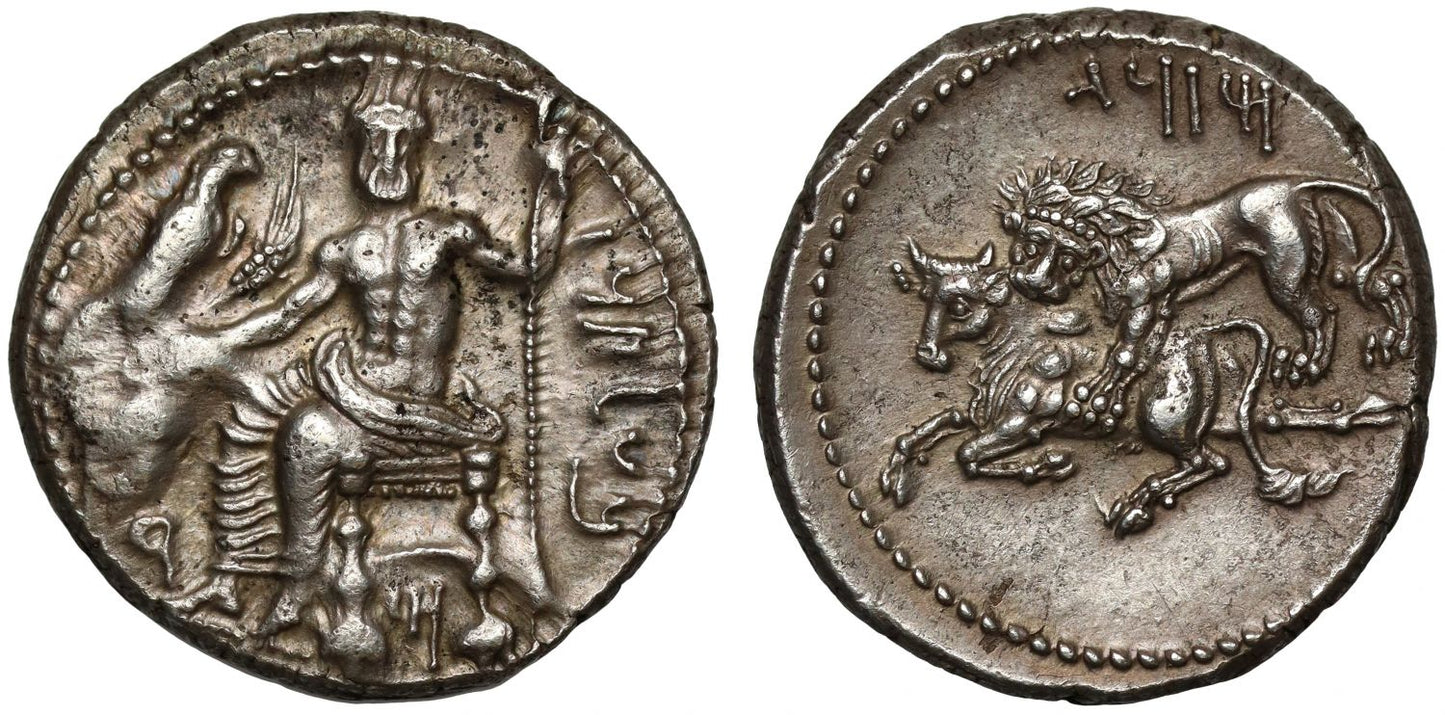
Cilicia, Tarsus, Satrap Mazaios, silver Stater, 361-334 BC
Cilicia. Tarsus. Satrap Mazaios, (361-334 BC), silver Stater, Baaltars enthroned, holding an ear of grain and a grapevine in his right hand, upon which an eagle sits, and a lotus scepter in his left, TN (Aramaic) below, M (Aramaic) beneath the throne, rev. MZDY, lion biting the neck of a prone bull, 10.82g (Casabonne Series 2, Group C; SNG Levante 106). Extremely fine.
The silver stater of Mazaios, struck at Tarsus in Cilicia between approximately 361 and 334 BC, is a fascinating coin from the final century of the Achaemenid Persian Empire. Cilicia, located on the southern coast of modern-day Turkey, occupied an important strategic position between Anatolia and the eastern Mediterranean. Its principal city, Tarsus, was an important political, commercial and minting centre.
Mazaios, also known as Mazaeus, served as satrap, or governor, of Cilicia during the reign of the Persian kings. His coinage reflects the diverse cultural character of the region, combining Persian authority, local Cilician religion and the artistic influence of the Greek world.
The obverse features Baaltars, the principal god of Tarsus, seated majestically upon a throne. He holds a sceptre and symbols associated with prosperity, including grain and grapes, while an eagle also appears among the attributes. The name Baaltars is written in Aramaic, the administrative language widely used within the Persian Empire. The image itself, however, is rendered in a strongly Hellenised style, demonstrating the influence of Greek artistic traditions in Cilicia.
The reverse presents one of the most striking images of the series, a lion attacking or overpowering a bull. This powerful scene may have carried symbolic associations of strength, authority and divine power. Aramaic inscriptions identify Mazaios and, on some varieties, his position as governor. The combination of inscriptions and imagery makes the coin a particularly clear expression of the multicultural character of the Achaemenid Empire.
The historical importance of the stater is heightened by its date. These coins were produced during the final decades of Persian rule, shortly before Alexander the Great invaded Asia in 334 BC. Cilicia soon came under Macedonian control as Alexander's campaign progressed eastward.
The stater of Mazaios represents more than an ancient means of payment. It captures a fascinating moment when Persian political power, local religious traditions and Greek artistic culture existed side by side, shortly before the transformation of the eastern Mediterranean world under Alexander the Great.
FAQs
What makes a coin valuable?
I have coins to sell, what’s the next step?
How will my purchases be shipped?
What happens if I’m not entirely happy with my purchase?
Popular Coins
View all-
Elizabeth II 2022 silver proof 2oz City Views London
Regular price £220Regular priceUnit price per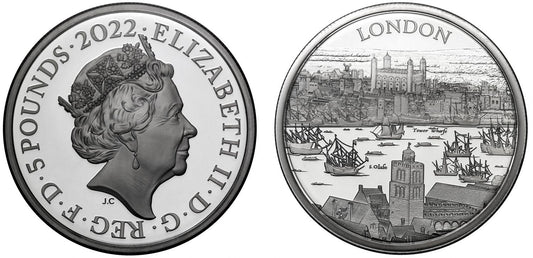
-
Tudor Beasts Completer 2027 1oz silver proof Charles III
Regular price £185Regular priceUnit price per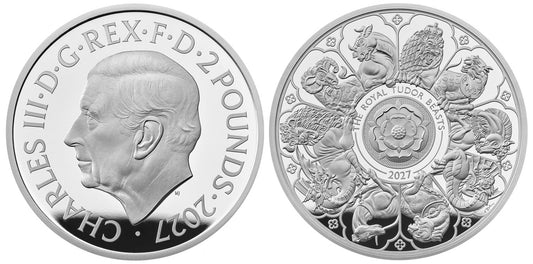
-
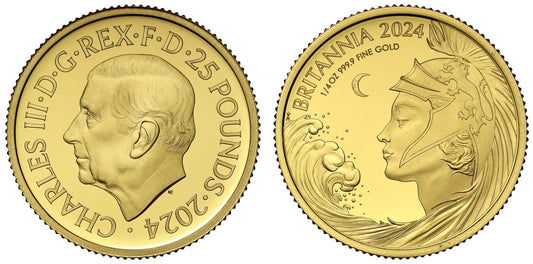
Charles III 2024 gold PF70 UC 1/4oz Britannia
Regular price £1,020Regular priceUnit price per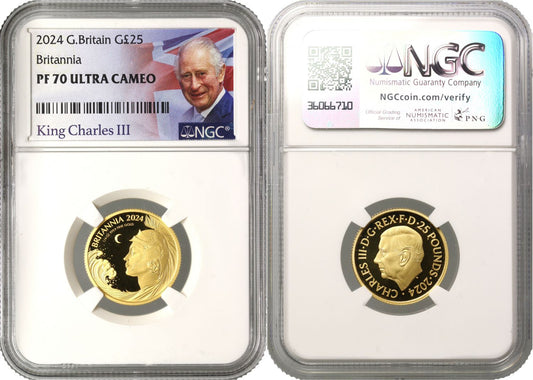
-
Charles III 2024 gold proof 1/4oz Britannia
Regular price £950Regular priceUnit price per