 Search


FAQs
What makes a coin valuable?


I have coins to sell, what’s the next step?
How will my purchases be shipped?
What happens if I’m not entirely happy with my purchase?
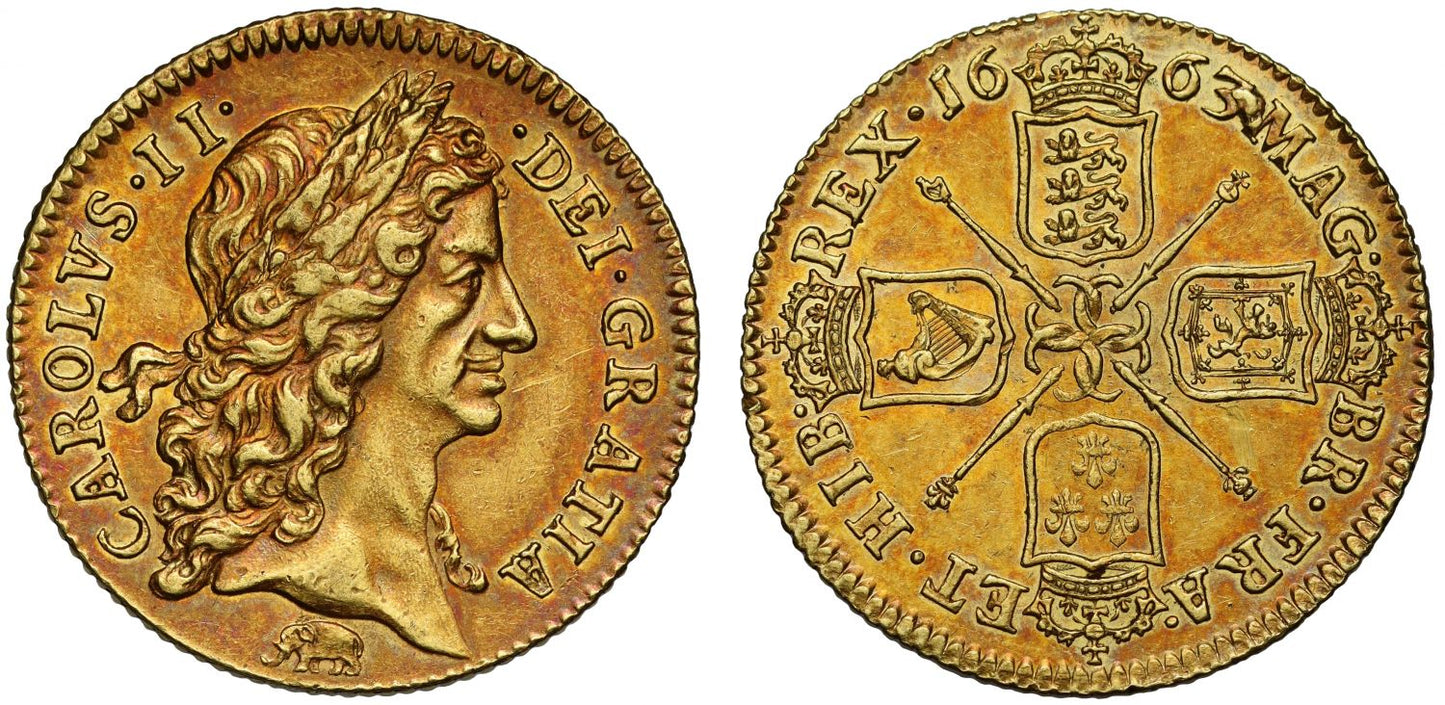
Charles II 1663 Guinea, Elephant below, 1st year of issue, low mintage
Charles II (1660-85), gold Guinea, 1663, elephant and castle below first laureate head right, Latin legend and toothed border surrounding, CAROLVS. II. DEI. GRATIA, rev. crowned cruciform shields, sceptres in angles, four interlinked Cs at centre, date flanking top crown, Latin legend and toothed border surrounding, .MAG. BR. FRA. ET. HIB REX., weight 8.39g (Schneider 438; Farey 0015; EGC 227 R5; MCE 53; S.3339). Striking original copper red bloom permeating the surfaces with mirrored fields, well detailed in both the portraiture and reverse shields and heraldry, one short reverse scratch through the rich tone in the lower right quarter of reverse, raised die flaw connecting 3 of date with M following, a very attractive coin, good very fine, extremely rare.
The Latin legends translate as on the obverse "Charles the second by the Grace of God," and abbreviated on the reverse as "King of Great Britain, France and Ireland."
Only £1,231 worth of gold was coined in the calendar year of 1663 which would have been all guineas as there was no other gold denomination at this time. The only division would be between elephant below provenance mark coins and those without such a symbol, a breakdown which is unknown, but probably means both types number each to only three figure sums originally struck.
Such coins with the elephant and castle provenance mark below the bust were issued by the Royal African Company of England which was the subsequent reincarnation of the Royal African Company originally launched by Prince Rupert in 1660 to bring back gold and trade goods from Africa. The Company did well and became a tad over-confident on the African coast, in being too aggressive in attempted takeovers of Dutch assets. The monetary costs of his confrontations also caused havoc with the Company's finances, somehow soldiering on with some further coin issues, through to 1671 when it eventually became insolvent. The Company was soon relaunched again from 1672 as the Royal African Company of England, however trading voyages were delayed by the third Anglo-Dutch War and did not get underway till late in 1673. Prosperous times returned in the period, when this Two Guinea piece would have been issued and 1676, 1677 and 1678 are years in which all four denominations of gold were struck with the company provenance mark. For further reading see the relatively new publication "The Metal in Britain's Coins" by Graham Birch, chapter 3.
FAQs
What makes a coin valuable?
I have coins to sell, what’s the next step?
How will my purchases be shipped?
What happens if I’m not entirely happy with my purchase?
Popular Coins
View all-
Elizabeth II 2022 silver proof 2oz City Views London
Regular price £220Regular priceUnit price per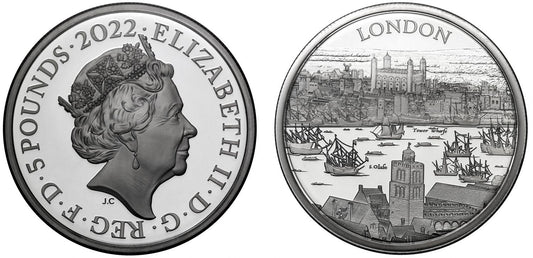
-
Charles III 2024 gold proof 1/4oz Britannia
Regular price £950Regular priceUnit price per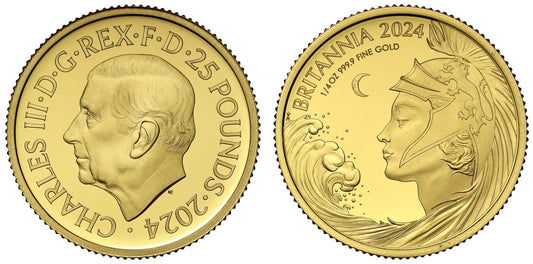
-
Charles III 2025 silver proof 2oz Waterloo Victory
Regular price £260Regular priceUnit price per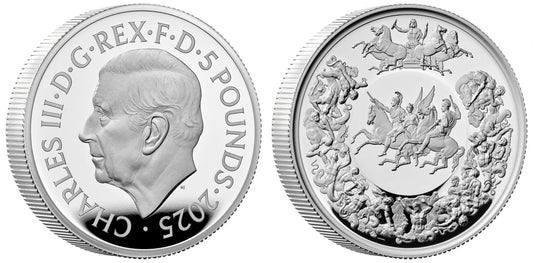
-
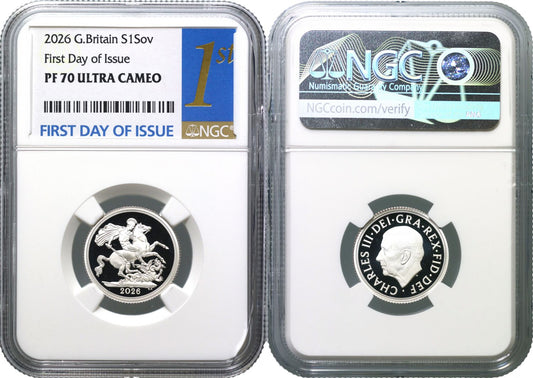
Charles III 2026 silver PF70 UCAM FDI Sovereign
Regular price £125Regular priceUnit price per