 Search


FAQs
What makes a coin valuable?


I have coins to sell, what’s the next step?
How will my purchases be shipped?
What happens if I’m not entirely happy with my purchase?
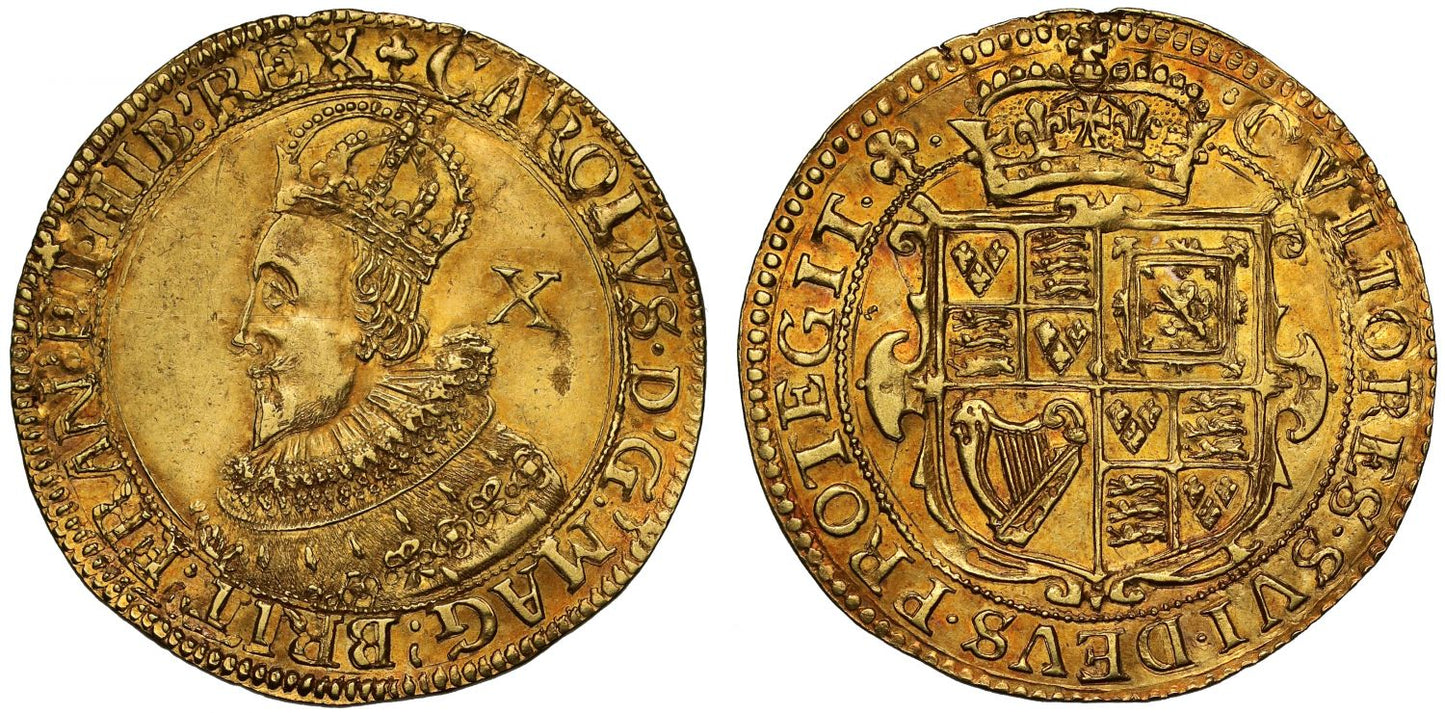
Charles I pattern Double Crown, mm trefoil UNIQUE, ex Martin, Bergne, Addington, Montagu, Murdoch, Carter, Brooker and English
Charles I (1625-49), Pattern Half-Unite or Double Crown of Ten Shillings, the earliest gold pattern known of this reign, crowned bust in Coronation robes facing left with value X behind, all within beaded circle, initial mark trefoil at top the mint mark used previously at the end of the reign of his Father James I, legend and outer beaded border surrounding, +CAROLVS D; G; MAG; BRIT; FRAN; ET HIB; REX, rev. crowned quartered shield of arms, frosted caul to crown, beaded circles and legend surrounding, mint mark at end of legend, .CVLTORES. SVI. DEVS, PROTEGIT.+., weight 4.54g (Brooker 1263 this coin; WR 30 R6; North 2668 ER). Toned, with small flaw near value and some doubling in legends, a hint of wear to highest points only, has been graded and slabbed by NGC as AU53, unique, of the highest rarity and believed to be the first gold coin struck in the reign of Charles I, of the highest numismatic importance clearly defining the transition from the Father King James I utilising his last coinage mint mark into the first ever issue of the son Charles I in his Coronation robes as seen on the first gold issue under the mint mark lis in 1625, a once in a lifetime chance to secure such an important coin also not present in museum collections and with a great provenance.
NGC certification 6320339-003.
This coin by definition of the mint mark is the earliest coin of the reign of King Charles I, and no other coin is known with this mark for a Tower mint coin of Charles. This unique gold piece is clearly an early pre-production pattern of what would follow for the mint mark lis gold Ten shilling piece in the coronation robes issued as currency for the initial year of his coinage only. This pattern also shows a frosted caul in the crown on the reverse, not seen on the currency pieces, as a further indication of the special status of this coin as some sort of "proving piece" for approval of Royal mint officers, or even for as senior figures as the new King himself.
The pattern is thought to have been engraved by Edward Greene who was joint Chief Engraver with John Gilbert at this time. John Gilbert left the Mint in 1628 officially retiring in 1630, and Greene continued in the Chief engraver position at times jointly until his death in 1644. There is a surviving record (Symonds 1913) that Edward Greene was paid for his work on pattern coins on 31st March 1626 just a few days into the new year old style calendar. Charles I Coronation did not occur until 2nd February 1626 he having ascended the throne on the 27th March 1625, and clearly wanted to take time to make the coinage right as there was no immediate change over from James I to Charles I, it being known that coins as James I continued to be struck into the new reign as a pyx trial just after 7th July 1625 showed with only coins of James being returned. As of the 2nd April 1625 Charles I commanded Abraham Van Der Dort to produce pattern Unite coins in varying weights which physically proved to be too higher relief pieces and technically difficult to ultimately make production. Correspondence on the matter survives and continues into 1626 as the King championed the work of Van Der Dort and is quoted as misliking the coin work of Greene as of November 1625. Therefore, it would seem Edward Greene was the muted victor in having his design adopted for currency and the only surviving pattern in gold appears to be this unique coin, physically made post-pyx trial some time between mid-July and November 1625 for which he was eventually paid in March of 1626. The mint mark finalisation of lis for currency must have come later and the mint mark finished utilisation on 26th June 1626.
The mint mark trefoil Ten Shilling piece is the only surviving piece known from the trial pattern period and therefore of the highest numismatic importance as piece of portraiture in metal.
Provenance:
Ex Rev. Joseph William Martin, Sotheby, 23rd May 1859, lot 248, sold for £6/2/6d to John Bergne.
Ex John Brodribb Bergne, Sotheby, 20th May 1873, lot 804, sold for £12 to Samuel Addington.
Ex Samuel Addington, collection purchased en bloc by Hyman Montagu.
Ex Hyman Montagu, third portion, Sotheby, 11th November 1896, lot 359 sold for £10 to Spink.
Ex John Gloag Murdoch, second portion, Sotheby, 8-13th June 1903, lot 287, sold for £6/10/-
Ex Dr Ernest Christison Carter, collection purchased by A. H. Baldwin 1950.
Ex John G. Brooker, Collection dispersed by Spink from 1978.
Ex Sotheby, 4th April 1991, lot 167, sold for £3,800.
Ex Simon English Collection.
In addition to the above Dr Carter exhibited this coin at a meeting of the British Numismatic Society during World War II, on the night of 23rd October 1940 where it was also opined that this coin carries the last mint mark of James I. The coin was subsequently mentioned and plated by Herbert Schneider in writing up the Tower Gold coins of King Charles I specifically in his listing of Double Crowns in the British Numismatic Journal Volume XXIX of 1958. He mentions the specific use of small square lettering the punches of which are used again on the earliest issues of the currency piece which also display a similar styled crown upon the King's head defining type 1 of the subsequent currency issue.
FAQs
What makes a coin valuable?
I have coins to sell, what’s the next step?
How will my purchases be shipped?
What happens if I’m not entirely happy with my purchase?
Popular Coins
View all-
Elizabeth II 2022 silver proof 2oz City Views London
Regular price £220Regular priceUnit price per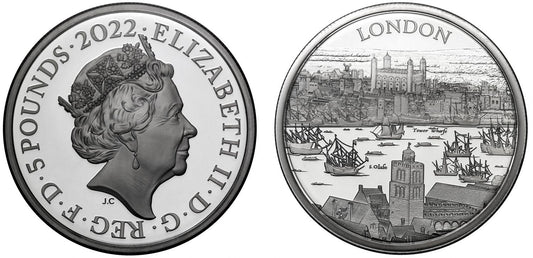
-
Charles III 2024 gold proof 1/4oz Britannia
Regular price £950Regular priceUnit price per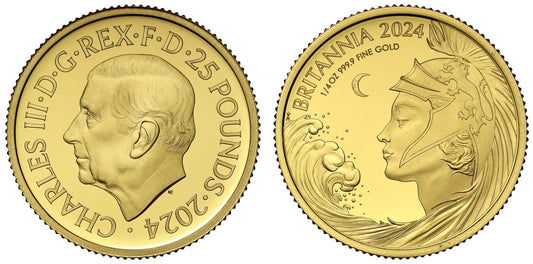
-
Charles III 2025 silver proof 2oz Waterloo Victory
Regular price £260Regular priceUnit price per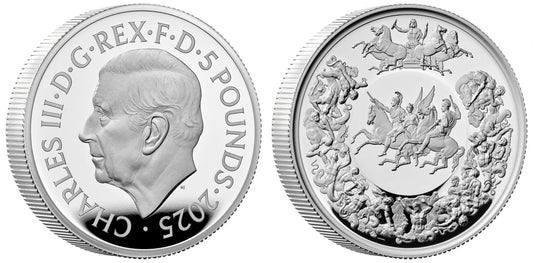
-
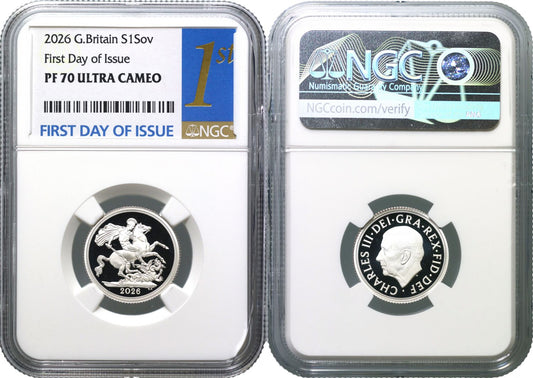
Charles III 2026 silver PF70 UCAM FDI Sovereign
Regular price £125Regular priceUnit price per