 Search


FAQs
What makes a coin valuable?


I have coins to sell, what’s the next step?
How will my purchases be shipped?
What happens if I’m not entirely happy with my purchase?
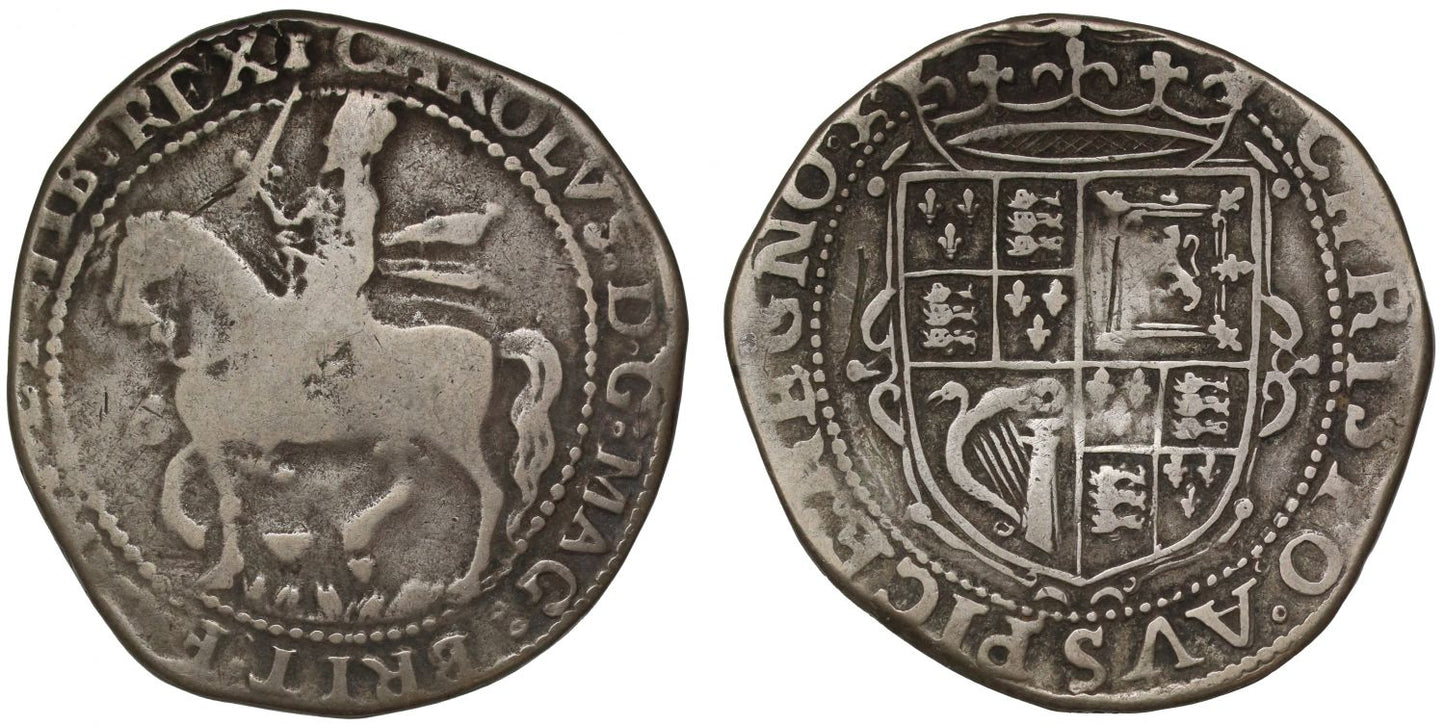
Charles I Halfcrown, Worcester, grassy ground with W, mm castle / helmet
Charles I (1625-49), silver Halfcrown, Worcester Mint (1644-45), armoured King on horseback left, with raised sword and flowing scarf, beaded border with legend surrounding, initial mark castle with double annulet stops on obverse, CAROLVS: D. G: MAG: BRIT: FRAN: ET HIB: REX, rev. crowned flat topped quartered shield of arms with frame, hatched interior to crown, beaded border with legend surrounding, annulet stops, terminal mark helmet, CHRISTO: AVSPICE: REGNO. ., weight 14.12g (Brooker 1140A; Allen B-5; Bull 668/5; N.2587; S.3096). Toned, uneven in shape, worn with short hairline scratch to left of shield, good fine for this very rare issue.
The Worcester Mint was originally assumed to be Weymouth in Dorset, after being first suggested for the W mint mark coins by the Victorian numismatist T. F. Dymock in the Numismatic Chronicle of 1861, page 185. Victorian numismatists accepted this due to lack of contemporary evidence as there are no coinage commissions for any Mints in Dorset or Wiltshire and the subject continued to be debated into the 20th Century. Therefore the Weymouth attribution was listed as such for over 100 years, even as late as the 1983 Seaby Standard Catalogue, as it was not until the early 1980s that the attribution was acceptably changed to what it is still today, based on an article by George Boon then Curator of the National Museum of Wales, "Provincial and Civil War Issues" featured in the John G. Brooker Sylloge "Coins of Charles I" published in 1984.
The Worcester attribution is based mainly on the subsequent hoard evidence of where such coins have been found geographically, for instance a number turned up in the Telford Hoard in 1982. Also contemporary surviving evidence from the Ordinance Agent Captain Strachan at Weymouth in 1643-44 demonstrated a distinct lack of cash, as he was continually writing to the King's Capital at Oxford; which would mean if coins were struck there, it would have been after his letters ceased complaining about cash shortfall, and before the town fell to the Parliamentarians on 17th June of 1644, an incredibly short space of two and a half months.
Therefore, the Halfcrowns are today all attributed to Worcester, and the smaller silver denominations of Shilling, Sixpence, Groat, Threepence and Half-Groat to Worcester or Salopia. The Halfcrowns either feature a W under the horse or no mark other than a pellet, the defining feature being the tall horseman style coupled with the rosette stops on the reverse. Other varieties have mint mark of a helmet or castle as herewith for sale, and some feature lis or lions in their legends.
Derek Allen formerly of the British Museum wrote the definitive article categorising this series of coins as long ago as 1938, when the guarded assumption was still that these coins were Weymouth, and the Salopia mint mark SA was assumed to mean Salisbury. His article referenced above appeared in the British Numismatic Journal, volume 23, pages 97-119.
To put a historical perspective on these issues it is known that King Charles I passed through Worcester with his troops in the early part June of 1644, having left Oxford on the night of the 3rd June with 7,000 men and first passing through Northleigh, Burford, Bourton-on-the-Water and Evesham.
Provenance:
Ex Lucius S. Ruder Collection, USA.
We note that Maurice Bull only traces six examples of this castle/helmet with the flat topped shield combined with the grass ground W obverse and that two of those are in museums. The Ruder example either adds one coin to this roster or it is intriguing to think it might actually be the unseen Ryan example sold at London auction in 1952 right when Ruder was collecting and buying from dealers in Ohio and Florida. Ryan 1296 graded as "VF" was not deemed worthy of photographing in the 1952 sale and sold for £20 with a further provenance of Henry Webb which was sold in two parts at Sotheby in 1894-95 and incorporated parts of the Neck collection and before that to the Wigan collection.
Perhaps this coin is not the Ryan example as it is clearly not a VF coin in todays standards of grade, even if it is an extra example to add to the Bull list there are still only seven examples extant with two in museums.
American collector Lucius S. Ruder was born on the 18th September 1901 in Hamilton, Ohio and was a businessman and banker part owning the Cincinnati sheet metal and roofing company as well as being a director at the First National Bank of Hamilton and later on in life at the Bank of Clearwater in Florida. He also served as a Lieutenant Colonel in the Air Force in World War II. In the 1930s he purchased a large collection of coins from the estate of Dr Philip Holmes a prominent Chicago surgeon who had put the bulk of his collection together in the 1920s. Mr Ruder's collection focused on USA and British coinage and doubled the size of the collection over the following decades including some major rarities. The collection has gradually come up for auction through sales with Stacks Bowers over 2024 and 2025 decades after Ruder's death in 1965.
FAQs
What makes a coin valuable?
I have coins to sell, what’s the next step?
How will my purchases be shipped?
What happens if I’m not entirely happy with my purchase?
Popular Coins
View all-
Elizabeth II 2022 silver proof 2oz City Views London
Regular price £220Regular priceUnit price per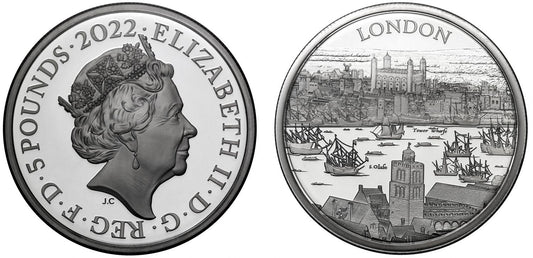
-
Charles III 2024 gold proof 1/4oz Britannia
Regular price £950Regular priceUnit price per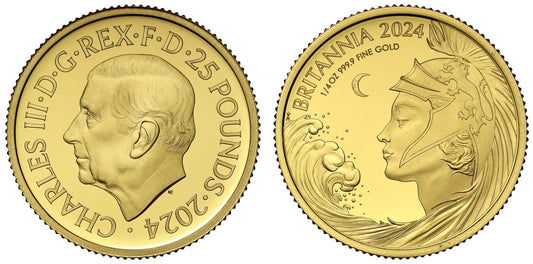
-
Charles III 2025 silver proof 2oz Waterloo Victory
Regular price £260Regular priceUnit price per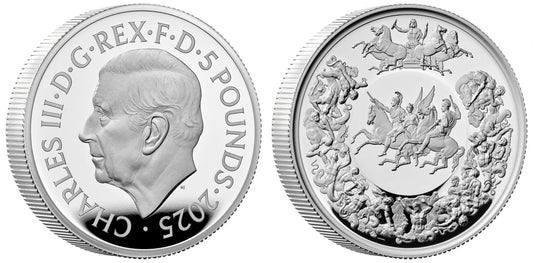
-
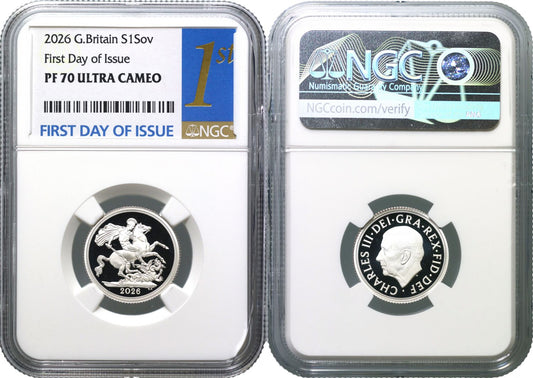
Charles III 2026 silver PF70 UCAM FDI Sovereign
Regular price £125Regular priceUnit price per