 Search



FAQs
What makes a coin valuable?


I have coins to sell, what’s the next step?
How will my purchases be shipped?
What happens if I’m not entirely happy with my purchase?
Charles I 1644 Triple Unite, Oxford, XF45, small module, less than ten known
Charles I (1625-49), gold Triple Unite of Three Pounds, dated 1644, Oxford Mint, struck on a smaller module flan, crowned smaller armoured half-length figure of King left, holding upright sword and palm branch, mostly within inner beaded circle, Oxford plumes with bands in field behind, legend and beaded borders surrounding, initial mark Shrewsbury style plumes, lozenge stops on obverse, CAROLVS. D: G: MAG: BRI: FRA: ET. HIBER: REX., rev. legend commences upper left on continuous scroll, toothed outer border surrounding, no initial mark, pellet stops, EXVRGAT. DEVS. DISSIPENTVR. INIMICI., running into Declaration inscription on three line scroll at centre, RELIG: PROT: / :LEG: ANG: / LIBER: PAR:, date below between stops, OXON below date, three Oxford plumes over III value above scroll, weight 26.77g (Beresford-Jones dies VIII / L8; Schneider 304; N.2385; Brooker 842; S.2729). Struck from the rocker press machinery of that time with associated weakness in strike evident mainly in legend at left side of obverse and right side of reverse, small flan flaw to right of sword blade, one small rim bruise on reverse, some light marks, otherwise lightly toned with a good portrait of the King, has been graded and slabbed by NGC as XF45, with only seven or eight examples extant one of the rarer die combinations, extremely rare.
NGC certification 5855559-010.
The gold Triple Unite represents the largest hammered gold denomination ever produced in the English series of coinage at a face value of Three Pounds. Such coins were produced at a time of duress, when the King had moved his Capital from London after the Battle of Edgehill, to the Royalist Universities of the City of Oxford, where he made a state entrance on 29th October 1642. The King lived at Christ Church, with the Queen installed at Merton; the Royalist Parliament met in the Upper Schools and Great Convocation House; the Privy Council at Oriel; and the Mint worked at New Inn Hall from the 3rd January 1642/3. These magnificent gold coins were struck for only three dates, 1642, 1643 and 1644 with some variation as there are 24 different varieties of obverse and reverse across these three dates, plus an extremely rare 1642 piece struck in Shrewsbury. Today, it is estimated the 25 different combinations exist in a mere surviving sample of some 250 pieces.
When the Triple Unite was introduced as currency it was more than double the value of any previous English coin produced, and would have been seen as a magnificent piece of propaganda against the Puritan cause, to show that though the King had moved from London, Oxford was a rich alternative City. Perhaps the King was inspired by similar large extremely rare Scottish coins produced some 70 years earlier by his Father, King James VI of Scotland in 1575-6. The King had introduced the first regular newspaper printed in Oxford the "Mercurius Aulicus" from the 1st January 1642/3 (1642 old calendar style), and the introduction of the new Triple Unite as currency is featured in the edition produced around the 18th February 1642/3, and features a woodcut illustration of the new denomination (dies 1/S1 combination). This is thought to be the first ever illustration of a current coin of the realm in contemporary print. As the new year in the old calendar style commenced on the 25th March this means all the 1642 dated coins were produced in only a very limited time from mid-February to probably April at latest when 1643 dated pieces were no doubt produced. It seems the issue of this great coin ceased with the great fire of Oxford as reported in the same newspaper of 6th October 1644, as there are only three reverse types known of 1644. Strangely the 1644 issue all feature a Shrewsbury style initial mark in the obverse legend, though the plumes in the field are true Oxford style with the double bands.
Provenance:
Ex Glendining, 15th April 2003, lot 868.
FAQs
What makes a coin valuable?
I have coins to sell, what’s the next step?
How will my purchases be shipped?
What happens if I’m not entirely happy with my purchase?
Popular Coins
View all-
Elizabeth II 2022 silver proof 2oz City Views London
Regular price £220Regular priceUnit price per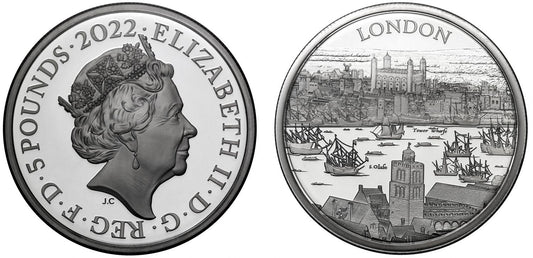
-
Tudor Beasts Completer 2027 1oz silver proof Charles III
Regular price £185Regular priceUnit price per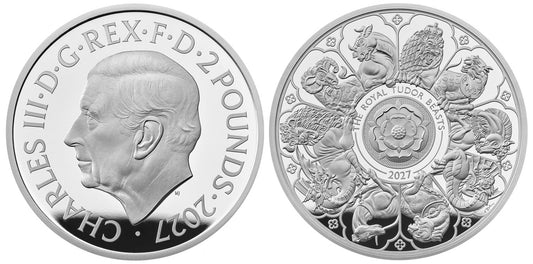
-
Charles III 2024 gold PF70 UC 1/4oz Britannia
Regular price £1,020Regular priceUnit price per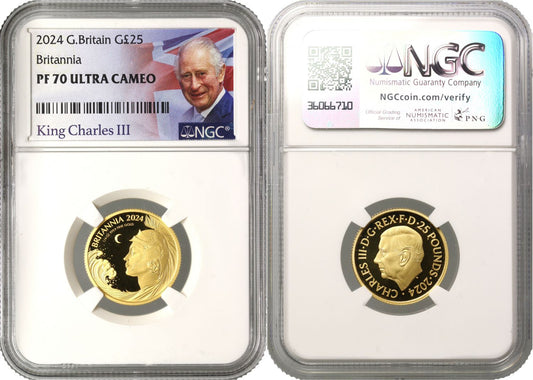
-
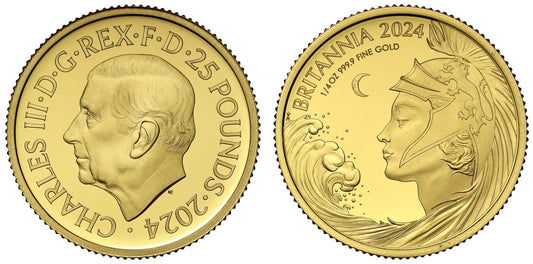
Charles III 2024 gold proof 1/4oz Britannia
Regular price £950Regular priceUnit price per