 Search


FAQs
What makes a coin valuable?


I have coins to sell, what’s the next step?
How will my purchases be shipped?
What happens if I’m not entirely happy with my purchase?
Caracalla, silver Denarius, Rome, 215 AD
Caracalla (198-217 AD), silver Denarius, Rome, 215 AD, ANTONINVS PIVS AVG GERM, laureate head right, rev. P M TR P XVIII COS IIII P P, Aesculapius standing front, head to left, leaning right on serpent-entwined staff; at feet to right, globe, 3.45g, 1h (BMC 103, RIC IV 251). Two small scuffs in the fields on the reverse, otherwise good extremely fine.
This silver denarius of Emperor Caracalla, struck at Rome in 215 AD, reflects the religious symbolism and imperial authority of the Roman Empire during the early third century. His laureate head faces right, the laurel wreath symbolising victory and imperial status. Although commonly known as Caracalla, the emperor's official name was Marcus Aurelius Antoninus, and he adopted the name Antoninus in an effort to associate himself with the prestigious Antonine dynasty.
Caracalla ruled jointly with his father, Septimius Severus, from 198 AD and became sole emperor following his father's death in 211 AD. His reign was marked by military campaigns, increased taxation and a reputation for severity. One of his most significant measures was the Constitutio Antoniniana of 212 AD, which extended Roman citizenship to nearly all free inhabitants of the empire. He also commissioned the enormous public baths in Rome that still bear his name.
The choice of Aesculapius is particularly notable for a coin issued in 215 AD, when Caracalla travelled east and visited the healing sanctuary of the god at Pergamum. The reverse imagery may therefore reflect the emperor's association with divine healing and protection. This denarius combines traditional religious imagery with imperial propaganda, offering a glimpse into the beliefs and political priorities of Caracalla's turbulent reign.
The obverse inscription ANTONINVS PIVS AVG GERM translates to "Antoninus the Pious, Augustus, Conqueror of the Germans"
The reverse inscription P M TR P XVIII COS IIII P P translates to "Chief Priest, holding Tribunician Power for the 18th time, Consul for the fourth time, Father of the Fatherland."
FAQs
What makes a coin valuable?
I have coins to sell, what’s the next step?
How will my purchases be shipped?
What happens if I’m not entirely happy with my purchase?

Popular Coins
View all-
Elizabeth II 2022 silver proof 2oz City Views London
Regular price £220Regular priceUnit price per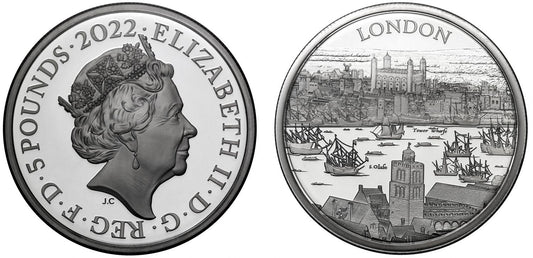
-
Charles III 2024 gold PF70 UC 1/4oz Britannia
Regular price £1,020Regular priceUnit price per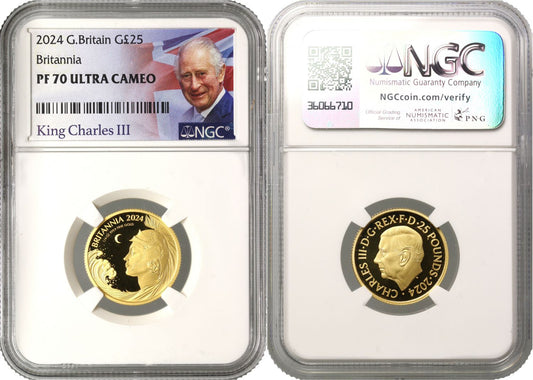
-
Charles III 2024 gold proof 1/4oz Britannia
Regular price £950Regular priceUnit price per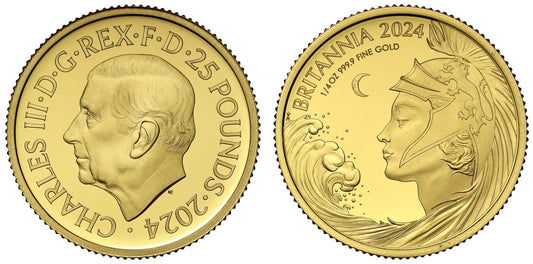
-
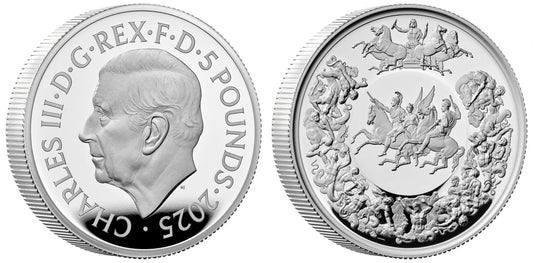
Charles III 2025 silver proof 2oz Waterloo Victory
Regular price £260Regular priceUnit price per