 Search


FAQs
What makes a coin valuable?


I have coins to sell, what’s the next step?
How will my purchases be shipped?
What happens if I’m not entirely happy with my purchase?
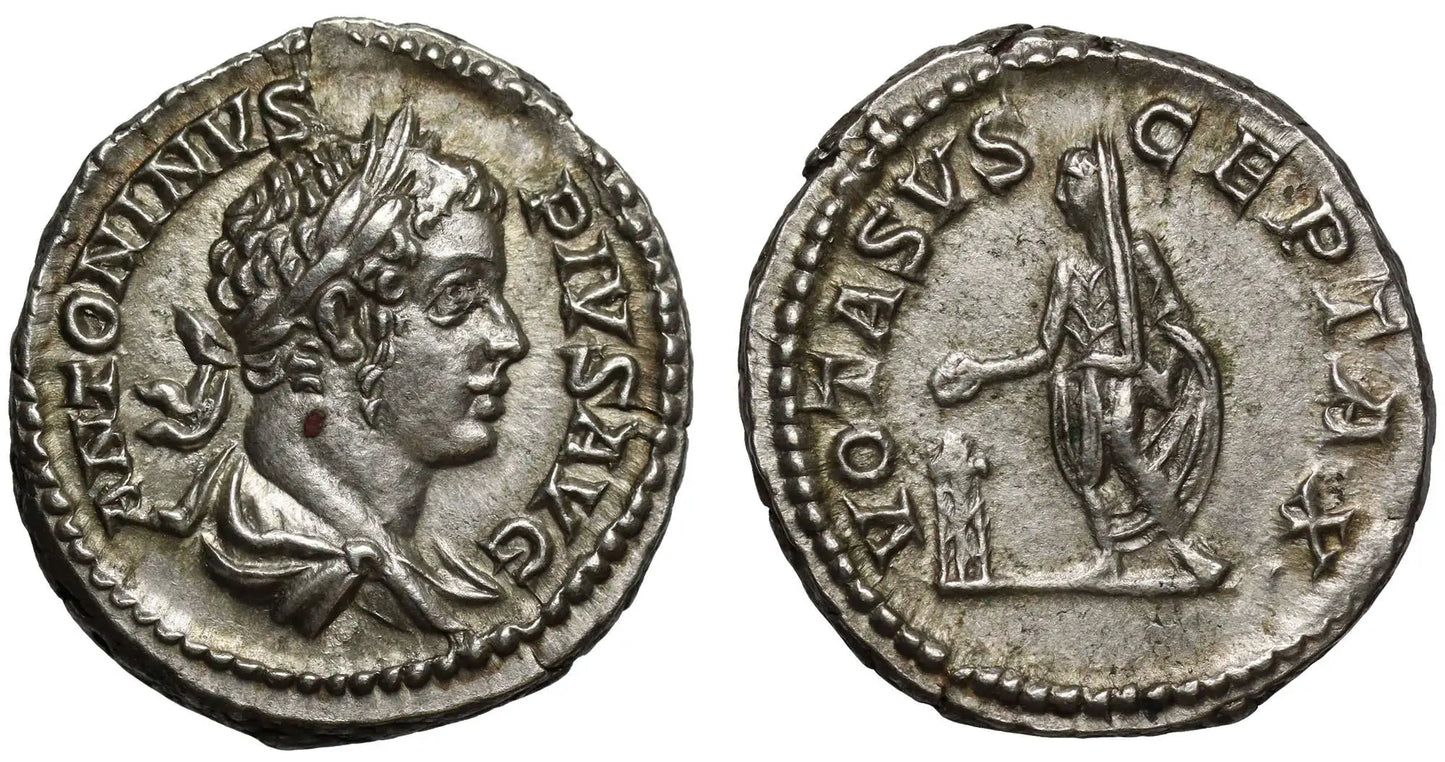
Caracalla, silver Denarius, Rome, 201-6 AD
Caracalla (198-217 AD), silver Denarius, Rome, 201-206 AD, ANTONINVS PIVS AVG, laureate and draped bust of Caracalla to right, rev. VOTA SVSCEPTA X, Caracalla, veiled, standing front, head to left, sacrificing out of patera with his right hand over lighted tripod altar, 4.00g, 1h (BMC 302. Cohen 688. RIC IV 150). Extremely fine.
This silver denarius of Caracalla, struck at Rome between approximately 201 and 206 AD, illustrates the important role of religious ritual in Roman imperial life. His laureate and draped bust faces right, combining the laurel wreath, a traditional symbol of victory, with the drapery associated with imperial dignity. Although remembered by the nickname Caracalla, derived from a Gallic-style cloak he popularised, the emperor's official name was Marcus Aurelius Antoninus.
Caracalla became joint emperor with his father, Septimius Severus, in 198 AD. During this period, the Severan dynasty sought to reinforce its legitimacy through military success, religious observance and associations with earlier emperors. Following his father's death in 211 AD, Caracalla ruled alone after the murder of his brother and co-emperor, Geta, later that year. His reign was characterised by military campaigns, substantial expenditure and increasingly centralised imperial authority.
The reverse legend, VOTA SVSCEPTA X, it refers to the vota decennalia, religious vows associated with the emperor's ten-year anniversary of rule or the undertaking of vows for the welfare and continuation of his reign. The precise significance depends on the issue's dating and historical context. Caracalla is shown veiled, standing before a lighted tripod altar and pouring a sacrifice from a patera, a shallow ritual dish. His veiled head signifies his role as the officiant in a formal religious ceremony.
This imagery emphasises the emperor's duty to maintain the pax deorum, or peace with the gods, through correct ritual observance. The denarius therefore served not only as currency but also as a statement of religious responsibility, dynastic legitimacy and the divine protection believed essential to Rome's continued prosperity.
The obverse inscription ANTONINVS PIVS AVG translates to "Antoninus the Pious, Augustus."
The reverse inscription translates to "Vows undertaken for the 10th anniversary (of the emperor's reign)."
FAQs
What makes a coin valuable?
I have coins to sell, what’s the next step?
How will my purchases be shipped?
What happens if I’m not entirely happy with my purchase?
Popular Coins
View all-
Elizabeth II 2022 silver proof 2oz City Views London
Regular price £220Regular priceUnit price per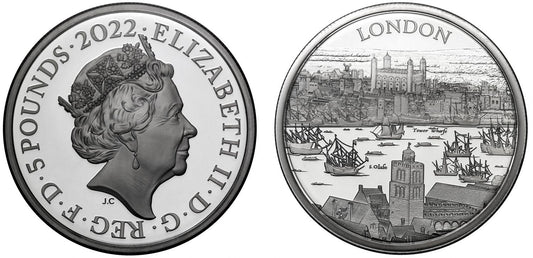
-
Charles III 2024 gold PF70 UC 1/4oz Britannia
Regular price £1,020Regular priceUnit price per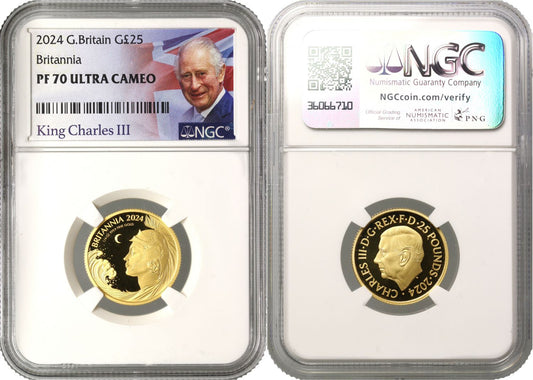
-
Charles III 2024 gold proof 1/4oz Britannia
Regular price £950Regular priceUnit price per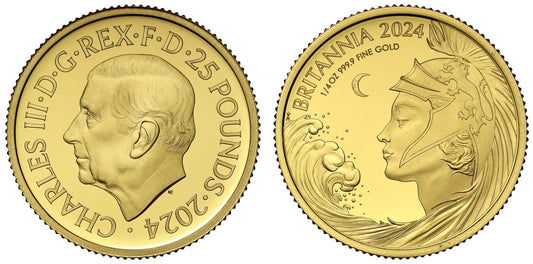
-
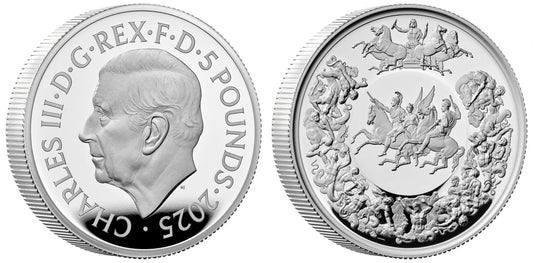
Charles III 2025 silver proof 2oz Waterloo Victory
Regular price £260Regular priceUnit price per