 Search


FAQs
What makes a coin valuable?


I have coins to sell, what’s the next step?
How will my purchases be shipped?
What happens if I’m not entirely happy with my purchase?
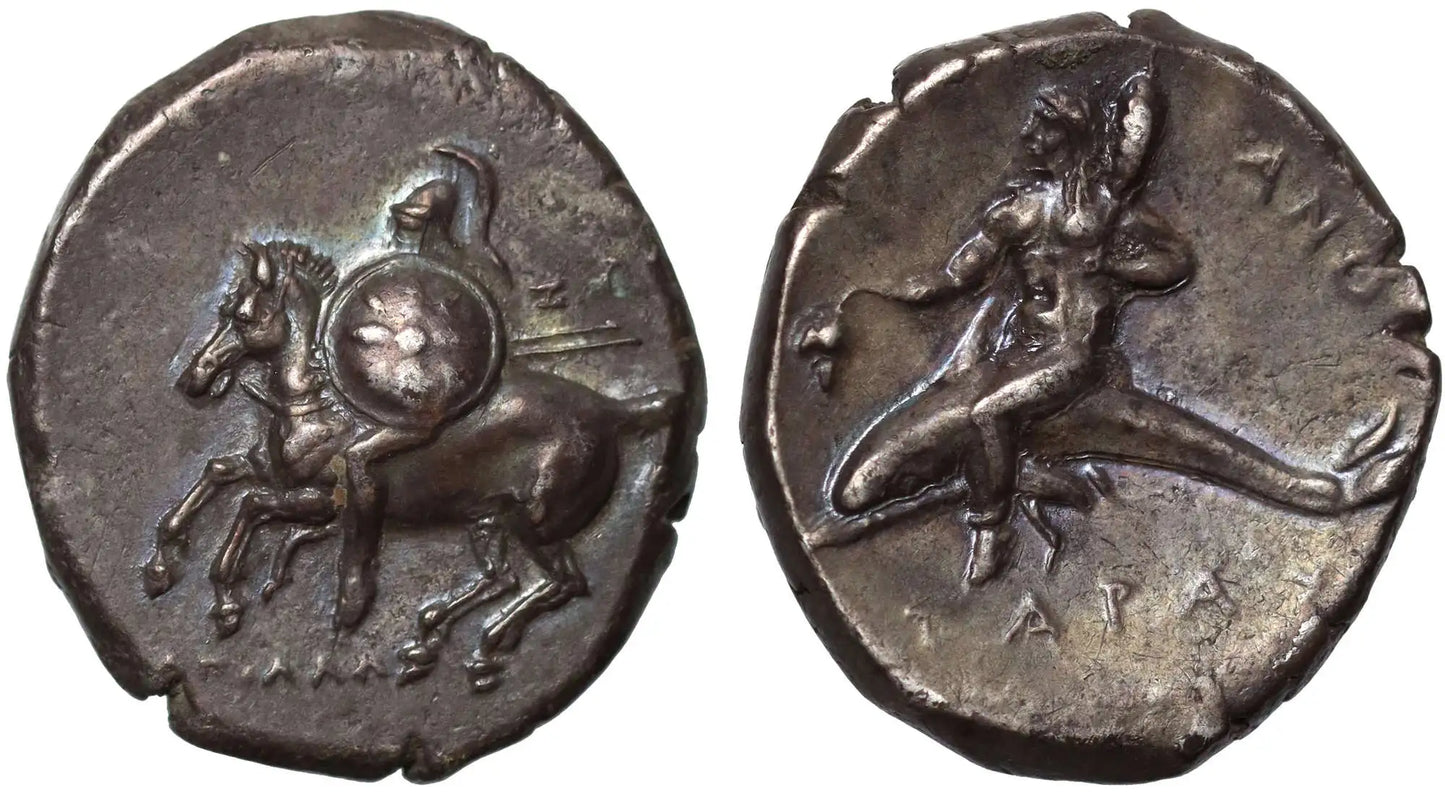
Calabria Tarentum, 280-272 BC, silver Nomos, Apollo and Anth magistrates
Calabria Tarentum, 280-272 BC, silver Nomos, Apollo and Anth magistrates, helmeted warrior on horse galloping to left, holding shield decorated with star and two spears; to right; ΞΩ; below, AΠOΛΛΩ, rev. TAPAΣ Phalanthos, nude, riding dolphin to left, holding grape bunch in his right hand and distaff in his left; to right, ANΘ, 6.35g, 6h (HN Italy 1013. Vlasto 789-91). Dark cabinet tone, about extremely fine.
This silver nomos was minted at Tarentum (Taras) in Calabria, part of the Greek world of Magna Graecia, between approximately 280 and 272 BC. Tarentum was founded by Spartan colonists in the late eighth century BC and became one of the most powerful Greek cities in southern Italy. Its location on the Gulf of Tarentum allowed it to develop into an important centre for trade, agriculture and maritime activity. The city was also famous for its distinctive coinage, which frequently featured images connected with the sea and Greek religious traditions. The date of this coin is particularly significant because it falls during the Pyrrhic War, when Tarentum sought the help of King Pyrrhus of Epirus against the expanding Roman Republic. Pyrrhus arrived in Italy in 280 BC with his army and famously defeated the Romans at Heraclea and Asculum. However, his victories came at enormous cost, giving rise to the expression "Pyrrhic victory." By 272 BC, Pyrrhus had withdrawn from Italy and Tarentum surrendered to Rome. The coin therefore belongs to a crucial period in Tarentum's history, when the city was fighting to preserve its independence against Rome. The names Apollo and Anth are associated with the magistrates responsible for the coin's production. Their appearance demonstrates the civic organisation of Tarentum's mint and provides evidence of the officials active during this important period. The nomos consequently reflects both Tarentum's strong Greek identity and the political pressures it faced from Rome.
The obverse legend AΠOΛΛΩ translates to "Apollo"
The reverse legends TAPAΣ and ANΘ translate to "Taras and Anth"
FAQs
What makes a coin valuable?
I have coins to sell, what’s the next step?
How will my purchases be shipped?
What happens if I’m not entirely happy with my purchase?
Popular Coins
View all-
Elizabeth II 2022 silver proof 2oz City Views London
Regular price £220Regular priceUnit price per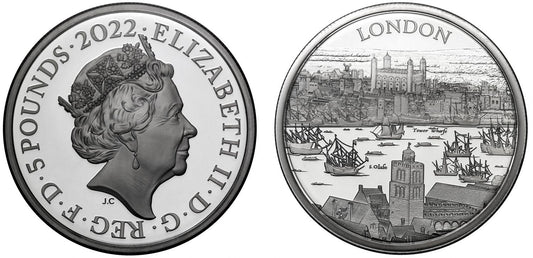
-
Charles III 2024 gold proof 1/4oz Britannia
Regular price £950Regular priceUnit price per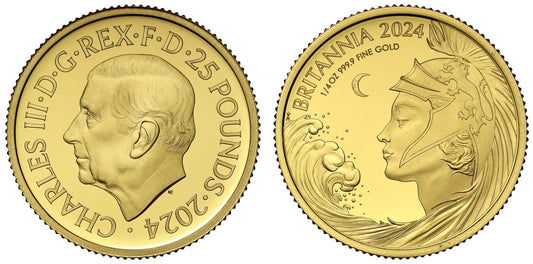
-
Charles III 2025 silver proof 2oz Waterloo Victory
Regular price £260Regular priceUnit price per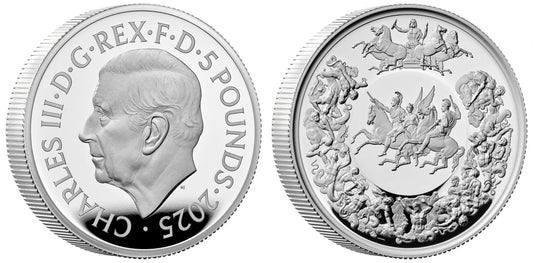
-
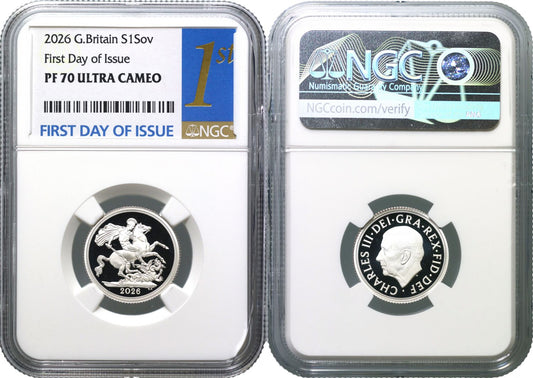
Charles III 2026 silver PF70 UCAM FDI Sovereign
Regular price £125Regular priceUnit price per