 Search


FAQs
What makes a coin valuable?


I have coins to sell, what’s the next step?
How will my purchases be shipped?
What happens if I’m not entirely happy with my purchase?
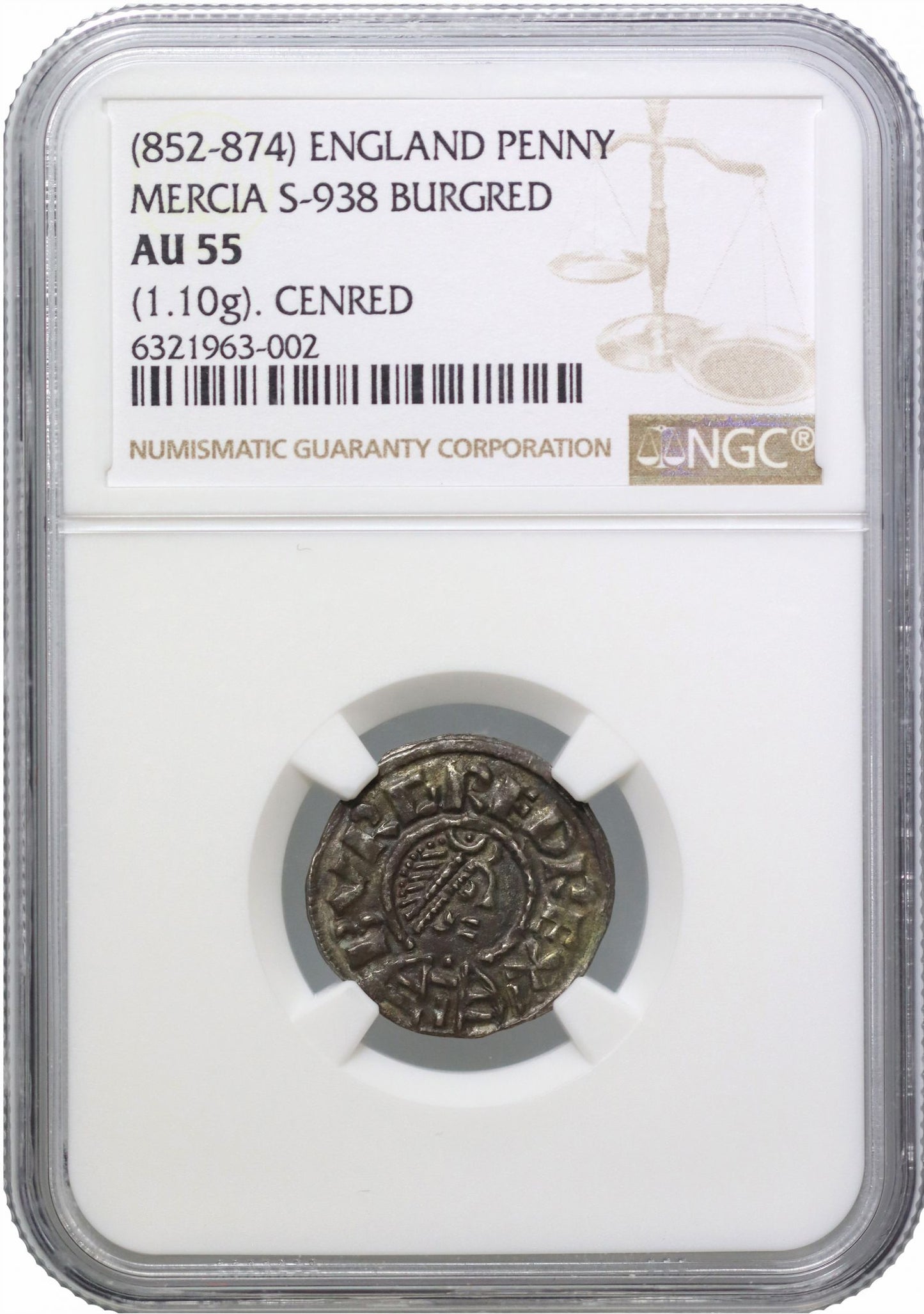
Burgred, King of Mercia, Penny, Cenred, AU55
Burgred, King of Mercia (852-874), silver Penny, Moneyer Cenred, diademed bust right to bottom of coin, linear inner circle and legend around, toothed border around rim both sides, legend commences lower left, BVRGRED REX-, rev. type D, three line inscription with beaded division lines with curved ends, CENRED / 'MON' / 'ETA', weight 1.13g (Mackay H10.19 this coin O15/R16; N.426; S.942B). Toned almost extremely fine, graded by NGC as AU55.
NGC Certification 6321963-002
Turning to the "The Coinage of Burgred of Mercia 852-874" in the British Numismatic Journal volume 85 of 2015, William Mackay in this monumental corpus shows only 23% of the total sample has a type D reverse, equating to 196 coins out of 847 Burgred pennies sampled. The exact variety is phase III, obverse type H10, late horizontal B, moneyer Cenred H10.19 O15/R16, obverse C9 pellet inner circle and diadem, pellet at base of neck, reverse D pelleted lines. This coin is one of 17 coins classified as H10 of Cenred and he in turn is one of 26 moneyers working in this type, of which 81 coins in total are H10.
Burgred was probably a senior Ealdorman when he succeeded to the Kingship of Mercia from Beorhtwulf in 852. Preferring alliances rather than hostility he first married Ethelswith daughter of Aethelwulf of Wessex at Easter 853, possibly surrendering Berkshire in return. The two Kings allied against Powys in 853 causing King Cyngen ap Cadell to flee to Rome. His nephew Rhodri Mawr took over what was left but Burgred continued against Gwynedd and advanced as far as Anglesey along the northern coast but had to turn back after the Vikings landed a great army in England that Autumn.
The large Viking force wintered in East Anglia then marched across Mercia to attack Northumbria in 866, but Burgred did not make a move and perhaps missed an opportunity to unite with the Northumbrians against the Vikings. By the Autumn of 867 the Vikings had moved south to Nottingham whereupon Burgred called for aid from Wessex, and King Aethelred and his brother Alfred joined the cause, both taking Mercian wives as an alliance. However, the Vikings stayed within the city walls of Nottingham happily living off supplies brought in by their boats up the River Trent, whilst the English camped outside living off the land, whilst a long stand-off progressed due to Burgred's caution. Eventually the Vikings agreed to go by 869 presumably in exchange for money and further supplies and left for either York or East Anglia, the latter in which they settled in 870. Burgred did not aid Wessex in 871 as the Vikings continued their marauding and had to come to terms that Winter with the Vikings when they threatened London. The Vikings moved on to Torksey in 872 and then the Midlands wintering in 873 at Repton. Then in 874 the invaders moved to formally take over Mercia, and Burgred fled into exile with his wife and journeyed to Rome where he later died at an unknown date.
The obverse legend translates as "Burgred King" and the reverse with moneyer name "Cenred Moneyer"
Provenance:
Ex Spink Numismatic Circular, March 2010, HS4024.
FAQs
What makes a coin valuable?
I have coins to sell, what’s the next step?
How will my purchases be shipped?
What happens if I’m not entirely happy with my purchase?

Popular Coins
View all-
Elizabeth II 2022 silver proof 2oz City Views London
Regular price £220Regular priceUnit price per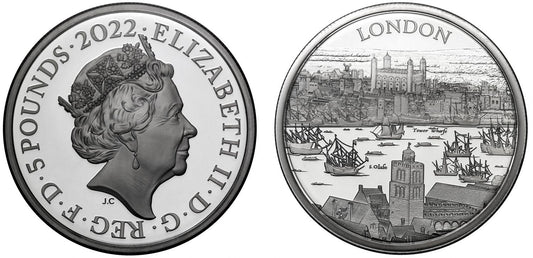
-
Charles III 2024 gold PF70 UC 1/4oz Britannia
Regular price £1,020Regular priceUnit price per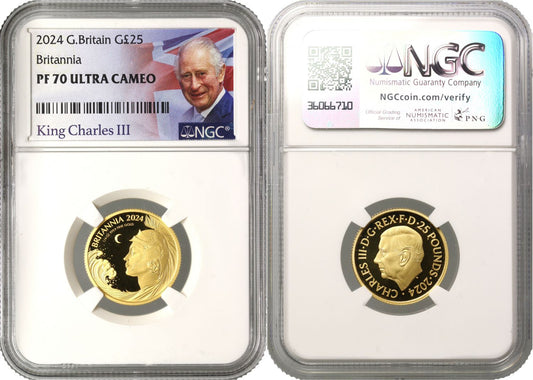
-
Charles III 2024 gold proof 1/4oz Britannia
Regular price £950Regular priceUnit price per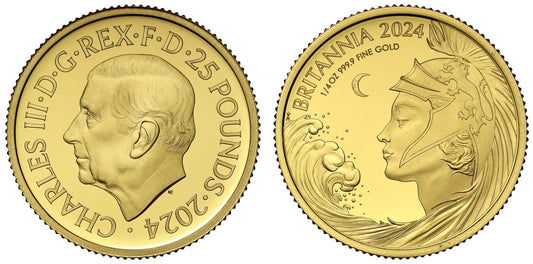
-
Charles III 2025 silver proof 2oz Waterloo Victory
Regular price £260Regular priceUnit price per