 Search


FAQs
What makes a coin valuable?


I have coins to sell, what’s the next step?
How will my purchases be shipped?
What happens if I’m not entirely happy with my purchase?
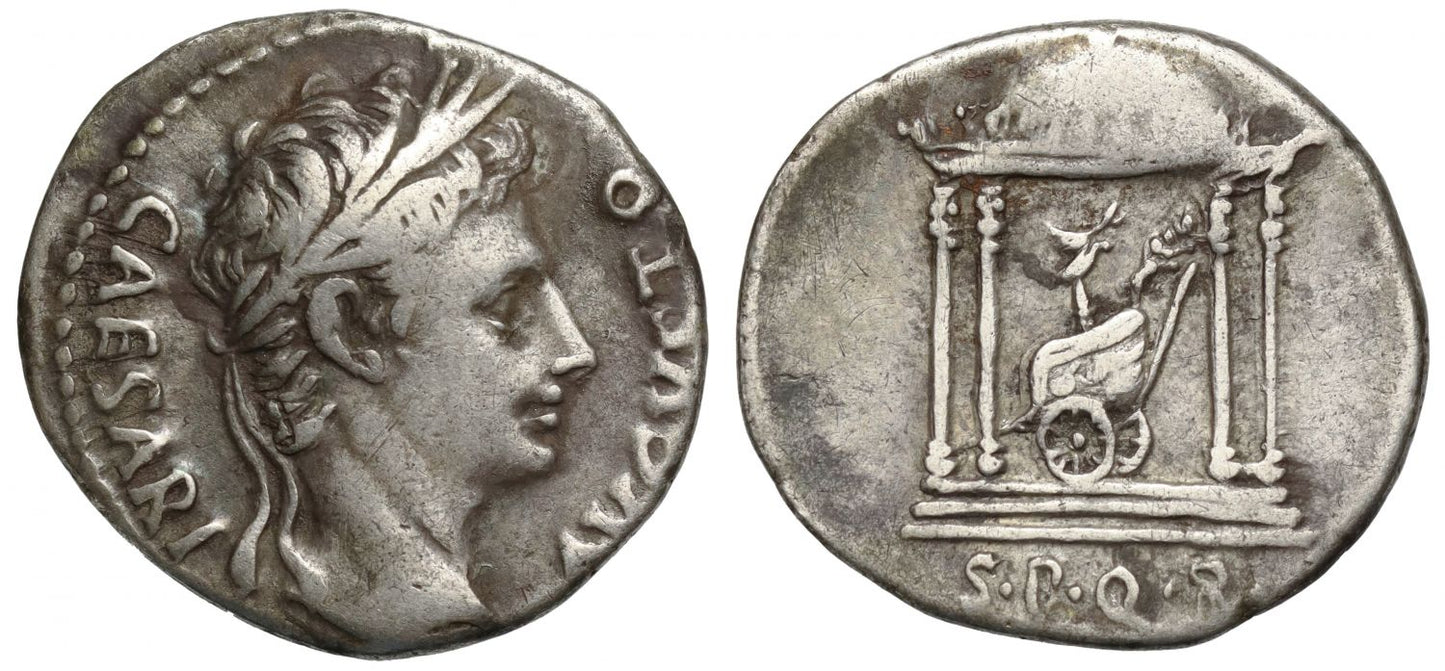
Augustus, Silver Denarius, Tetrastyle Temple With Chariot.
Augustus (27 BC to AD 14), silver Denarius, Spanish mint, c. 18 BC, CAESARI AVGVSTO, laureate head right, rev. domed tetrastyle temple containing chariot containing aquila and four miniature galloping horses, S.P.Q.R. in exergue, 3.71g, 5h (RIC I, 115). Very fine.
Augustus, who ruled as Romes first emperor from 27 BC to AD 14, issued this silver Denarius around 18 BC from a Spanish mint (likely Colonia Patricia / Córdoba). Struck during a period when Augustus was heavily focused on consolidating his moral and political reforms, securing provincial administration, and promoting diplomatic victories such as the recovery of the lost legionary standards from the Parthians this coin served as a powerful piece of imperial propaganda meant for both the army and the western provinces. On the obverse of the coin, we see a clean, classic laureate head of Augustus facing right. The laurel wreath was a traditional symbol of triumph and supreme authority, signalling to anyone handling the currency that Augustus stood at the apex of power, embodying the peace and stability of the Pax Romana. The reverse of the coin features an intricate architectural design: a domed tetrastyle temple containing a triumphal chariot. Inside the chariot sits an aquila flanked by four miniature galloping horses. Beneath this architectural marvel, the iconic acronym S.P.Q.R. is displayed in the exergue. This imagery brilliantly bridged the gap between divine honour and state governance, celebrating Roman military honour and the return of lost standards while subtly placing the glory under the watchful eye of the emperor. This denarius captures Augustan art at its finest, balancing classical restraint with grandiose political messaging. It remains an insight into how the emperor used everyday coinage to shape public memory and loyalty across the vast Roman world.
The obverse legend CAESARI AVGVSTO translates to "To Caesar Augustus."
The reverse legend S.P.Q.R translates to "The Senate and People of Rome."
FAQs
What makes a coin valuable?
I have coins to sell, what’s the next step?
How will my purchases be shipped?
What happens if I’m not entirely happy with my purchase?
Popular Coins
View all-
Elizabeth II 2022 silver proof 2oz City Views London
Regular price £220Regular priceUnit price per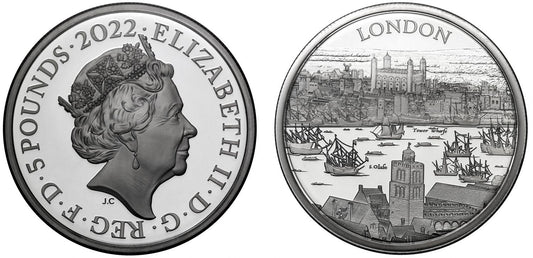
-
Charles III 2024 gold PF70 UC 1/4oz Britannia
Regular price £1,020Regular priceUnit price per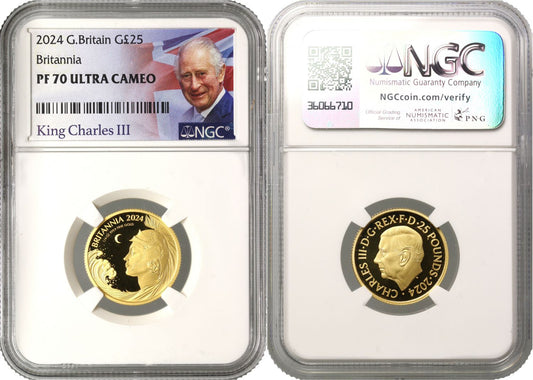
-
Charles III 2024 gold proof 1/4oz Britannia
Regular price £950Regular priceUnit price per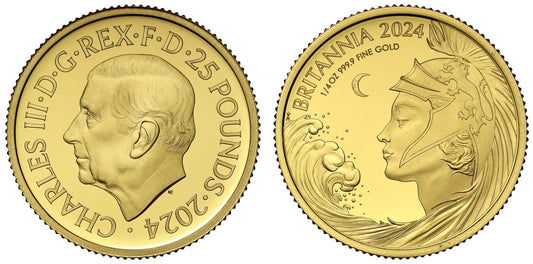
-
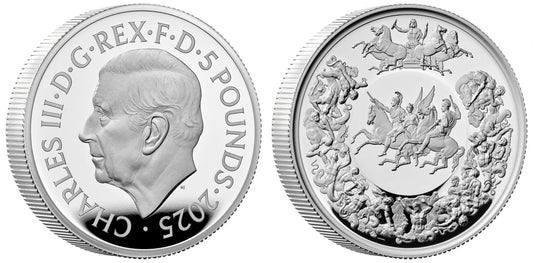
Charles III 2025 silver proof 2oz Waterloo Victory
Regular price £260Regular priceUnit price per